Arta: the cool of the interior and whale sharks
Arta is a small town in the interior of Djibouti, at 750 metres of altitude and 42 kilometres from Djibouti City. Its cooler climate than the coast makes it a classic escape, and it hosts the March for Peace every year. The region also holds the Arta marine protected area, where whale sharks are observed from October to February, the DECAN animal refuge and the Djalélo protected area.
Do not confuse two seasons. The best climatic season for the Arta region runs from October to March, when temperatures are bearable. The whale shark season is shorter: a regulatory window from 15 October to 15 March set by decree, with a peak of sightings from November to January. The two overlap, but they are not the same thing.
Where is Arta?
Arta is a small town in the interior, set on a shelf at 750 metres of altitude, 42 kilometres from Djibouti City. That modest altitude is enough to change the atmosphere: the temperature drops and the view opens onto the mountains on one side, the Gulf of Tadjourah on the other.
That explains its function. For the capital’s residents, Arta plays the role of a nearby escape: you go up to breathe, to walk, to sleep in the cool.
Arta is also a place of collective memory: the town hosts the March for Peace every year, a national event that brings people together beyond divisions. That symbolic dimension counts in how the place is perceived locally.
Finally, the Arta region concentrates the largest number of protected areas in the country: the Arta marine area, Djalélo, the Douda reserve.
Key facts
| Reference | Data |
|---|---|
| Administrative region | Arta |
| Coordinates of the area | 11.534 N — 42.861 E |
| Altitude | 750 m |
| Distance from Djibouti City | 42 km |
| Climate | Cooler than the coast |
| Access | Paved road |
| Protected areas | Arta marine area, Djalélo, Douda reserve |
| Annual event | March for Peace |
| Best season | October to March |
| Recommended duration | 1 to 2 days |
How do you get to Arta?
Access is simple: 42 kilometres of road from Djibouti City, on a paved axis. It is one of the rare destinations in the country reached without a 4×4 or a boat, which makes it accessible to every budget.
Two uses coexist: the day return, for the cool and the view, and the one- to two-night stay, to combine the town, the coast and a boat trip.
The region combines naturally with the coastline: you go up to Arta in the morning, come down to Arta Plage or Ras Korali in the afternoon. The walking route between Arta Ville and Arta Plage lets you make the transition on foot.
What is there to do in Arta?
Enjoy the cool
This is the primary reason for the visit, and it is nothing anecdotal in a country where heat structures the timetable: at 750 metres, nights become comfortable and mornings allow you to walk.
Hike
The region is walking country. The Arta Maison des Randonneurs organises several hikes or trails each year, essentially from November to March-April, outside the hot season. Its owner, a former Foreign Legion soldier, offers discovery walks of one or several days with bivouac. The site has dormitories, a library, a picnic area, a barbecue and a dive club.
Take in the panorama
The view embraces the arid relief and the Gulf of Tadjourah: mountain, coastal plain, sea and road axis read at a single glance.
Go down to the coast
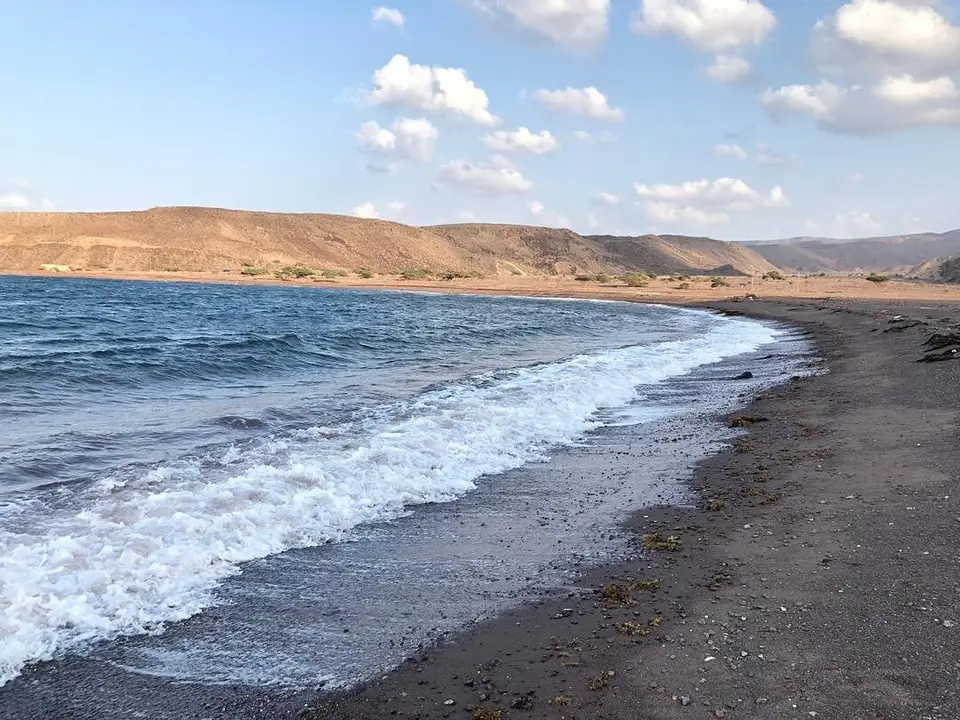
Arta Plage and Ras Korali form the region’s maritime outlet. Ras Korali is the departure point for whale shark trips, and also offers swimming, snorkelling and diving, with corals and colourful fish.
Visit the DECAN refuge
See below: it is one of the most striking visits in the region.
Whale sharks off Arta
The Arta marine protected area covers 40.1 km² and counts among the best places in the world to observe the whale shark (Rhincodon typus), the largest fish in the world. The animal is peaceful and harmless: it feeds essentially on plankton and small fish.
| Period | Announced presence | Conditions | Remark |
|---|---|---|---|
| October – November | Start of season | Sea generally calm | Good window |
| December – February | Full season | Calm sea | Ideal window |
| March | End of season depending on offers | Variable | Last chances |
| April – September | Out of season | Very hot | Not recommended |
Two clarifications. First, the presence of the animals is never guaranteed: no trip can promise an encounter. Second, the season is announced from October to February for the marine protected area, while some offers sold off Ras Korali mention a presence until late March.
The marine protected area also plays a conservation role for sea turtles, seagrass beds, mangrove and natural coral reefs.
The DECAN refuge and the Douda reserve
Created in 2003 by Dr Bertrand Lafrance, the DECAN animal refuge lies in the Douda nature reserve. Its purpose: to take in animals in distress, victims of traffickers or held illegally. It is not a zoo: the refuge takes part in neither the purchase nor the sale of animals.
The refuge presents about forty wild species, among them animals reintroduced or threatened with disappearance in the region: cheetahs, lions, caracals, zebras, oryx, Somali wild asses, ostriches, gazelles, baboons, several dozen Djiboutian tortoises, green monkeys and nearly 200 bird species.
The reserve presents three radically different ecosystems: acacia forest, prosopis forest and mangrove. A rotunda with a hanging terrace and a refreshment kiosk have been laid out for visitors.
The refuge runs partly on paid admissions and donations: your visit contributes to preserving the region’s wildlife. DECAN also manages two ecotourism camps, at Djalelo and Assamo.
The Djalélo protected area
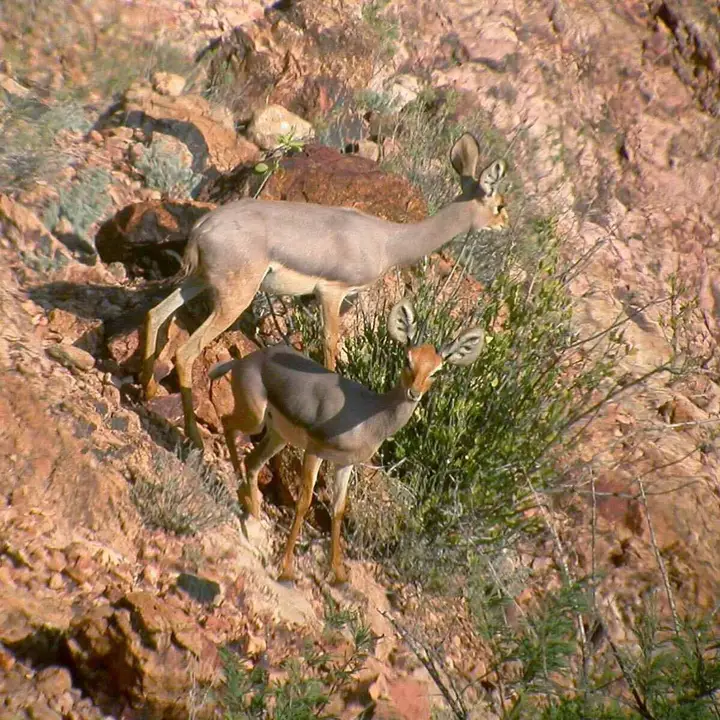
40 kilometres from the capital, the Djalélo terrestrial natural area covers about 45 km². It is famous for sheltering Waller’s gazelle (Litocranius walleri), also called gerenuk or “giraffe gazelle”: an antelope with long slender legs and a slender neck, 1.40 to 1.60 m long and 28 to 52 kg. Only the male carries horns of 24 to 44 cm, strongly ringed and curved in an S. The species does not graze on grass: it eats acacia leaves, shoots and fruit, which leads it to stand on its hind legs to reach the canopy.
The site is also an essential biotope for the Beira antelope, Soemmerring’s gazelle, Pelzeln’s gazelle and Salt’s dik-dik. Djibouti declared it a “protected natural terrestrial area” in 2011. The country is also working to have its heritage recognised: Unesco is assisting it in preparing its first application for world heritage status, and several natural or archaeological sites appear on the national tentative list. We publish no Unesco status specific to Assamo, for lack of a consultable source on that precise point.
The Djalelo ecotourism camp, built by DECAN volunteers and opened in January 2014, hosts up to 30 people with 8 rooms, 3 barbecue hearths and 3 showers; the funds raised are reinvested in protecting the sites. The protected area reaches about 4,000 hectares, including the Erolé spur, which peaks at nearly 900 metres.
Comparing the sites of the region
| Site | Distance | Main interest | Status |
|---|---|---|---|
| Arta (town) | 42 km, 750 m altitude | Cool, panorama, hiking | Interior town |
| Arta Plage and Ras Korali | Coast, below | Whale sharks, snorkelling, diving | Marine protected area, 40.1 km² |
| Djalélo | 40 km from the capital | Waller’s gazelle, gerenuk | Protected area since 2011 |
| Douda reserve | Nearby coastal zone | DECAN refuge, three ecosystems | Nature reserve |
How much does a day in Arta cost?
| Service | Indicative price | Detail |
|---|---|---|
| Night in a bungalow at Sinny Hill Center | 7,800 Fdj | 4 beds, economy basis |
| Room or bungalow at Sinny Hill Center | 9,750 Fdj | 2 beds |
| Studio at Sinny Hill Center | 11,700 Fdj | 4 beds |
| Walk Arta Ville – Arta Plage | 8,500 Fdj | Supervised trip |
| Day at Ras Korali beach from Arta | 8,000 Fdj | Adult rate |
| Full day at Ras Korali from Djibouti | 13,000 Fdj | Adult rate |
| Night at Ras Korali beach | 17,000 Fdj | Adult rate |
| Whale shark trip off Arta Plage | 25,000 Fdj | Supervised trip |
| Whale Shark package | 80,000 Fdj | Group of 1 to 10 people |
Arta is one of the least expensive destinations in the country for accommodation: hostel-type formulas there are far cheaper than the capital’s hotels. The budget therefore concentrates on the boat trip.
When to go to Arta?
| Period | Feel | Wildlife interest | Visitor numbers | Recommendation |
|---|---|---|---|---|
| October – November | Temperate | Whale sharks | Moderate | Excellent window |
| December – February | The coolest | Full season | High | Ideal window |
| March – April | Temperate | Possible end of season | Moderate | Good window |
| May – September | Hot even at altitude | Low | Low | To be avoided |
Altitude softens things without transforming them: in summer, Arta remains hot. The cool season combines two advantages, comfort and whale sharks.
Where to stay in Arta?
| Type | Indicative price | Who for |
|---|---|---|
| Bungalow, 4 beds | 7,800 Fdj | Groups, families, tight budget |
| Room or bungalow, 2 beds | 9,750 Fdj | Couples |
| Studio, 4 beds | 11,700 Fdj | Groups of friends |
| Dormitory at the Maison des Randonneurs | on site | Hikers, bivouac |
The offer is deliberately simple: you come to Arta to sleep in the cool, walk and leave early. For a comfortable seaside stay, aim instead at Les Sables Blancs or the capital.
What should you know before setting off?
- Do not count on a guaranteed whale shark sighting. The trip is a chance, not a service with a result.
- Bring protection against sun and wind, even at 750 metres: reflection off the sea remains strong below.
- Bring walking shoes if you make the Arta Ville – Arta Plage link on foot.
- The organised hiking season runs from November to March-April: outside that window, ask before counting on accompaniment.
- Check your entry formalities on the official visa portal if you continue your journey overland.
How do you watch whale sharks responsibly?
The whale shark is a vulnerable species, and the Arta marine protected area exists precisely because visitor numbers can become a problem. A few rules apply, and they are generally repeated by operators before you get in the water:
- Never touch the animal and do not swim above it.
- Keep a lateral distance and do not cut its path: let it come, do not chase it.
- Limit the number of simultaneous swimmers and follow the guide’s instructions.
- No sun cream before entering the water on exposed areas: it disperses into the environment.
- Do not feed the animals and use neither flash nor drone without permission.
The same logic applies on land: the DECAN refuge and the Djalélo area are conservation spaces, not amusement parks. You move there with a guide, you stay on the paths and you carry your waste back — the modest price of tourism that leaves these sites in good condition.
Preparing your trip
Arta combines well with the coast: a night on site, a boat trip in the morning, a stop at the DECAN refuge or Djalélo on the way back. If you are aiming for whale sharks, place your stay between October and February and keep a day in hand in case of postponement.
Frequently asked questions
Why is Arta cooler than Djibouti City?
Because it lies at 750 metres of altitude, 42 kilometres from the capital. As you climb, the temperature drops appreciably, and the town also benefits from the proximity of the relief and the Gulf of Tadjourah. That is what explains why Arta has become a traditional escape for the capital's residents, especially at weekends and during the hottest periods.
When can you see whale sharks off Arta?
The announced season runs from October to February in the Arta marine protected area, with some local offers mentioning a presence until late March off Ras Korali. Whale sharks feed on plankton and small fish and present no danger to swimmers. Their presence is never guaranteed: plan a supervised trip and accept that the sighting remains a matter of chance.
What is the DECAN animal refuge?
A refuge in the Douda nature reserve, created in 2003 by Dr Bertrand Lafrance. It takes in animals in distress, victims of traffickers or held illegally, and takes part in neither the purchase nor the sale of animals. About forty species can be seen there, including cheetahs, caracals, zebras, oryx, ostriches and nearly 200 bird species. Entrance fees fund the protection of the sites the association manages.
What can you do in Arta in one day?
Go up to Arta for the cool and the view over the mountains and the Gulf of Tadjourah, then come down towards the coast: the walking route between Arta Ville and Arta Plage links the two in a few hours. You can also reach Ras Korali beach for a boat trip, or visit the DECAN refuge and the Djalélo protected area.
Sources
Location
Lat. 11.53437Lng. 42.86124
Destinations
Read next
Abourma: the rock engravings of the Makarrassou massif
Ali-Sabieh: the south-east region, sites and camps
Allols depression: salt, hot springs and caravans
Ardoukoba: the most recent volcano in Djibouti
Assamo: the protected area of the beira antelope
Balho: rock art and the northern border post
Bankoualé: the oasis at the foot of the Goda massif
Daasbiyo cave: rock paintings and burial mounds