Desert and lakes: salt, rift and Lake Abbe in four days
This 4-day and 3-night itinerary treats the Djiboutian desert in two blocks: the salt and the lava first, around Lake Assal, the rift and the Allols depression, then the western border, with Lake Abbe and its bivouac. The first block runs on road and a short track; the second requires a 4×4 and a night on site.
Why cut the Djiboutian desert into two blocks?
Because the salt sites and the border sites do not behave in the same way. Some are reached on road, others on track. Some are visited between the morning departure and the evening return, others require a night. Mixing them into a single loop produces exactly what must be avoided: two days of vehicle and no site really seen.
This programme therefore separates them clearly:
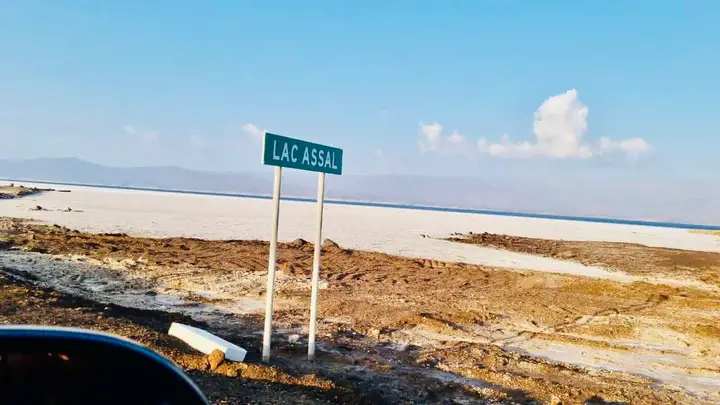
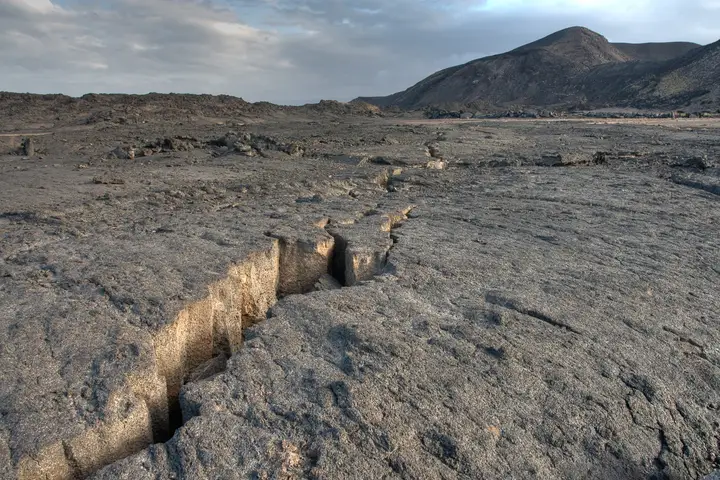
The salt and lava block, in the Tadjourah region, around Lake Assal: the lowest point of the African continent at 155 metres below sea level, about 120 kilometres from Djibouti City and an hour and a half of tarmac road. It includes the rift and lava fields, where the Great Rift can be followed on foot, and the Allols depression, north of the lake.
The western border block, around Lake Abbe, in the Dikhil region: an endorheic salt lake straddling Ethiopia, whose limestone chimneys reach 30 to 50 metres. Access is by track, in a 4×4, and the night on site is not added comfort: it is what makes the visit possible.
The split has a simple logistical virtue: the first block is played out from Djibouti City without changing accommodation, the second is played out in bivouac. No night is lost driving between the two.
What is the programme, day by day?
| Day | Stages | What is published on access | Meals | Overnight |
|---|---|---|---|---|
| Day 1 — the rift and the salt | Djibouti City → Arta → rift and lava fields → Lake Assal → Goubet al-Kharab viewpoint → Djibouti City | ≈ 120 km to Lake Assal, that is an hour and a half of tarmac road then a last stretch on track | Picnic taken along: no supplies on the site | Djibouti City |
| Day 2 — the Allols | Djibouti City → Allols depression, north of Lake Assal → hot springs and marshes → return | Site difficult to access: organised excursion with a suitable vehicle | Picnic taken along | Djibouti City |
| Day 3 — towards the border | Djibouti City → southern axis → Dikhil → Handoga site, about fifteen kilometres west of Dikhil → track to Lake Abbe → bivouac | Track, 4×4 essential, no organised supply point | Meals taken along, dinner at the bivouac | Bivouac at Lake Abbe |
| Day 4 — Lake Abbe | Limestone chimneys at dawn → walk on the former lake bed → return towards Djibouti City | Track, 4×4 essential | Breakfast at the bivouac, picnic | — |
Two reservations, to be read before fixing dates.
We publish no journey time for Lake Abbe. Its destination page gives none, and we will not invent one: the only defensible duration is that of the formulas actually sold, which stretch over two or three days. Day 3 is therefore a full day of track, whose detail you will only know from your operator.
The Handoga site is borderland in the broad sense. It lies in the Gobaad basin, on the same axis as Lake Abbe, and combines with it. It falls, however, under the same accompaniment rule as the lake: you move around there with a guide who knows the area.
What can you see at each of those sites?
| Site | What is documented | Access | Main constraint |
|---|---|---|---|
| Lake Assal | A swim where you float without effort in water at 348 g of salt per litre, salt crust with polygonal patterns, hot springs and gypsum deposits at the edge | Tarmac road, last stretch on track | Heat in the basin, no shade, salt aggressive to skin and eyes |
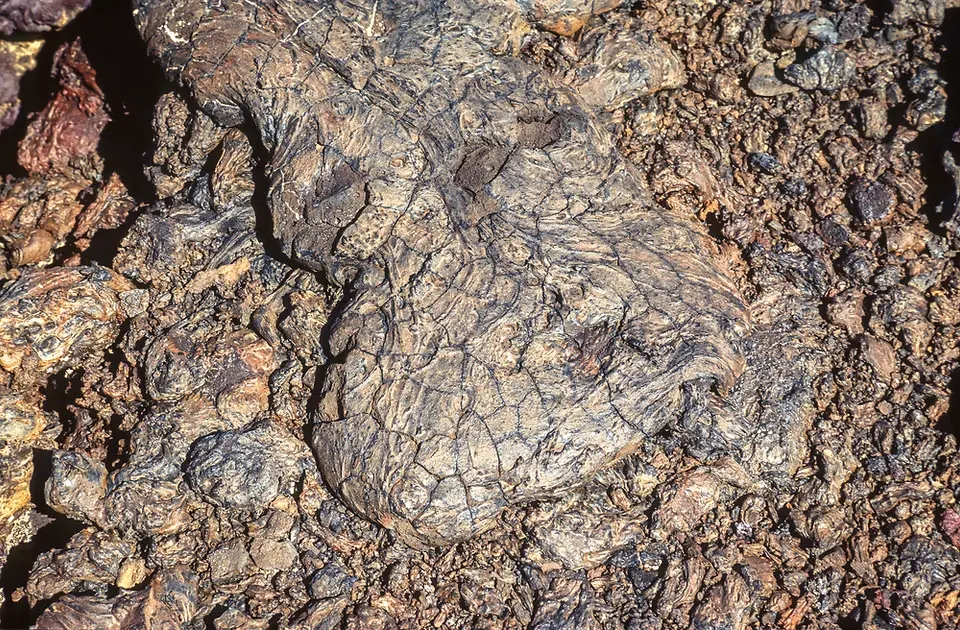
| Rift and lava fields | A tear more than 5 km long, vertical throw up to 5 m, a 20 km² lava field between the Hâhayta Kôma dome and Lake Assal, 1978 flows | 4×4, local guide recommended | Trackless terrain, sharp blocks, tunnels and chasms not to be explored |
| Allols depression | Vast salt expanses, black rocks, hot water springs, small marshes, patches of greenery where the doum palm grows | Difficult: organised excursion, suitable vehicle | A site without landmarks; you do not swim there without checking on site |
| Handoga, Gobaad basin | A pre-Islamic village overlooking the Chekheitti wadi: ceramics, glass-paste beads, and a Chinese coin, the first unearthed in an archaeological context in the Horn of Africa | On the Dikhil axis | Archaeological site: nothing to take, nothing to move |
| Lake Abbe | Crystallised limestone chimneys 30 to 50 metres high, born of former springs now exposed; a shallow lake receding since the 1950s | Track, 4×4 with driver | Isolation, no continuous telephone coverage, no supplies |
A word on what that table does not say. None of those four stages has a documented visitor facility: no ticketing, no water point, no shade. They are natural or archaeological sites, not urban parks.
How much does this itinerary cost, item by item?
Each amount is the displayed price of the offer cited, reproduced as it stands. No total is presented as a package: we sell none.
| Item | Published amount | Offer |
|---|---|---|
| One-day excursion to Lake Assal | 18,000 Fdj per person | excursion-lac-assal-journee |
| Lake Assal package, decreasing with group size | 44,485 to 17,794 Fdj per person | lake-assal-package |
| Hire of a 4×4 with driver | ≈ 44,000 Fdj per vehicle per day | Rate published on the Lake Assal page |
| Two-day tour: Lake Abbe and Lake Assal | 55,000 Fdj | circuit-2jours-lac-abbe-lac-assal |
| Lake Abbeh package, per person according to group size | 133,500 from 53,000 Fdj | lake-abbeh-package |
| Three-day tour: Lake Abbe, Tadjourah and Lake Assal | 44,500 Fdj | massigo-three-day-lake-abbe-tour |
| Epic 3-day tour: Lake Abbe, Lake Assal, Tadjourah and Sables Blancs | 85,000 Fdj | circuit-epique-3jours-complet |
| Complete 4-day tour: the best of Djibouti | 120,000 Fdj | circuit-complet-4jours-meilleur-djibouti |
We do not add those lines up to announce a four-day budget. The reason is concrete: the offers do not detail the same things. Some include the vehicle and the guide, others do not; none publishes the number of meals or the number of nights in the same way. A total would be a precise figure built on different bases — therefore a false figure. The only addition we own is that of the vehicle: at about 44,000 francs a day, a 4×4 pays for itself from four people.
Two methodological markers, because they change how the prices read. The main item of a tour towards Lake Abbe is the vehicle and its driver, not the number of passengers: the price per head therefore dilutes with the size of the group, and a lone traveller pays the same 4×4 as a group of five. Conversely, Lake Assal is reached on tarmac road, and only the last stretch is on track: that is what explains why it fits into a day.
Why does the catalogue show price gaps we cannot explain?
Because those gaps exist, and it is better to publish them than to retain only one. Two seem impossible to justify.
| Offer | Announced duration | Displayed price | Announced programme |
|---|---|---|---|
massigo-three-day-lake-abbe-tour |
3 days | 44,500 Fdj | Lake Abbe, Tadjourah and Lake Assal |
circuit-2jours-lac-abbe-lac-assal |
2 days | 55,000 Fdj | Lake Abbe and Lake Assal |
massigo-two-day-djibouti-city-and-lake-assal-tour |
2 days | 15,130 Fdj | Djibouti City and Lake Assal |
circuit-2jours-ville-lac-assal |
2 days | 35,000 Fdj | Ville de Djibouti and Lake Assal |
Three days cheaper than two. The three-day tour is displayed at 44,500 francs, the two-day tour at 55,000 francs. Either the basis of calculation differs — for example a price per person against a price per vehicle — or one price is wrong. We do not decide in the seller’s place.
Same announced content, double the price. Two two-day city and Lake Assal formulas show 15,130 and 35,000 francs for an identical announced programme. Here again, the difference is documented nowhere.
A third observation, of the same order: the catalogue publishes two “desert tours”, of two and three days, at the same displayed price of 24,030 francs. We flag it without explaining it further.
What we do recommend, on the other hand, is simple: ask for a written quotation before paying a deposit, and have it show the number of nights, the number of meals, the vehicle, the guide, the site entries and what happens in case of cancellation. It is more useful to the reader than retaining the lowest price. The same trade-off is detailed in our comparison Lake Assal or Lake Abbe.
What access and seasonal constraints have to be built in?
From October to April, and more precisely from November to February for the Lake Abbe part. The Gobaad depression counts among the hottest areas in the country: in summer, the heat makes the track punishing and the bivouac uncomfortable. From March to April, the transition remains acceptable, before temperatures climb.
Four material constraints follow from those sites, and none is negotiable.
- Water first. There is no supply point at Lake Assal, no organised supplies at Lake Abbe, and nothing at all at the Allols. Take far more than your estimated consumption.
- The vehicle next. Lake Assal is passable in a saloon in dry weather, a 4×4 remains preferable for the descent to the salt pans. Lake Abbe and the Allols are not attempted other than in a 4×4 with a driver who knows the tracks.
- Cash. No card payment is conceivable on those sites, and the telephone network there is not continuous.
- The safety margin. On track, a breakdown or a bogging down translates immediately into lost hours. Do not schedule a flight for the evening of your return from Lake Abbe.
A word on the natural heritage: Lake Abbe is a protected terrestrial area, hunting there is strictly forbidden and traditional livestock farming remains authorised and regulated. In practice, that means you move around with a guide, you take neither salt, nor crystals, nor a fragment of a chimney, and you take all your waste back. The rift sector is being studied: do not move the blocks and do not take samples. For the vehicle logistics, see our page on 4×4 hire with a driver.
What does not fit into four days?
Three things, and it is better to name them than to make them disappear from an overloaded programme.
Lake Assal in its long version. Our Lake Assal page also describes the Ardoukoba volcano, born in a week in November 1978, and the Goubet al-Kharab viewpoint, an inlet hemmed in between cliffs and overlooked by the Devil’s Islands. Day 1 barely skims them: those two sites deserve half a day of their own, or a second day on site.
The north of the country. Tadjourah, the Forêt du Day and the Goda mountains belong to another journey. The three-day Lake Abbe tour passes through Tadjourah, but in transit. If you want the white town and the forest massif, you need a fifth day, or you give up the Lake Abbe bivouac.
A third night at Lake Abbe. It is the most interesting variable, and it is documented: the formulas published for Lake Abbe stretch over two or three days. Two nights on site allow you to add the dawn of the second morning and a longer walk on the former lake bed, without leaving on the day of arrival itself.
One last rule, valid for this whole programme: two major sites properly seen are worth more than four glimpsed from a 4×4. Four days are enough to cover the salt, the rift and the border — provided you accept not seeing everything.
Frequently asked questions
Can you see Lake Assal and Lake Abbe in four days?
Yes, provided you treat the two sites as two separate blocks rather than as a loop. Lake Assal is visited in a day from Djibouti City, on tarmac road, with a last stretch on track. Lake Abbe is reached by track, in a 4×4, and the published formulas stretch over two or three days with a night on site. Four days cover both, without chaining them.
Why does Lake Abbe require a night on site?
Because a day is not enough under reasonable conditions: the track is long, partly sandy, and crosses an arid environment with no supplies. The formulas sold stretch over two or three days. It is also what allows you to arrive for the evening and morning light, when the limestone chimneys stand out best.
How much does this itinerary cost, item by item?
The one-day excursion to Lake Assal is published at 18,000 Djiboutian francs per person. The two-day tour combining Lake Abbe and Lake Assal is announced at 55,000 francs, and the three-day tour that adds Tadjourah at 44,500 francs. A 4×4 with a driver comes to about 44,000 francs per vehicle per day.
Why do two catalogue formulas show contradictory prices?
We cannot explain it, and we would rather say so. A three-day tour to Lake Abbe is displayed at 44,500 francs, cheaper than the two-day tour at 55,000 francs. And two two-day city and Lake Assal formulas show 15,130 and 35,000 francs for the same announced programme. Ask for a written quotation specifying the content.
What is the best period for this tour?
From November to February, and more broadly from October to April. In the cool season, the bivouac nights remain bearable, the track is firmer and walking on the sites is done without stopping every hour. From May to September, the Gobaad depression counts among the hottest areas in the country: the bivouac becomes punishing and the track harder.
Sources
Itineraries
Read next
Budget in Djibouti: backpacker, mid-range, luxury
Culture and heritage: rock art and old cities in four days
Diving in Djibouti: the three-day itinerary
Djibouti and Ethiopia: combining the two countries
Djibouti in 1 day: the rift or the beach?
Djibouti in 10 days: the assembly of three itineraries
Djibouti in 2 days: the rift, the salt and the sea
Djibouti in 2 weeks: what the second week adds