Djibouti in 10 days: the assembly of three itineraries
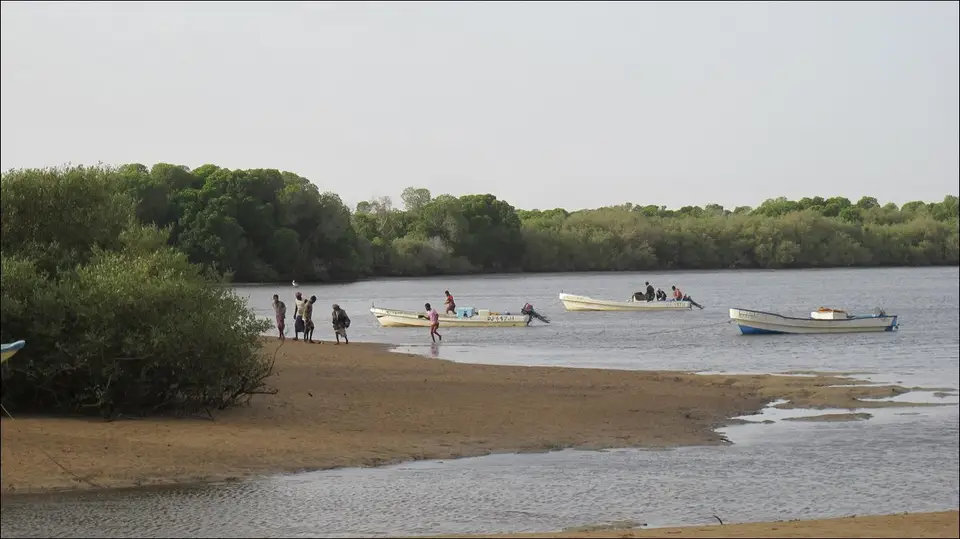
Ten days in Djibouti is not a programme we invent: it is an assembly. We combine three already documented itineraries — the Djibouti in 2 days base, a three-day tour published in the catalogue, then the northern extension towards Obock — and we declare the two days that nothing fills as free. No query beyond 7 days is documented in our research corpus.
Method box — to be read before the rest. Our research corpus contains no query beyond 7 days for Djibouti. This page therefore does not answer a measured demand: it organises a long stay. It offers no day-by-day programme, because we have no documented material to fill ten distinct days. It says which already published itineraries combine, in what order, and what each brings. The days that nothing fills are declared free.
Ten days in Djibouti: why an assembly rather than a programme?
Three reasons, and the third is the most important.
The catalogue does not sell a ten-day stay. The published multi-day offers stop at four days. Beyond that, there is no longer a product to hold on to: only days to organise yourself.
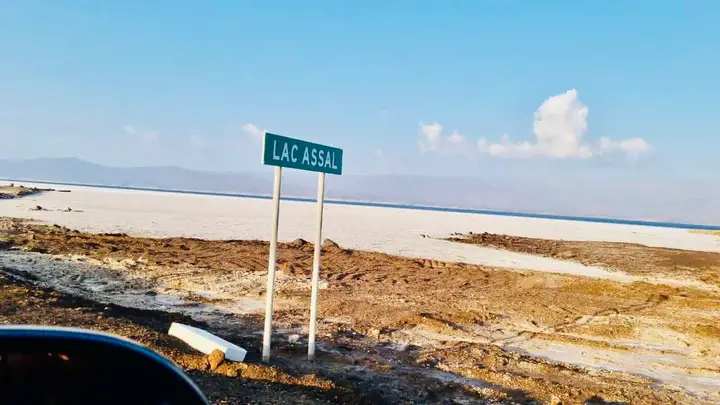
The documented sites are not numerous enough for ten full days. The country has major sites — Lake Assal, Lake Abbe, Tadjourah, Obock, the Forêt du Day, the islands of the gulf — but our sources describe no more. Beyond seven days, adding a site would amount to inventing a place.
We have no demand to serve. We know of no search concerning ten days in Djibouti. Writing an hour-by-hour schedule would therefore be easy, and false.
What this page does instead: it assembles. Three documented itineraries are placed end to end, each is named, and the order is justified by the logic of the journeys — not by the desire to fill a calendar.
Which itineraries are combined, and in what order?
| Block | Days | Combined itinerary | What it brings |
|---|---|---|---|
| Coastal base | 1 to 2 | Djibouti in 2 days | The rift and the salt, then the sea: Arta, Lake Assal, the Goubbet al-Kharab viewpoint, and a boat outing in the gulf |
| Desert and north coast | 3 to 5 | A three-day tour published in the catalogue: “Lake Abbe, Lake Assal, Tadjourah and Sable Blanc” | The only block giving access to Lake Abbe with a night on site, then the north coast |
| Deep north coast | 6 to 7 | Extension towards Obock, by ferry or by road | Obock, the Godoria mangrove, and for divers the Seven Brothers marine protected area |
| Mountains | 8 | Day 7 of Djibouti in 7 days, taken alone | The Forêt du Day and the Dittilou cirque, at 1,799 metres at Bara’barré |
| Free days | 9 to 10 | No documented service | Nothing. We do not fill them: see the next section |
Why this order, and not another. The first three blocks head in three different directions — west and south-west, south, then north — and do not cross. That is the only way to avoid passing twice over the same road. The reverse order works too, on one condition: that the gulf crossing stays at the end of the stay, because the ferry is the only link whose availability does not depend on you.
What each block brings, in one sentence. The base gives the country’s two fundamental contrasts, the rift and the sea. The three-day tour is the only one opening the southern desert, which cannot be visited in a day. The northern extension adds an entire region — Obock and its marine reserve — that seven days cannot absorb. The mountain day is a breath at 1,799 metres, in the country’s only forest massif.
What has to be removed, since the itineraries overlap?
This is the point a naive assembly misses. Every published multi-day tour passes through Lake Assal. The two-day base contains it, the three-day tour contains it too, and the complete four-day tour as well. Adding the blocks up therefore amounts to paying three times for the same journey.
The rule to apply is simple:
- Choose one backbone, a single multi-day tour. It is the one carrying Lake Assal, the desert and the north coast.
- Add only what the backbone does not contain: a boat outing to the islands, a whale shark encounter, a day in the Forêt du Day, two days at Obock.
- Never pay twice for a site. If your backbone already includes Tadjourah and Les Sables Blancs, the north coast day is done.
Applied to this assembly, the rule gives a counter-intuitive and useful result: the two-day base only serves if you want a sea outing early in the stay. If diving and snorkelling do not interest you, delete block 1 and move those two days to free days. Ten days oblige you to nothing.
What should you do with the days that nothing fills?
Two days of this assembly — days 9 and 10 — are covered by no documented service. We do not fill them with activities our sources do not describe. They are free, and here are the three uses the documentation justifies.
Rest. Ten days with transfers, bivouac and crossings does not hold up at the pace of a four-day stay. A day without a programme is what makes the other nine bearable.
Resuming a site whose season has shifted. It is the most concrete use. A sea outing cancelled because of swell, a mountain track cut after rain: those hazards are made up if the calendar has a margin, and are not made up otherwise. The regulatory whale shark window runs from 15 October to 15 March, and an outing books early because capacity is capped by decree: a reserve day therefore has real value.
Revisiting at a better hour. The same site changes in nature according to the hour. Lake Assal visited at sunrise has nothing to do with Lake Assal at midday, when the basin becomes an oven. A free day allows a major site to be redone in the right light, which a tight programme never allows.
How much does a ten-day assembly cost?
No ten-day package exists. The table below gathers the services the assembly uses, each at its published price. It is not a total budget: it is a list of items, from which you have to choose some or others.
| Block of the assembly | Published service | Price |
|---|---|---|
| Base, organised formula | Two-day tour: city of Djibouti and Lake Assal | 35,000 Fdj per person (economical version: 15,130 Fdj) |
| Base, with the sea | Two-day tour: Lake Assal and Moucha island with snorkelling | 40,000 Fdj per person |
| Desert and north coast, three days | 3-day tour: Lake Abbe, Lake Assal, Tadjourah and Sable Blanc | 85,000 Fdj per person |
| Same block, other operator | 3-day tour: Lake Abbe, Tadjourah and Lake Assal | 44,500 Fdj per person |
| Bivouac at Lake Abbe, à la carte | Lake Abbeh package, with a night on site | 53,000 to 133,500 Fdj per person according to group size |
| North coast, crossing | Ferry Djibouti City ↔ Obock | 800 Fdj per adult, one way |
| North coast, night | Nights in camps published in the catalogue | 7,800 to 17,000 Fdj per person according to the formula |
| Mountains | Forêt du Day package, with transport | 35,600 to 87,220 Fdj per person according to group size |
| Sea outing, variant | Whale shark encounter departing from Arta Plage | 25,000 Fdj per person |
| Day of vehicle on track | 4×4 with driver | about 44,000 Fdj per vehicle per day |
| Base of the stay | Room in a Djibouti City hotel | 7,800 to 91,492 Fdj per night |
Three warnings.
Obock’s nights are not costed in our sources. The table therefore gives the general range of camps published in the catalogue, not the price of a specific establishment in Obock. Ask for the rate when booking.
The 4×4 rate is not a catalogue price. The offer type “vehicle hire” does not exist in the partner platform’s catalogue, and the national tourism agency publishes no hire grid. The 44,000 francs come from a commercial display: demand a written quotation.
Two price gaps we do not smooth over
The catalogue contains two anomalies we cannot explain, and which we publish as they stand.
- Three days cheaper than two. The tour “Lake Abbe, Tadjourah and Lake Assal in 3 days” is 44,500 Djiboutian francs, when the 2-day tour “Lake Abbe and Lake Assal” is 55,000 francs — for a shorter programme.
- Same announced content, double the price. The tour “Djibouti city and Lake Assal in 2 days” is 15,130 Djiboutian francs, when the tour “Ville de Djibouti et lac Assal” in 2 days shows 35,000 francs.
Those gaps directly change the choice of a backbone: at 44,500 francs for three days against 55,000 for two, the catalogue’s logic is inverted. Ask each operator for a written quotation, having what is included specified — transport, guide, meals, night, site permits — and compare like with like.
What does a longer stay really bring?
Honesty is required: beyond seven days, you do not buy more major sites. Our sources describe no others.
What ten days really buy comes down to four points.
One additional regional block, and only one. Obock and its marine protected area require two to three days on site. It is the only documented set that does not fit into a week.
A margin for recovery. A seven-day stay that loses a sea outing to swell does not get it back. A ten-day stay does.
A sustainable pace. Three days in a 4×4, a bivouac and a sea crossing chain badly when they are stuck together. Spacing them out changes the nature of the trip: you visit instead of chaining.
Nothing else. There is no hidden tenth wonder. A page promising ten days full of distinct sites would invent at least three of them.
What precautions should you take before booking?
- Choose a backbone first, then the additions. It is the reverse that produces duplicated journeys and doubled bills.
- Book the 4×4, the camps and the boat outings early. The fleet of vehicles with drivers is limited, the camps have small capacities, and the boats of the whale shark season are full several weeks ahead.
- Set the gulf crossing on the ferry schedule. It leaves only on certain days, stays about an hour at the quay, runs at reduced service from mid-July to the end of August and stops on public holidays.
- Obtain a written quotation for each block, with the list of what is included. The catalogue’s two price gaps show that an identical heading does not guarantee identical content.
- Plan for cash. Bank cards are little accepted outside Djibouti City.
- Do not fill the free days as a matter of principle. A long stay is also judged by what it leaves empty.
For the overall budget — accommodation, meals, excursions — budget and costs details the published items. For the longer duration, the assembly logic continues in Djibouti in 2 weeks.
Frequently asked questions
Can you visit Djibouti in ten days?
Yes, materially: the country can be crossed, and ten days leave time to add two blocks that seven days do not allow — the north coast as far as Obock, and two free days. We have no search query concerning ten days in Djibouti, however. This page therefore does not claim to answer a measured demand: it organises a long stay from published services.
How much does a ten-day stay in Djibouti cost?
No ten-day package exists in the catalogue. The blocks are costed separately: a two-day base runs from 15,130 to 40,000 Djiboutian francs per person according to the formula, a three-day tour from 44,500 to 85,000, a Forêt du Day package from 35,600 to 87,220, and a whale shark encounter costs 25,000. Nights run from 7,800 to 91,492 francs.
Why does this page give no day-by-day programme?
Because we have no documented material to fill ten distinct days. Our corpus stops at seven days, and our sources describe no additional activities that would justify a tenth site. Inventing an hour-by-hour schedule would produce a pleasant and false page. We prefer to say which itineraries combine, and to leave free the days that nothing fills.
What should you do with the days that nothing fills?
They are free, and that is an owned choice. Three documented uses occupy them usefully: rest, resuming a site whose season has shifted — a postponed whale shark outing, for example, since the regulatory window runs from 15 October to 15 March — and revisiting a site already seen at a better hour, such as Lake Assal at sunrise rather than in mid-morning.
Should you sleep at Obock during a ten-day stay?
It is the natural extension, and it fits into two days. Obock lies about 240 kilometres by road, or about two hours by ferry and one hour by fast boat. Our page on the spot advises devoting two to three days to it, which corresponds exactly to days 6 and 7 of this assembly. Without those two days, ten days bring nothing more than seven.
Sources
Itineraries
Read next
Budget in Djibouti: backpacker, mid-range, luxury
Culture and heritage: rock art and old cities in four days
Desert and lakes: salt, rift and Lake Abbe in four days
Diving in Djibouti: the three-day itinerary
Djibouti and Ethiopia: combining the two countries
Djibouti in 1 day: the rift or the beach?
Djibouti in 2 days: the rift, the salt and the sea
Djibouti in 2 weeks: what the second week adds