Djibouti in 3 days: eight tours compared
A 3-day stay in Djibouti is the duration that opens up Lake Abbe, because a night on site is required. The catalogue publishes eight three-day tours, from 24,030 Djiboutian francs for the desert tour to 85,000 for the epic tour that adds Tadjoura and Les Sables Blancs. This breakdown is our recommendation, not a package.
What does a third day in Djibouti change?
It changes one precise thing, and everything else follows from it: you can sleep outside Djibouti City. Two days require returning in the evening; three days allow a night on site, and that night is what opens up the distant sites.
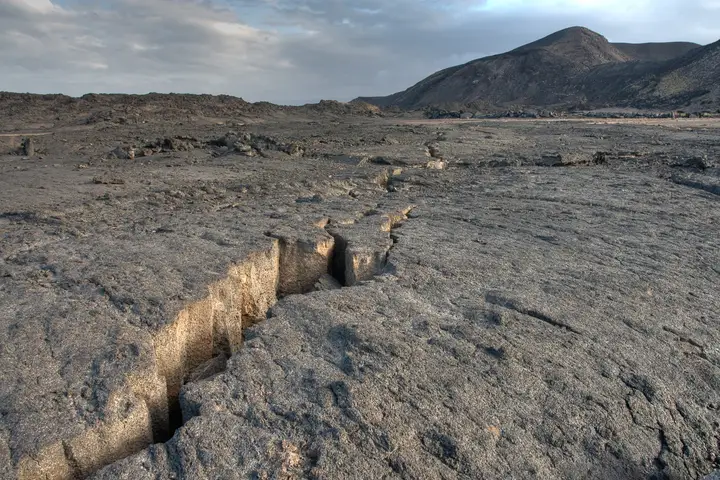
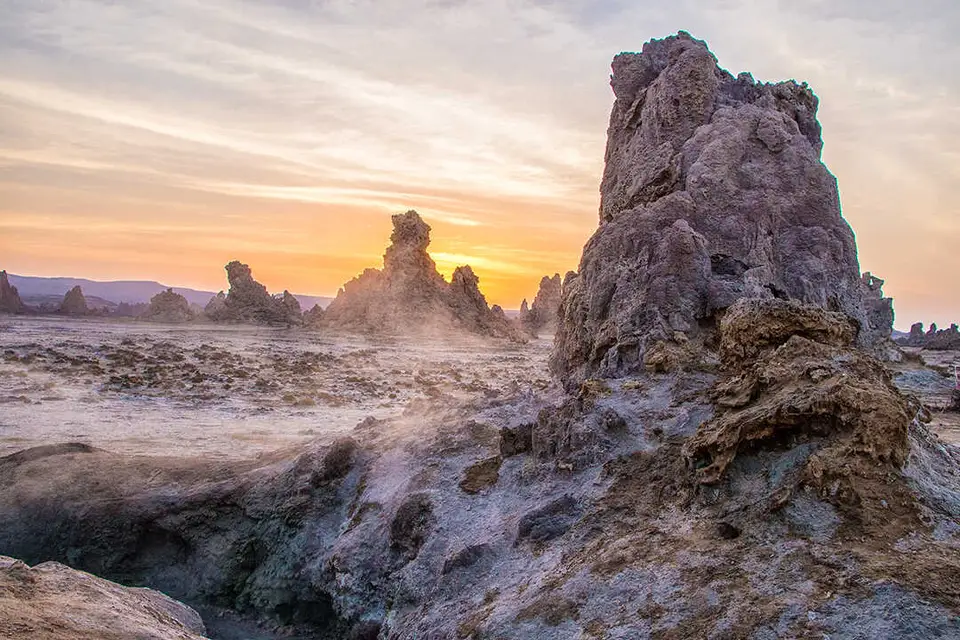
The clearest case is Lake Abbe. It cannot be visited in a day: the track is long, partly sandy, it crosses an arid environment with no supplies, and the published formulas stretch over two or three days with a night on site. Our page documents a recommended duration of two to three days. The night is not added comfort, it is the condition of access.
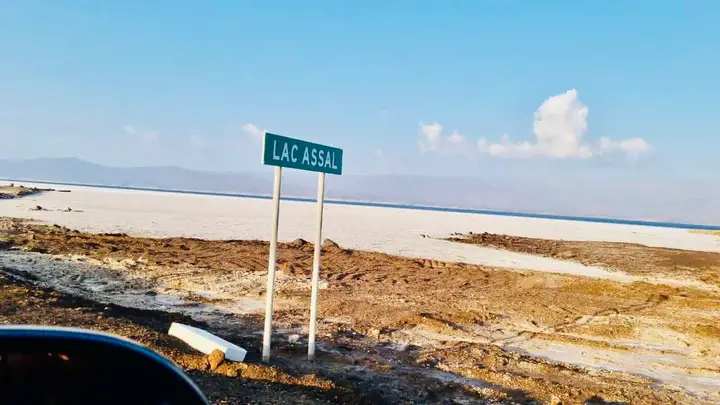
Three days therefore open up three sets: the desert with Lake Abbe, the islands of the gulf, and the north coast with Tadjoura and Les Sables Blancs. Lake Assal remains the common base: it appears in almost all published three-day tours.
Which programme structures fit into three days?
The table below proposes three breakdowns. They are our organisational recommendations, built on the documented constraints of the sites — not the official programme of the offers, of which only the heading is published.
| Structure | Day 1 | Day 2 | Day 3 | What the night on site allows |
|---|---|---|---|---|
| Desert | Lake Assal road, salt pans and hot springs | Track to Lake Abbe, bivouac among the chimneys | Sunrise over Lake Abbe, return along the coast | See the limestone chimneys in the low light of morning and evening |
| North coast | Lake Assal, then road or boat to Tadjoura | Tadjoura, then Les Sables Blancs five kilometres away | Return towards Djibouti City | Sleep on the north coast without going back through the capital |
| Islands | Lake Assal | Boat to the islands of the gulf, snorkelling or diving | Djibouti City, place du 27-Juin | Chain two sea outings without road transport |
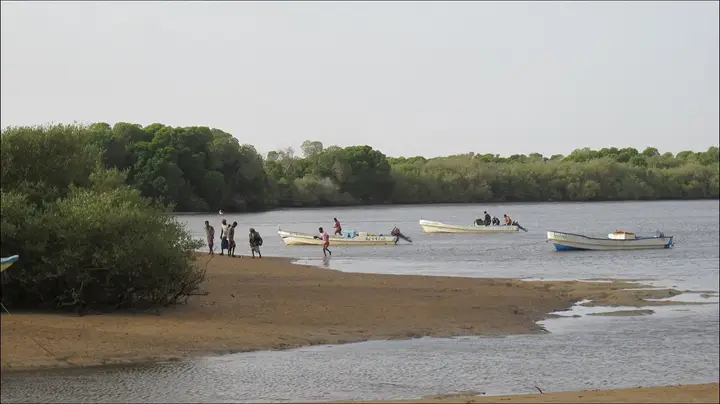
Three documented markers weigh on those breakdowns. Tadjoura is reached in about 45 minutes by fast boat, an hour and a half by ferry, or 180 kilometres of road. The Moucha and Maskali islands are taken by boat from Djibouti City. And the Goda massif, which carries the Forêt du Day, rises to 1,799 metres at Bara’barré: it is the country’s main forest massif, and the coolness there genuinely changes a day.
Which three-day tours does the catalogue publish?
Eight offers, with their prices published per person. The headings are the catalogue’s own: it is the only programme description that exists.
| Published tour | What the heading announces | Price (Fdj) |
|---|---|---|
| Djibouti desert tour 3 days | Lake Abbe and Lake Assal | 24,030 |
| Djibouti islands tour 3 days | Islands of the gulf and Lake Assal | 34,710 |
| Moucha island, Lake Abbe and Lake Assal in 3 days | Moucha, Lake Abbe, Lake Assal | 34,710 |
| Djibouti City, whale sharks and Lake Assal in 3 days | City, whale sharks, Lake Assal | 34,710 |
| Lake Abbe, Tadjoura and Lake Assal in 3 days | Lake Abbe, Tadjoura, Lake Assal | 44,500 |
| Djibouti safari 3 days | Whale sharks and Lake Abbe | 44,500 |
| Goda mountains and Lake Abbe in 3 days | Goda massif, Lake Abbe | 44,500 |
| Epic tour 3 days | Lake Abbe, Lake Assal, Tadjoura and Sables Blancs | 85,000 |
The distribution of prices is instructive. Three tours at 34,710 francs and three at 44,500: in both cases, different programmes are sold at the same rate, which suggests a tiered grid rather than pricing by content. The desert tour at 24,030 francs is the only one below the 30,000 mark, and the epic tour at 85,000 francs stands alone at the top of the grid — it is the only one to announce Tadjoura and Les Sables Blancs in the same formula.
How much does a three-day tour cost, and what does it exclude?
| Item | What the catalogue documents | What remains at your expense |
|---|---|---|
| Transport | Vehicle and driver for the duration of the tour, according to the heading | Airport transfers, taxis in town |
| Guiding | Guide and organisation according to the operator | Tips |
| Accommodation | Night(s) on site according to the formula: camp, bivouac or hotel | Upgrade, extra night in town |
| Meals | Full board or half board according to the operator: not detailed by the catalogue | Drinks, alcohol, snacks, meals outside the formula |
| Activities | Visits listed in the offer’s programme | Optional boat outing, scuba diving |
| Insurance | — | Travel and repatriation insurance |
| Visa | — | e-Visa, to be requested before departure |
Two lines of that table are to be checked in writing before paying, because they decide the real gap between two tours announced at the same price: the number of meals included and the number of nights actually included. The catalogue does not detail them, and we do not infer them from the heading.
To place nights outside a tour, two published markers: a night in a beach camp at Ras Korali is about 17,000 Djiboutian francs per adult, dinner and breakfast included, and a night on Khor-Ambado beach about 15,000 francs. Those are offers distinct from the tours, to be booked separately if you extend the stay.
Why does a three-day tour sometimes cost less than a two-day tour?
Because our catalogue contains two pricing anomalies we cannot explain, and which we publish rather than smooth over.
Three days cheaper than two. The three-day tour to Lake Abbe, Tadjoura and Lake Assal is published at 44,500 Djiboutian francs, when the two-day tour to Lake Abbe and Lake Assal is at 55,000 francs. The short programme costs 10,500 francs more than the long one.
The same programme at double the price. The two-day “Djibouti city and Lake Assal” tour is published at 15,130 francs, when the two-day “Ville de Djibouti et Lac Assal” shows 35,000 francs for the same announced programme. The gap reaches 19,870 francs for an identical heading.
We have no explanation for those two gaps: either the basis of calculation differs — group size, category of accommodation, meals — or one price is wrong. Those gaps have to be settled on the commercial side. Meanwhile, the course of action is the same in both cases: ask for a written quotation detailing the nights, the meals and the vehicle before comparing two tours on their displayed price. A 19,870 franc gap is not justified by a phrase in a heading.
What does a three-day tour not cover?
Obock and the Seven Brothers archipelago. None of the eight three-day tours mentions them. The north-east coast demands its own logistics, and divers aiming for the Seven Brothers must look at another duration — that part of the country belongs to long stays, not to a three-day tour.
The Abourma rock engravings and the Grand Bara. No three-day tour announces them either. Those southern sites assume a 4×4 with a driver and a separate organisation.
The Forêt du Day solo. The one-day offer exists, but its rate depends entirely on the size of the group: 87,220 Djiboutian francs for a single person, 35,600 per person for five or more. For three people, it costs more than the cheapest three-day tour in the catalogue.
Scuba diving. It is booked separately: the supervised outings to Moucha are published at 10,000 and 12,000 Djiboutian francs, and the whale shark outing off Arta Plage around 25,000 francs, within the window from 15 October to 15 March fixed by decree.
How do you choose between a tour at 24,030 and a tour at 85,000?
The gap is 60,970 Djiboutian francs for the same three-day duration, and it does not read in the headings. Here is what can honestly be said about it.
The tour at 24,030 francs is the desert tour: Lake Abbe and Lake Assal. It is the best ratio between what the country has that is unique and what it costs, provided you accept bivouac accommodation and a programme centred on two sites.
The tours at 34,710 francs add the sea: islands of the gulf, Moucha island or whale sharks. They suit anyone who wants to alternate land and boat.
The tours at 44,500 francs add either Tadjoura, or the Goda mountains, or a combination of whale sharks and Lake Abbe. It is the range where three distinct programmes end up at the same displayed price.
The epic tour at 85,000 francs is the only one to announce all four sets: Lake Abbe, Lake Assal, Tadjoura and Sables Blancs. It costs 3.5 times the desert tour. Nothing in the catalogue documents what justifies that multiplier — neither the category of accommodation, nor the number of meals, nor the type of vehicle.
The practical conclusion is the same for all four ranges: ask for the written list of what is included, then compare. Without it, a tour at 44,500 francs can cost more in total than a tour at 85,000.
Frequently asked questions
What can you see in Djibouti in three days?
A third day changes the nature of the stay, because it allows you to sleep outside Djibouti City. Three sets become accessible: Lake Abbe, which requires a night on site among its limestone chimneys, the archipelago and islands of the gulf, and the north coast with Tadjoura and Les Sables Blancs. Lake Assal remains the common base of almost all published tours.
How much does a three-day tour in Djibouti cost?
The catalogue publishes eight three-day tours, from 24,030 to 85,000 Djiboutian francs per person. The desert tour with Lake Abbe and Lake Assal is the cheapest at 24,030 francs. Three tours sit at 34,710 francs, three others at 44,500, and the epic tour that adds Tadjoura and Les Sables Blancs reaches 85,000 francs.
Why is a three-day tour cheaper than a two-day tour?
It is an anomaly in our catalogue, and we publish it as it stands rather than smoothing it over. The three-day tour to Lake Abbe, Tadjoura and Lake Assal is 44,500 Djiboutian francs, when the two-day Lake Abbe and Lake Assal tour is 55,000. Either the basis of calculation differs, or one price is wrong. Ask for a written quotation before booking.
Can you stay at Lake Abbe during a three-day tour?
Yes, and that is precisely the reason for this duration. Our Lake Abbe page documents a recommended duration of two to three days with a night on site: the track is long, partly sandy, and crosses an arid environment with no supplies. It is also what allows you to arrive for the evening and morning light, when the chimneys stand out best.
What is the best period for a three-day tour?
From November to February. The Gobaad depression counts among the hottest areas in the country: in summer, the track becomes punishing and the bivouac uncomfortable. The cool season combines three advantages: bearable nights in the desert, low light on the Lake Abbe chimneys, and the regulatory whale shark window, open from 15 October to 15 March.
Sources
Itineraries
Read next
Budget in Djibouti: backpacker, mid-range, luxury
Culture and heritage: rock art and old cities in four days
Desert and lakes: salt, rift and Lake Abbe in four days
Diving in Djibouti: the three-day itinerary
Djibouti and Ethiopia: combining the two countries
Djibouti in 1 day: the rift or the beach?
Djibouti in 10 days: the assembly of three itineraries
Djibouti in 2 days: the rift, the salt and the sea