Camps and ecolodges: sleeping in the wild
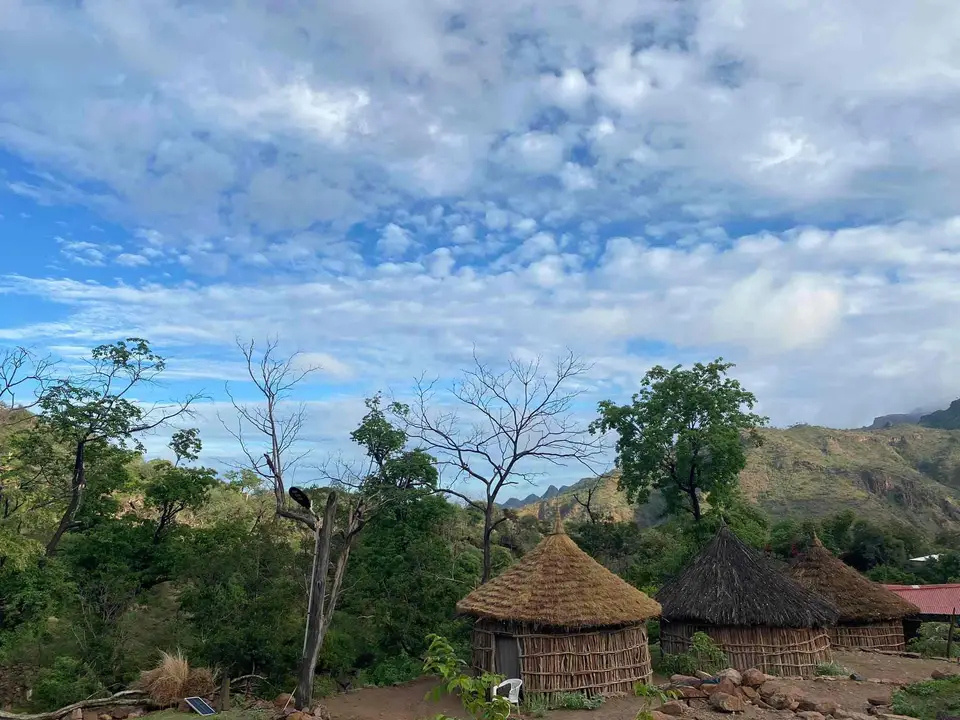
Djibouti has nine tourist camps and ecolodges spread across four regions: Tadjourah, Arta, Ali-Sabieh and Obock. Two of them, Djalelo and Assamo, are run by a wildlife protection association and give their revenue to the protected areas. Expect 7,800 to 15,000 Djiboutian francs a night depending on comfort and board. Booking ahead is essential in the cool season.
What is a tourist camp in Djibouti?
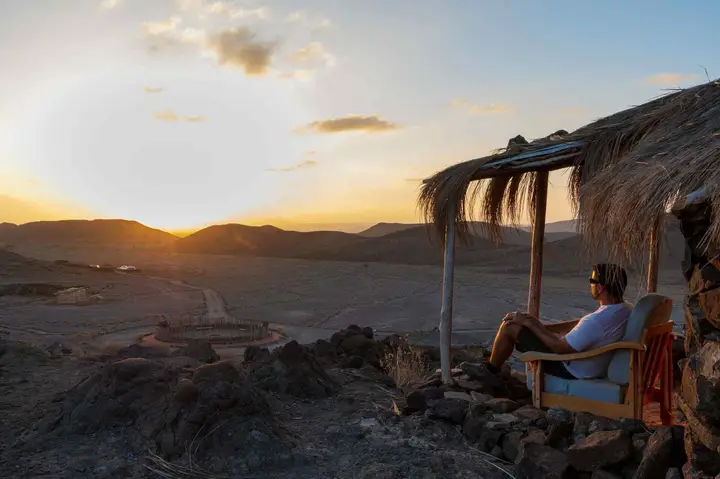
The camp is a category of accommodation in its own right in Djiboutian tourism, not a fallback solution. It occupies a place a hotel cannot take: the country’s natural sites — mountain cirques, protected valleys, isolated beaches of the north — are too far from Djibouti City for a day visit, and too fragile to host heavy infrastructure.
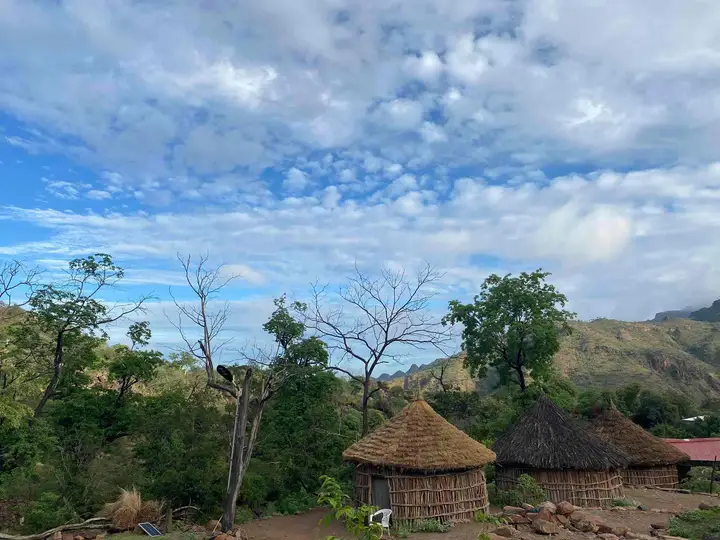
A typical camp combines four elements: simple accommodation (a room, a traditional hut or a bivouac pitch), often shared sanitary facilities, meals prepared on site, and direct access to the trails or the sea.
Two models coexist, and the distinction matters:
- The host camp, family-run or privately run. It sells a night, a meal and access to the site. It is the dominant model on the coast.
- The ecotourism camp, run by a conservation body. It employs local staff and assigns its revenue to protecting a protected area. That is the case for Djalelo and Assamo, both managed by the same association.
Which are the nine camps to know?
| Camp | Region | Character and main interest |
|---|---|---|
| Dittilou | Tadjourah | Nestled in a mountain cirque; walking routes leave from the site, with guides trained in the valley’s fauna and flora; green monkeys, baboons, klipspringers, francolins, Verreaux’s eagle |
| Djalelo | Arta | Non-profit ecotourism camp built by volunteers of the Décan association; 8 rooms, 3 showers, 30 people; a major site for watching Waller’s gazelle; valley classed as a protected area since 2011 |
| Assamo | Ali-Sabieh | Non-profit ecotourism camp opened in 2016, lit by solar power; 5 rooms, 3 showers, 28 people; about 30 minutes from the village, far from any road; habitat of the very rare beira antelope |
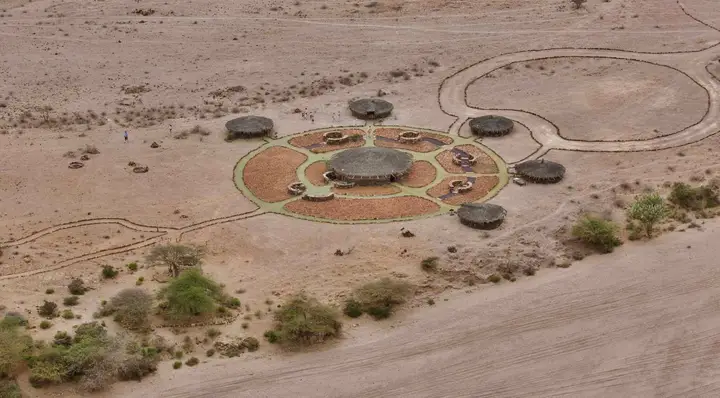
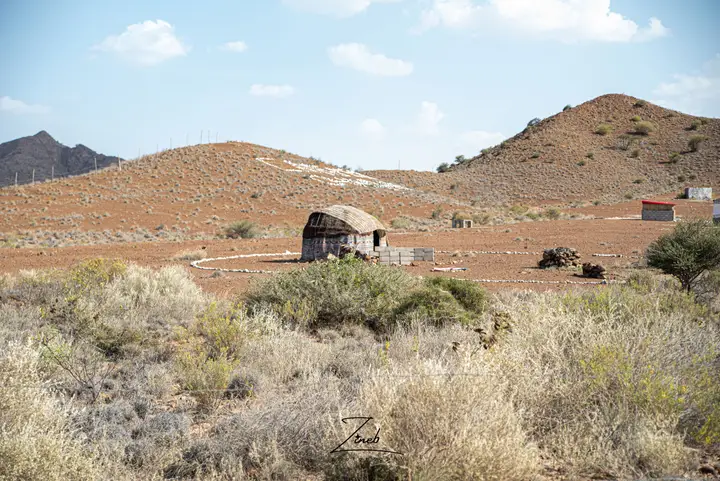
| Dhaydhan | Ali-Sabieh | A reinterpreted nomadic camp, a few kilometres from Ali-Sabieh; traditional toukouls, bivouac under the stars, nomadic cooking served on mats; camels, gazelles, dik-diks, monkeys and birds; outings to identify medicinal plants |
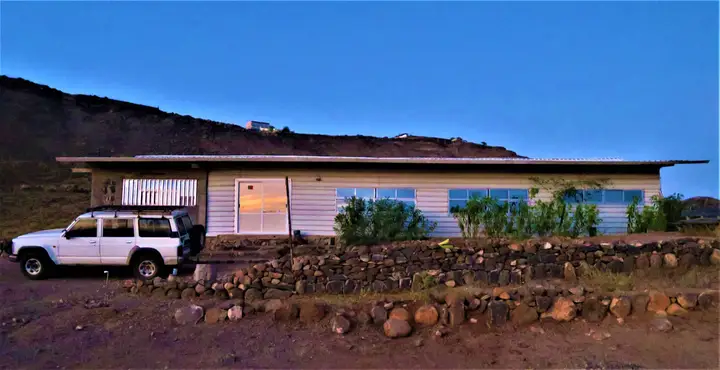
| La Maison des Randonneurs | Arta | Dormitory with camp beds looking out over the Arta mountains and the Gulf of Tadjourah; a base for walking, mountain biking and land sailing; library, shared kitchen, picnic area; guided trails from November to April |
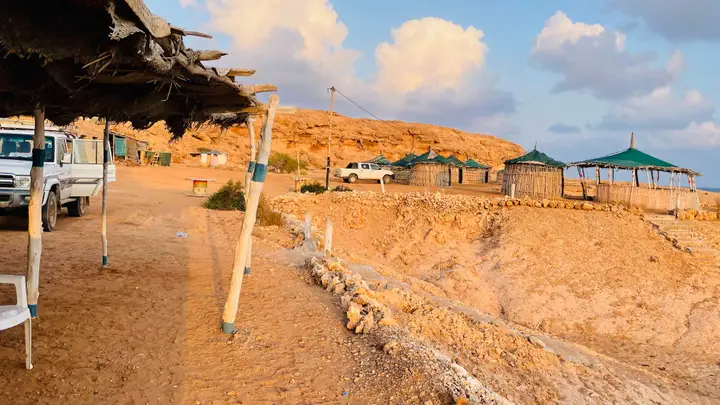
| Rayali chez Fato | Tadjourah | At the entrance to Rayali bay, a few kilometres from Tadjourah; thatched shelters and well-kept sanitary facilities, fresh fish of the day; coral a few metres from the shore, sea turtles frequent; kayaking, night fishing, snorkelling |
| Ras-Bir Houguef | Obock | Twelve daboitas spread over a rocky platform above a small fine-sand beach; coral reachable on foot from the beach; a very isolated site, oriented towards switching off |
| Village de la Mer Rouge | Obock | Less than a kilometre from Obock; four bungalows facing the sea, six on the hill, six on the beach; a 200-metre fine-sand beach; two fish and seafood restaurants, town water supply, solar power and generators |
| Seven Brothers | Obock | On the shores of the Khor-Angar mangrove; a network of channels and mangrove roots covering several hundred hectares; sport fishing, diving, kitesurfing, quad biking and birdwatching |
Three of these camps lie in the Obock region and draw a coherent northern axis with the Ras Bir lighthouse and the Godoria mangrove. Two lie in the Arta region, less than an hour’s drive from the capital, which makes them the easiest options to fit into a short stay.
How much does a night in a camp cost?
The rates published by the operators allow a real scale to be built. They are expressed in Djiboutian francs.
| Formula | Indicative price | What is included |
|---|---|---|
| Night under the stars (village resort) | ≈ 8,000 Fdj / person | Pitch, access to the facilities |
| Bungalow in an ecotourism centre (Arta) | ≈ 7,800 Fdj / person | Accommodation in a shared bungalow |
| Seaside camping pitch | ≈ 10,000 Fdj | Pitch on the seafront |
| Camping on full board (Sables Blancs) | 10,000 to 15,000 Fdj / person | Meals included; rate decreasing from 1 to 10 people |
| Night in a beach camp (Khor-Ambado) | ≈ 15,000 Fdj / adult | Night on site |
| Night in a beach camp (Ras Korali) | ≈ 17,000 Fdj / adult · 12,000 Fdj / child | Night, dinner and breakfast |
| Stay with boat transport (Sables Blancs) | 22,000 to 32,000 Fdj / person | Crossing and stay; rate decreasing with group size |
The pricing logic is constant: the unit price falls with the size of the group, because the dominant cost is not the room but transport and logistics. A camp at 15,000 francs for one person drops to 10,000 francs per person in a group of six to ten. That is the strongest argument for booking as a small group rather than solo.
Camp or hotel: which to choose?
| Criterion | Camp | Hotel in Djibouti City |
|---|---|---|
| Location | On the natural site, a walk from the trails or the beach | In town, at a distance from the sites |
| Comfort | Simple, often shared sanitary facilities, variable electricity | Air-conditioned room, running water, guaranteed network |
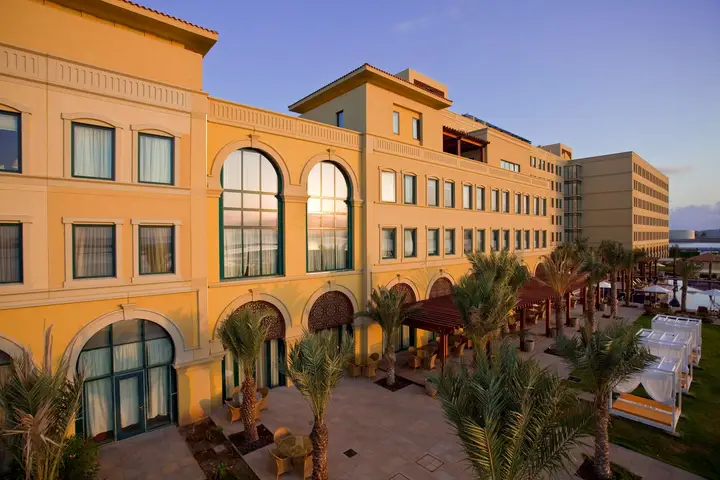
| Atmosphere | Silence, night sky, the rhythm of the site | Urban life, restaurants, shops |
| Relation to the place | Immersion, meeting inhabitants and guides | Logistical base |
| Price | Decreasing with group size | Relatively stable |
The right answer is not a choice but a combination: two nights in a hotel on arrival and departure, one to two nights in a camp at the heart of the stay. The camp is a highlight, not a rear base.
What equipment should you plan for?
Equipment varies so much from one site to the next that the question has to be asked before paying. Here is what remains useful in every case:
- A head torch. Lighting is often limited, sometimes solar.
- A mosquito net if one is not provided: camps close to water are exposed.
- Bottled water, in quantity. Some sites have no guaranteed drinking water.
- Cash in small notes. Card payment is rare, even impossible, outside Djibouti City.
- An adaptor and a power bank. Electricity can be cut at night.
- Sun protection and a hat. Natural shade is scarce.
- Closed shoes for the volcanic trails and the rocky beach approaches.
Conversely, do not bring heavy camping gear if you are booking an equipped camp: tent and mattress are provided.
Can you camp independently in Djibouti?
Wild camping is not the norm, and it is not recommended. Three concrete reasons stand against it: most of the interesting land lies in protected areas or on their edge, where free bivouacking is regulated; drinking water and supplies are scarce outside the towns; and the night heat, in summer, makes bivouacking uncomfortable even on the coast.
The usual practice is to sleep in an existing camp, or to arrange a pitch with a beach camp. Several operators in fact offer the pitch alone, without accommodation or board: that is the formula to ask for if you are travelling with your own gear.
What rules of respect apply on site?
Several camps lie inside or on the edge of protected areas, or live off a fragile environment. A few elementary rules apply:
- Do not feed or approach the wildlife. Gazelles, dik-diks and monkeys quickly grow used to human food, which puts them at risk.
- Do not take plants, including those presented as medicinal.
- Take all your waste back. Several sites have no collection at all.
- Save water. It is often brought in or stored on site.
- Ask before photographing people and dwellings.
- Respect the regulated zones: hunting forbidden, driving off track discouraged, protection perimeters not to be crossed.
These rules are not abstract administrative constraints: they govern the economic survival of the model. A camp that damages its site no longer has a reason to exist.
How should you book, and when should you go?
Booking is the weak point of the sector: capacities are small, communication is often by telephone, and the most sought-after sites are full on the weekends of the cool season.
Three practical rules:
- Book at least two weeks ahead, and a month for a group or for the end-of-year holidays.
- Confirm what is included: meals, transfer, sheets, mosquito net, drinks. It is the most frequent source of a gap between the advertised price and the final bill.
- Plan a fallback. In case of strong wind or a washed-out track, a beach camp can become inaccessible.
The best period runs from October to April. In summer, the heat makes bivouacking uncomfortable and some sites close or reduce their activity.
What is there to do around the camps?
Each camp structures a programme on its own.
Around Dittilou and the Forêt du Day, walking dominates: mountain trails, villages, viewpoints over the Gulf of Tadjourah, and the Bankoualé waterfall for hikers.
Around Djalelo and La Maison des Randonneurs, in the Arta region, wildlife watching combines with altitude: the area is cooler than the coast and is covered on foot or by mountain bike.
Around Assamo and Dhaydhan, in the south, the programme is nomadic: encounters, cooking on mats, identifying plants, watching gazelles and dik-diks.
Around the camps of Obock, the sea takes over: snorkelling from the beach, the Khor-Angar mangrove, the Godoria mangrove, the Ras Bir lighthouse, and dolphin watching, regularly present in this area.
Is the economic model really ecological?
Two excesses are to be avoided: systematic scepticism and wishful thinking. What is verifiable deserves to be said.
Two of the nine camps — Djalelo and Assamo — are explicitly non-profit. They were built by the volunteers of a wildlife protection association, employ only local labour, and the whole of their revenue is reassigned to protecting the sites they manage. Their construction in fact answers a precise objective: funding the salaries of the protected areas’ wardens.
The other camps are private accommodation. Their impact depends on concrete practices — management of water, waste, energy, supervision of water activities — which it is legitimate to question on site.
One sign that does not deceive: a camp that employs trained local guides, that limits the number of simultaneous visitors and that maintains its trails rather than widening them. That is the case at Dittilou, where guiding is provided by guides who know the valley’s fauna, flora and nomadic way of life.
Frequently asked questions
How much does a night in a camp cost in Djibouti?
The documented rates run from 7,800 Djiboutian francs for a bungalow in an ecotourism centre to 15,000 francs for a night in seaside camping on full board. A night under the stars in a village resort is offered at around 8,000 francs, and a night in a beach camp with dinner and breakfast at around 17,000 francs per adult, with a reduced child rate.
What is the difference between a camp and an ecolodge in Djibouti?
A camp is the local equivalent of an outdoor lodge: simple rooms or traditional huts, often shared sanitary facilities, meals served on site, frequently family-run. An ecolodge adds a conservation dimension: accommodation built inside a protected area, local staff, revenue assigned to protecting the site. Djalelo and Assamo clearly belong to that second category.
Should you book your camp in advance?
Yes, and well before a hotel in Djibouti City. Capacities are small, between twenty-eight and thirty people for the largest ecotourism camps, and the cool season, from October to April, concentrates most of the local demand at weekends. Book at least two weeks ahead, and more for a group or for the weekends of December and January.
What facilities do you find in a Djiboutian camp?
Facilities vary widely from one site to the next, and they must be checked before booking. Ecotourism camps have rooms, showers and barbecue hearths. Some sites run on solar power. Conversely, several beach camps offer neither electricity nor running water in the accommodation, with shared sanitary blocks. Bring a head torch, an adaptor and water.
Can you stay in a camp with children?
Yes, several sites are explicitly designed for families, with nature-discovery activities, camel and gazelle watching, and meals served on mats. The nomadic camp at Dhaydhan, near Ali-Sabieh, and the camps of the Arta region are the most accessible for a first stay. Do check the distance to the sanitary blocks, though, and bring mosquito nets.
Sources
Where to stay
Read next
Affordable hotels in Djibouti: the 3★ against their rating
Assamo camp: sleeping in the land of the beira
Dhaydhan camp: a nomadic night near Ali-Sabieh
Dittilou camp: sleeping in the cirque
Djalelo camp: the ecolodge of the protected valley
La Maison des Randonneurs: sleeping in Arta, pack on
Luxury hotels in Djibouti: the 4★ and 5★ against their score
Ras-Bir Houguef: the isolated camp on the Obock coast