Visa for Djibouti: e-Visa, price and documents
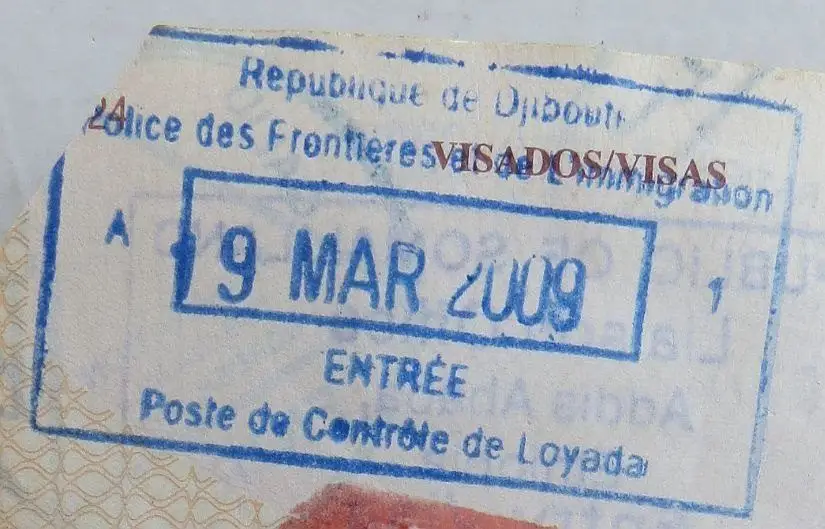
Most travellers obtain their visa for Djibouti online, before departure, on the government's official e-Visa portal. The official application has three steps: create an account, complete the form and pay by card (Mastercard, Visa or American Express), then download the visa as a PDF. You need a passport valid for at least six months after arrival. The fare is displayed during entry, according to nationality and duration.
Always check your own case. Visa rules depend on nationality and change without notice. The information below is given as an indication and is dated. The only binding source is the Djiboutian government’s official e-Visa portal.
How do you get a visa for Djibouti?
A visa is required to enter the country. The official British advice, updated on 27 July 2026 and still in force on the date of this page, is explicit: “You must have a visa to enter Djibouti”. Holders of a French passport are subject to the same obligation — a nationality-specific fact, stated as such. In other words, the question is not whether you need a visa, but by which route you obtain it.
Two routes coexist, and they are not equivalent:
- the e-Visa, applied for online before departure. It is the reference procedure. It absorbs the formality while you are still at home, with your connection and your documents to hand.
- the visa issued on arrival, at Ambouli international airport or at a land border post. It remains possible, but it is settled at the counter, after a long flight, in a queue that does not depend on you.
A third route, the “visa assistance” sold by intermediaries, is not an official procedure: it is a paid service that sometimes doubles the real cost. It brings nothing that an online form does not already do.
How does the e-Visa work, step by step?
The official portal describes its own procedure in three steps. We reproduce them as they are, without rewording, because that is exactly what you will see on screen.
| Step | What you do | What to prepare |
|---|---|---|
| 1. Register | Create an account on the portal, then confirm the email address and log in | A valid, accessible email address: everything that follows goes through it |
| 2. Complete and pay | Enter the application, state nationality and duration, then pay online | Mastercard, Visa or American Express. The fare is displayed at that point |
| 3. Obtain the visa | Wait for approval, then download the e-Visa | A PDF file, to keep and print or keep on your phone |
What the portal says precisely, and what changes everything. The e-Visa “replaces the visa issued at the point of entry” in the country, usually an airport or a border post. It is therefore not a parallel option nor a simple pre-authorisation: it is the formality itself, completed at a distance.
Issue is in PDF format. The document is to be presented on arrival, printed or shown on a phone. A badly saved PDF, in an inbox you cannot consult offline, is the most banal cause of a bad moment at the counter: save it in your phone, not only in your emails.
The cards accepted: what the portal announces. The portal announces that it accepts three networks — Mastercard, Visa and American Express. We report that list as it is published, without presenting it as verified: the portal loads its content dynamically, and we have not been able to check it independently. The payment screen is what decides on the day. A card from another network, or a card not authorised for international payments, will block the application at the payment step — the second most frequent reason for failure after an illegible document.
Which documents and which passport do you need?
The official British advice gives a passport validity rule worth retaining before anything else: the passport must carry an expiry date at least six months after the date of arrival. That rule is not a comfort recommendation: a passport that does not meet it exposes you to refusal of entry.
| Document | Requirement | Practical note |
|---|---|---|
| Passport | Expiry at least six months after the date of arrival | Check the date, not the visual impression: a passport that is “still valid” can be refused |
| Identity photograph | Recent, light background, ID format | A blurred scan is the first cause of rejection of an online application |
| Transport ticket | Return, or onward journey | The official advice requires proof of onward travel |
| Accommodation | Name and address of the hotel, camp or host | To gather before opening the form: the address is requested during entry |
| Vaccination certificate | Yellow fever, only if you are arriving from a country at risk of transmission | See the section on vaccines below |
Two points of method. First, first name and surname must be entered exactly as on the passport data page, with no added accents and no initials: a difference in transliteration is enough to create doubt at the counter. Second, prepare all the files on the device before you start: the portal session does not wait.
What is the price of a visa for Djibouti?
It is the most searched question in the corpus, and the one on which almost every competing site publishes a figure. We will not, for a simple reason: the fare does not appear on the official portal.
What can be written without being wrong:
The fare is displayed when the application is entered, once nationality and duration have been filled in.
In other words, the amount depends on two variables — your nationality and the duration requested — and it becomes binding at the precise moment it is displayed. Nobody can therefore announce a single price valid for everyone, and a page displaying a firm fare misleads you, even in good faith.
Three practical consequences:
- Never pay an intermediary before seeing the official fare. You cannot judge whether a “visa assistance” is honest without knowing the government amount it marks up.
- Be wary of sites imitating the portal. Check that the address really ends
in
evisa.gouv.dj. The copies charge along the way for a service that does not exist. - Plan for a card authorised for international payments. Mastercard, Visa and American Express are the three networks the portal announces it accepts.
Can I get a visa for Djibouti at the airport?
Yes, and it is documented information: the official British advice indicates that a tourist visa can be bought on arrival, paid in cash and in US dollars. Retain the two words: cash and dollars. A bank card does not replace green notes at that counter.
The visa on arrival therefore remains a credible fallback, but it has two hidden costs:
- Time. You collect your luggage, then queue at the visa counter. That happens after a long flight, often at night.
- Documentary risk. A missing document is badly settled once you are there; online, at home, it is settled in five minutes.
If you arrive late, if you are travelling with children, or if your flight has a tight connection, the e-Visa applied for before departure remains clearly preferable. It is the recommendation we give systematically.
Can you visit Djibouti without a visa?
Not for everyone, and the nuance matters. A visa is required on entry, for tourist stays as for others: that is the general rule, with no universal exemption scheme. But it does have real exceptions, which it would be wrong to pass over in silence — nationals of Singapore and Kenya, and holders of official, diplomatic or service passports from several countries, enter without a visa.
What causes confusion is the possibility of obtaining the visa on arrival: “you can enter without a prior visa” quickly becomes, in conversation, “you can enter without a visa”. Those are two different statements. The first is true, the second is false.
For an ordinary tourist stay, the correct reading is therefore this: you must hold a visa, and you simply choose the moment and the place where you obtain it — online before departure, or at the point of entry. The choice does not affect the obligation. If you believe you fall under an exemption, have it confirmed by the competent consulate before booking: the list depends on your nationality and on the type of passport you hold.
Which vaccinations are compulsory to travel to Djibouti?
Only one vaccine is administratively required: yellow fever. And it is not required of everyone — you must present a vaccination certificate if you are arriving from a country classified at risk of transmission. If you are coming directly from Europe, that requirement generally does not apply to you, but it may concern an itinerary passing through a third country.
For the rest, the official British advice gives a lead time rather than a list: check vaccination recommendations at least eight weeks before departure. That delay is not decorative. Some vaccinations are given in several spaced injections, and a departure in fifteen days no longer leaves time to complete them.
The health risks documented for Djibouti include dengue, Zika virus and schistosomiasis. Two habits follow: vector protection — repellent, covering clothes in the evening — and caution with stagnant fresh water, the transmission medium for schistosomiasis.
In a medical emergency on the spot, dial 21 35 09 62 or 21 35 27 12 and ask for an ambulance. Those two numbers are the ones published by the official British advice. Then tell your insurer without delay if you are referred to a medical facility: it is a standard clause in policies, and a late call complicates cover.
What should you do if your visa application is blocked?
A blocked application is almost never a refusal: it is an incomplete application. Go back over the four checkpoints, in this order.
- Consistency of dates. The ticket, the accommodation and the duration requested must tell the same trip. One hotel night for a ten-day stay is a warning signal for the assessment of the file.
- Legibility of documents. An ID photo taken on a phone, with a shadow or a reflection, is rejected by the automatic check.
- Spelling of the name. It must correspond exactly to the passport data page.
- Payment. A card refused by the issuing bank leaves the application pending, sometimes with no explicit message.
If the four points are clean and the application stays blocked, the only formal recourse is the government’s visa service, via the e-Visa portal. An intermediary can speed up the resumption of the file, it cannot decide in place of the administration.
What should you expect on arrival at Ambouli?
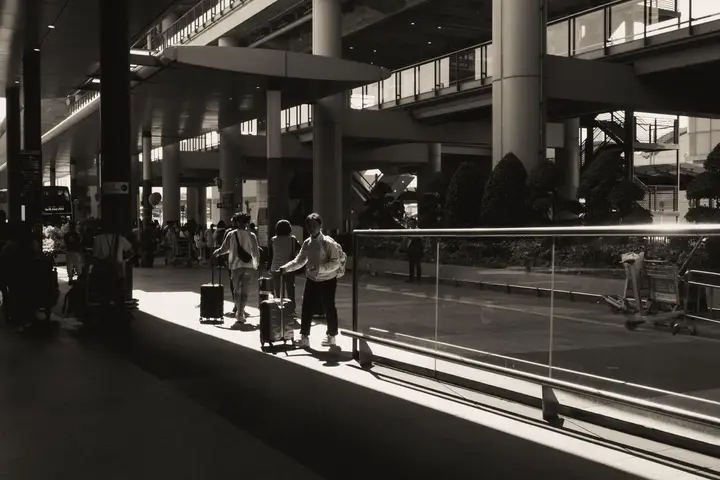
Ambouli international airport stands about seven kilometres from the city centre, roughly a ten-minute drive outside peak hours. A bureau de change, an information desk and car hire desks are installed there. Taxis provide the link with the city.
Two precautions for the first hour:
- Bring cash in Djiboutian francs for the first journey. The National Tourism Agency’s grid puts the transfer from the airport at about 1,500 Djiboutian francs (January 2021 grid, to be confirmed at the counter), and not all drivers accept cards.
- Keep your passport within reach, not in the hold luggage. You will need it at the counter, and it is requested during checks on the national roads.
The detail of fares, distances and transfer options is covered in the page on the airport transfer. To choose your dates before starting the application — some periods are busier at the counter — see when to go to Djibouti. And if your trip is part of an organised programme, the itineraries page details the stays that include logistical assistance on arrival.
Frequently asked questions
How do you get a visa for Djibouti?
Online, on the Djiboutian government's official e-Visa portal, before departure. The official procedure has three steps: create an account and confirm your email address, complete the application and pay by card (Mastercard, Visa or American Express), then download the visa issued as a PDF. Allow about twenty minutes, an estimate that depends on your connection. The only real sticking point is uploading the documents: a legible ID photo and passport page.
What is the price of a visa for Djibouti?
The exact amount does not appear on the official portal. The fare is displayed when the application is entered, once nationality and duration have been filled in: it is at that precise moment that it becomes binding. Intermediaries offering visa assistance charge for that service on top of the government fee, sometimes without saying so. Always check that you are on a domain ending in evisa.gouv.dj.
Can I get a visa for Djibouti at the airport?
Yes. The official British advice indicates that a tourist visa can be bought on arrival, paid in cash and in US dollars. That route remains useful in an emergency, but it exposes you to two pitfalls: the queue at the counter after a night flight, and the risk of being blocked if a document is missing. Applying online before departure removes both.
Can you visit Djibouti without a visa?
Not quite. A visa is required on entry: the official British advice states this, and holders of a French passport are subject to the same obligation. Exceptions do exist: nationals of Singapore and Kenya, and holders of official, diplomatic or service passports from several countries, are exempt. Check your own case with the competent consulate. The useful distinction remains between applying online before departure and obtaining it on arrival.
Which vaccinations are compulsory to travel to Djibouti?
Only one vaccine is administratively required on entry: yellow fever, and only for travellers coming from a country classified at risk of transmission. You must then present a vaccination certificate. The official British advice recommends checking vaccination recommendations at least eight weeks before departure. The health risks documented on the spot include dengue, Zika virus and schistosomiasis.
Sources
Practical
Read next
4×4 with a driver in Djibouti: prices and itineraries
Accessibility in Djibouti: what a demanding trip implies
Boat hire in Djibouti: trips out to sea
Budget in Djibouti: what does a trip cost on the spot?
Buses and taxis in Djibouti: fares by zone and route
Car hire in Djibouti: 4×4, saloon or driver?
Connectivity and SIM cards in Djibouti: internet and mobile
Djibouti airport transfer: taxi, fares and arrival