Diving in Djibouti: the nine sites to know
Djibouti has nine dive sites identified from Djibouti City, spread between the Gulf of Tadjourah, the Goubet channel and the north of Tadjourah. Useful depths run from five to fifty metres, from a first try-dive to advanced level. A supervised dive costs about 10,000 to 12,000 Djiboutian francs, equipment and boat included. The most comfortable season runs from October to April.
How many dive sites does Djibouti really have?
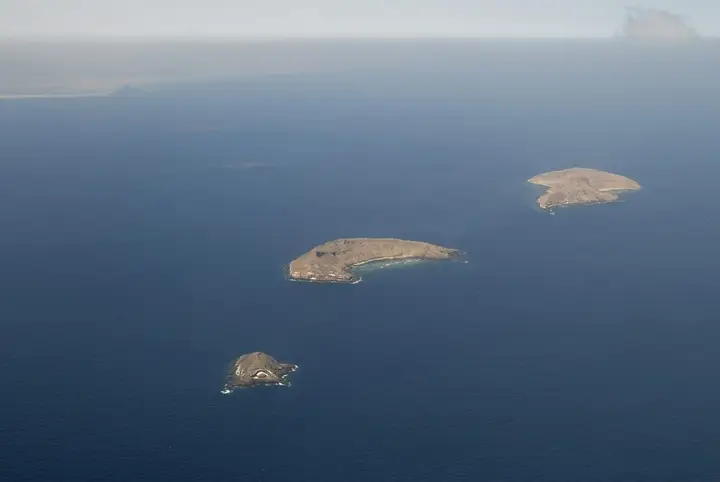
Nine sites are identified and dived regularly from Djibouti City. That figure often surprises, because the country’s tourist communication talks about biodiversity without ever naming its spots. The reality is simple: the Gulf of Tadjourah and the Goubet channel concentrate most Djiboutian diving, within one to two hours by boat.
Three families of sites stand out:
- The gulf sites, off Djibouti City and the Moucha and Maskali islands: corals, rocky outcrops, dense reef fauna, sheltered conditions.
- The Goubet channel sites, to the north-west: volcanic relief, faults, caves and tunnels, more marked currents, including the La Vierge Rouge site.
- The northern sites, around Tadjourah and Les Sables Blancs: small coral drop-offs, calm water, turtles, easy access.
What are the nine sites to know?
The table below sums up the sites actually dived. The depths given are the useful depths, the ones a guide builds the dive around — not the records reachable by letting out the line.
| Site | Region | Depth | Recommended level | Character of the site |
|---|---|---|---|---|
| Canyon | Djibouti City | 5 – 25 m | Beginner | Two tongues of coral rock forming a canyon; one of the few sites sheltered from the gulf’s strong winds |
| Bouée Air France | Djibouti City | 5 – 25 m | Beginner to intermediate | Sandy bottom and a 25 m drop-off, flat-tree corals, anemones; light current, boat wreck |
| Patates Air France | Djibouti City | 5 – 25 m | All levels | Rocky outcrops rich in groupers, napoleon fish, stingrays and whitetip sharks |
| La Vierge Rouge | Arta | 20 – 60 m | Intermediate to advanced | An almost vertical wall beneath a red rock virgin, very dense fauna; current rare but real depth |
| The Crack | Tadjourah | 12 – 50 m | Intermediate | Extension of the Goubet fault: fissure, caves and tunnels; a torch is essential |
| Le Dome | Arta | 14 – 45 m | Intermediate | Multicoloured coral dome, fauna concentrated down to 30 m, clownfish, morays and reef sharks |
| Korali | Arta | 5 – 25 m | All levels | The Ras Korali sector, reefs and colourful fish, excellent visibility; departure point for whale shark trips |
| Ras Eiro | Arta | 10 – 40 m | Intermediate | Two groups of features: large boulders and an immense drop-off; groupers and morays, whale shark reported in November-December |
| Sables Blancs | Tadjourah | 5 – 30 m | All levels | Small drop-offs covered in brain corals, green and hawksbill turtles, crocodilefish; weak current |
Two field remarks. The Canyon and Les Sables Blancs are the two most “weather-proof” sites: when the wind picks up, they are the ones that save the trip. And several sites combine naturally in the same day — the Dome and Ras Eiro are neighbours, as are the two “Air France” sites, which allows two dives without lengthening the navigation.
What is the water temperature by season?
The southern Red Sea and the Gulf of Tadjourah stay warm all year: a thin full wetsuit is enough, and many divers go down in lycra from June to September.
| Season | Months | Water temperature (indicative) | Visibility | Comfort at the surface |
|---|---|---|---|---|
| Cool season | December – February | 25 – 27 °C | 20 – 35 m | Excellent: dry air, calm sea |
| Mild season | March – April | 26 – 28 °C | 20 – 30 m | Very good, moderate winds |
| Transition | May | 28 – 30 °C | 15 – 25 m | Rising heat, morning trips |
| Hot season | June – August | 29 – 32 °C | 15 – 30 m | Difficult out of the water, swell possible |
| Hot season | September | 30 – 32 °C | 15 – 30 m | Maximum heat, irregular winds |
| Opening | October – November | 28 – 31 °C | 20 – 30 m | Return to calm, the season opening |
Those surface temperatures are seasonal orders of magnitude, not official readings: we publish no series of measurements we have not been able to source. Visibility, for its part, depends mainly on the wind and swell of the previous days.
Do you need a certification, and which one?
The answer depends on the site, not on your wish. Three cases arise.
The try-dive and the introduction. No certification required: you dive supervised, at shallow depth, on a sheltered site. It is the format to choose if you have never breathed on a regulator.
Level one or Open Water diving. It opens most of the gulf sites down to twenty metres: Canyon, Bouée Air France, Patates Air France, Korali, Sables Blancs. It is the level that matches the largest number of dives actually sold in Djibouti.
Advanced level. It becomes necessary as soon as depth exceeds thirty metres — La Vierge Rouge, Ras Eiro, the lower part of the Dome — or when the site imposes current management and cave orientation, as at The Crack.
A practical tip for non-divers: a swimming introduction in the sea completely changes the experience. Many travellers give up diving through simple discomfort in the water, not through lack of ability.
When should you dive in Djibouti?
From October to April, without hesitation. It is the period when the sea is calmest, visibility most stable and surface intervals bearable.
From June to September, diving remains possible but becomes a matter of timing: a very early morning departure, a return before the heat settles in, and the choice of sheltered sites. It is also the period when centres prefer to cancel rather than go out in an uncomfortable swell — a decision to be respected, not worked around.
For the whale shark, the logic is different: the peak season runs from November to January, as a surface observation.
How much does a dive in Djibouti cost?
The rates published by the centres fall within a narrow range, which simplifies the comparison.
| Service | Indicative price | Content |
|---|---|---|
| Supervised dive at Moucha Island | ≈ 12,000 Fdj / person | Boat, tank, weights, supervision |
| Exploration dive at Moucha | ≈ 10,000 Fdj / person | Boat trip, supervision, site of your choice |
| Marine-life discovery (Raysali reef) | ≈ 6,000 Fdj / person | Trip with mask, fins and snorkel, guide |
| Swimming introduction in the sea | ≈ 3,000 Fdj / person | Supervision, flotation equipment |
Two points to check before booking: whether the equipment is included in the displayed price, and how many dives the trip actually contains. A “two-dive” day and a “one-dive” day are not comparable.
What time of day do you dive?
The rhythm is imposed by the sea and the heat, not by the divers’ comfort. Boats leave early, often before seven o’clock, for two reasons: the water is flatter and the light more beautiful beneath the surface.
A classic trip is organised in four stages: briefing and equipment fitting at the centre, navigation to the site, the dive with an established buddy group, the surface interval on the boat — with water and fruit — then a second dive on a neighbouring site before returning in the early afternoon.
Afternoon trips exist, but they are more exposed to thermal wind and swell. If you have only one day to devote to diving, take the morning trip.
What do you see underwater?
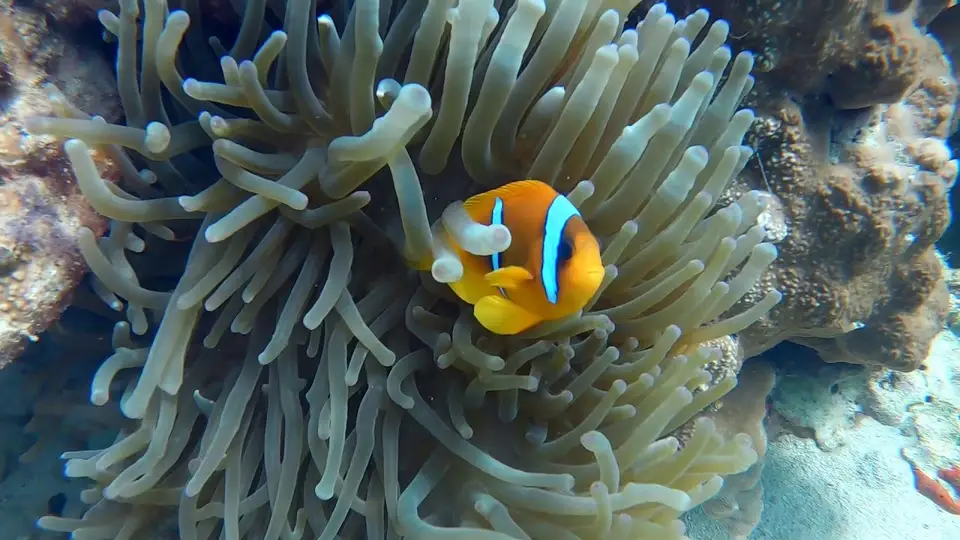
The gulf’s reef fauna is dense and varied: clownfish in their anemones, surgeonfish, parrotfish, wrasses, morays in the coral outcrops, good-sized groupers, napoleon fish, stingrays and, on the northern sites, green and hawksbill turtles.
Reef sharks — notably the whitetip — frequent the reliefs of the Patates Air France and the Dome. They are used to the presence of divers and keep their distance: you observe them, you do not feed them and you do not touch them.
Two seasonal phenomena are worth knowing: the gatherings of groupers during the breeding period, in spring, on the gulf’s outcrops; and the passage of the whale shark in the cool season, at the surface and not on a tank.
What can you do if you are not a diver?
Tank diving is not a condition of access to Djibouti’s marine life. A large part of what the country has that is most beautiful can be seen from the surface, with a mask and a snorkel.
Three sites are particularly suited to it. Les Sables Blancs, where the small coral drop-offs begin a few metres from the shore. Rayali bay — which the catalogue writes Raysali, and which you will find under that spelling in our offers — whose corals are accessible a few metres from the beach, with a good chance of meeting a turtle. And the Bouée Air France, where a simple mask is enough to observe the sandy bottom, triggerfish and anemones.
Two options complete the picture: boat trips to the Moucha and Maskali islands, which combine reefs, mangrove and swimming; and the swimming introduction, which settles the main obstacle in one session — ease in the water. Many travellers give up diving through discomfort, not through lack of ability.
How do you choose a dive centre?
Three criteria are enough, and they are verifiable before you pay.
- Supervision and ratio. One instructor for a small number of divers, with a briefing really given — not rushed through while the boat is starting up.
- Equipment. Recent regulators and jackets, checked tanks, wetsuits in the right size. A centre that maintains its gear shows it without difficulty.
- The weather policy. A serious centre cancels a trip when conditions are not right, and says so before you step aboard.
Add a fourth criterion specific to the country: knowledge of the marine protected areas. The gulf contains several regulated zones, including the Arta marine protected area and that of the Seven Brothers, in the north. Diving with a provider who knows those perimeters means diving with someone who respects the environment he is showing you.
Frequently asked questions
Do you need a certification to dive in Djibouti?
For a supervised try-dive, no: an instructor takes charge of you and you descend to a shallow depth. For the gulf sites deeper than twenty metres, a level one or Open Water certification is required, and some drop-offs demand advanced level. If you have never dived, start with an introduction in a pool or on a sheltered beach: several providers offer it in Djibouti.
What is the best season for diving in Djibouti?
From October to April. The sea is calmest, visibility most stable and temperatures bearable out of the water, which matters for surface intervals. From June to September, the air heat and the gulf swell degrade comfort without forbidding diving: you then go out early in the morning and favour sites sheltered from the wind, such as the Canyon.
How much does a dive in Djibouti cost?
Allow about 12,000 Djiboutian francs for a supervised dive at Moucha Island, equipment and boat included, and about 10,000 francs for an exploration dive in the same area. A marine-life discovery trip with mask, fins and snorkel is clearly cheaper, of the order of 6,000 francs. A swimming introduction in the sea, useful before diving, starts at around 3,000 francs.
Which sites should you choose as a beginner?
Three sites are accessible without experience: the Canyon, protected from strong winds and suited to beginners, Les Sables Blancs, between five and thirty metres with a weak current, and the Patates Air France, whose shallow relief suits all levels. The Dome, between fourteen and forty-five metres, addresses divers already at ease, and La Vierge Rouge descends well beyond sixty metres.
Can you dive with whale sharks in Djibouti?
The observation is done at the surface, with mask, fins and snorkel, and not on a tank: the animal feeds by filtering plankton between the surface and about ten metres, and a tank would hinder the approach. The peak season runs from November to January in the Gulf of Tadjourah. The Ras Eiro site, west of the gulf, occasionally reports the animal in November and December.
Sources
Location
Lat. 11.71700Lng. 43.15130
Experiences