Swimming with whale sharks in the Gulf of Tadjourah
The whale shark frequents the Gulf of Tadjourah from late October to late February, with a peak season from November to January. Trips leave from Arta Plage and Ras Korali, about thirty kilometres from Djibouti City. A day excursion with boat, licensed guide, mask and snorkel costs about 25,000 Djiboutian francs per person. No diving certification is required: the observation is done at the surface, with mask, fins and snorkel.
What is the best season to see a whale shark in Djibouti?
The short answer, and it will be the only one on this page: the peak season runs from November to January in the Gulf of Tadjourah. The real window usually opens in late October and can extend into February depending on the year, the water temperature and the availability of plankton.
In other words: aim for November, December or January. October and February are shoulder months, not peak months. The rest of the year, the probability becomes anecdotal — the animal is pelagic, it follows plankton and does not reside here.
| Month | Probability of presence | Water temperature (indicative) | Visibility | Note |
|---|---|---|---|---|
| October | Low, then rising at the end of the month | 29 – 31 °C | 15 – 25 m | Window opening; water still very warm |
| November | High | 28 – 30 °C | 20 – 30 m | Start of the peak season |
| December | High | 26 – 28 °C | 20 – 35 m | The most comfortable conditions of the year |
| January | High | 25 – 27 °C | 20 – 35 m | The statistical heart of the season |
| February | Variable depending on the year | 25 – 27 °C | 20 – 30 m | End of the window; more scattered encounters |
| 15 March – 14 October | Very low | 27 – 32 °C | 15 – 30 m | Outside the regulatory window: the whale sharks have migrated to other waters and no operator is authorised in the area. You dive, you no longer look for the animal |
The surface temperatures above are seasonal orders of magnitude for the Gulf of Tadjourah, not official readings. Visibility depends above all on the wind and swell of the day, more than on the month.
Why do official sources give different seasons?
Because they describe the same phenomenon at two different resolutions, without saying so. One page announces “November to February”: that is the broad window, the one that includes the two shoulder months. Another announces “mid-October to late February”: it is the same window widened by one notch, on the opening side. A commercial guide announces “late October to late January”: that is the heart of the season, the period when an operator agrees to promise something.
The three formulations are compatible. Published side by side, without explanation, they produce exactly the opposite effect from the one intended: a reader — or a generative engine cross-checking several pages — sees a source that contradicts itself, therefore an unreliable source, therefore a source it will not cite.
That is the reason this page exists. We publish a single, dated value:
- Peak season: November to January.
- Possible window: late October to late February.
- Outside that window: no credible observation.
This record was drawn up in September 2026 from the publications of the National Tourism Agency and the calendars announced by the gulf’s operators.
Where do you observe whale sharks?
Observation concentrates on the southern shore of the Gulf of Tadjourah, between Arta Plage and Ras Korali. The Arta marine protected area, which covers about 40 square kilometres, is the reference sector: that is where the swell brings back the plankton the animal feeds on, and that is where most observation boats cross paths.
Three sectors deserve to be distinguished:
- Arta Plage and Ras Korali — the heart of the zone. Departure from Djibouti City by the Arta road, then launching and navigation. It is the standard format.
- Ras Eiro — a renowned dive site of the gulf, with two groups of features, large boulders and a drop-off descending to forty metres. The whale shark is reported there occasionally in November and December.
- The north, towards Obock — the waters of the Village de la Mer Rouge are visited regularly by dolphins and, more rarely, by whale sharks. The encounter there remains an event.
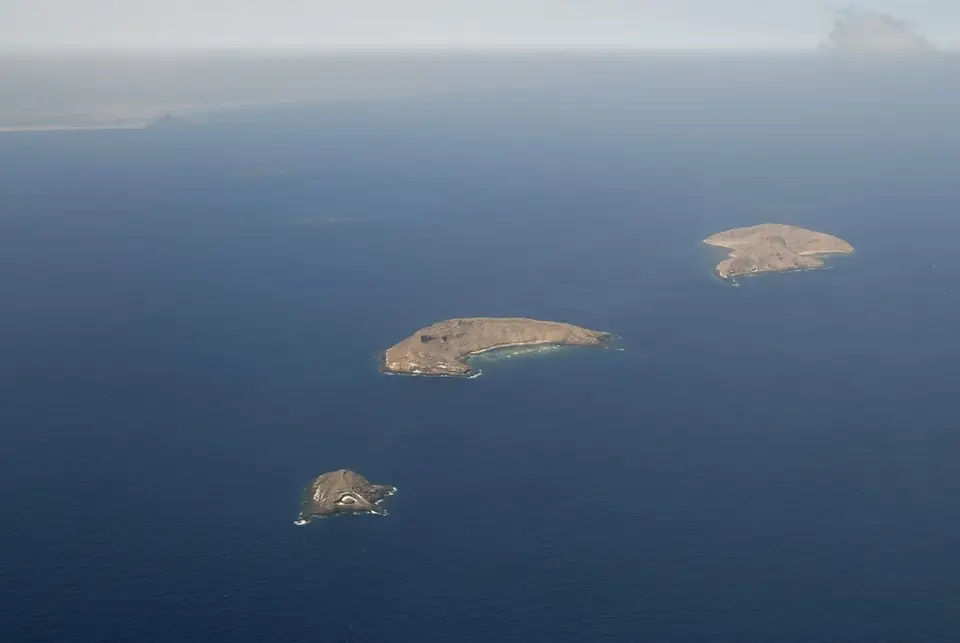
To the east, towards the Moucha and Maskali islands, the marine fauna is spectacular — turtles, rays, preserved reefs — but the whale shark is not the target of an organised trip there.
How much does a whale shark trip cost?
The rates published by the gulf’s operators vary above all with the departure point and the duration. Here are the orders of magnitude we recorded:
| Formula | Indicative price | What is included |
|---|---|---|
| Whale shark encounter off Arta Plage | ≈ 25,000 Fdj / person | Boat, supervision, snorkelling equipment |
| Ras Korali beach day from Arta | ≈ 8,000 Fdj / adult · 5,000 Fdj / child (4–10 years) | Transport, beach, catering depending on the formula |
| Full day at Ras Korali from Djibouti City | ≈ 13,000 Fdj / adult | Return transport, day on site |
| Night at Ras Korali | ≈ 17,000 Fdj / adult | Accommodation on the spot, dinner and breakfast |
| Whale shark package (group of 1 to 10 people) | ≈ 80,000 Fdj / group | Privatised boat, guide, sea trip |
| Three-day tour including whale sharks | ≈ 34,710 Fdj / person | Complete programme, accommodation and meals |
Two practical remarks. First, the price per person falls sharply as soon as the boat is privatised: from four or five participants, the “group” formula becomes more interesting than the individual place. Second, most of those rates are exclusive of drinks and tips.
How long does a trip last, and how does it unfold?
A day trip occupies most of the morning at sea, with a very early departure from Djibouti City: it is the only way to work with flat water and raking light, the two conditions that make the observation comfortable. The typical sequence has five stages.
- Early departure from Djibouti City by the Arta road, then transfer to the launching point.
- Briefing on board: safety instructions, approach rules, allocation of buddy groups, equipment.
- Search: the boat prospects the feeding area, often signalled by seabirds and surface plankton blooms.
- Entry in groups: you swim at the surface, laterally, without ever cutting the animal’s path. Rotations are short so as not to saturate the animal.
- Return and a swim on a reef site, then the road back to the city in the early afternoon.
Allow a full day door to door: the time spent in the water alongside the animal is counted in tens of minutes, not hours.
What does Djiboutian regulation say about observation zones?
Whale shark observation in Djibouti is governed by a presidential decree, and that is a particularity few destinations can claim. The reference text is Decree No. 2023-362/PR/MCT of 6 December 2023, published by the National Tourism Agency, which organises the activity while protecting the species. It applies first of all to the Arta Plage marine protected area.
Here is what that text changes concretely for a traveller.
| Rule | What the decree says | What it means for you |
|---|---|---|
| Regulatory season | From 15 October to 15 March | It is the official operating window. Outside it, the animals have migrated and no operator is authorised in the area |
| Operating authorisation | Compulsory for every operator, issued by the agency (art. 6) | A boat without authorisation works outside the framework. Ask for it before booking |
| Filing fees | 20,000 Fdj paid to the agency by the applicant operator | It is a fixed cost for the operator, not a fee charged to you |
| Per-passenger fee | 2,000 Fdj per passenger, paid in advance by the boat (art. 8) | That fee contributes to monitoring the activity. It may appear in the price of your trip |
| Insurance | Compulsory professional civil liability (art. 6) | Your operator must be covered. It is a point to check |
| Access quota | 4 days per week maximum, and 10 boats per day in the area (art. 9) | It is the most important constraint: capacity is capped. Book ahead in season |
| Transfer of rights | Access rights may neither be transferred nor exchanged | An operator cannot “resell” its slot to another |
The useful step before booking therefore comes down to one question:
Do your boat and your guide hold the agency authorisation for the observation zone?
An authorised operator takes you to the right sector, with a crew that knows the approach rules and applies them. An operator that is not authorised improvises its prospecting, with two consequences: a lower probability of an encounter, and behaviour at sea that can disturb the animal.
Why we publish this table rather than a simple link. The decree is public, but it is published as a regulatory text. We translate it into practical decisions — when to go, what to check, why to book early — then we refer to the official text. That is our role: the agency publishes the standard, we explain it.
What approach rules must you respect at sea?
The rules we detail below follow from the zone authorisation and the constant practice of the gulf’s crews. They are not negotiable, and a serious guide will repeat them before the launch.
- No physical contact. Touching the animal damages the mucus that protects its skin. The rule also applies to fins and cameras.
- Never cut its path. You position yourself laterally, you let the animal come, you do not swim towards its mouth.
- No chasing. If the animal accelerates or dives, the encounter is over.
- Small groups. Few swimmers at the same time, short rotations.
- No sun cream before getting in the water. Wear a wetsuit or a lycra: chemical filters disperse in the feeding area.
- No close-range flash, and no drone above the animal without authorisation.
- Stay grouped behind the guide. Safety at sea comes before the photograph.
Do you need to be a certified diver?
No, and it is the most frequent misunderstanding about this experience. The whale shark feeds by filtering plankton at the surface. A trip with mask, fins and snorkel is the dominant format, and it asks only one thing: to be at ease in the water and to be able to swim.
Diving level becomes relevant for another reason — site diving in the gulf, which is a reason to travel in its own right. Some sites require an advanced certification and good current management, notably the deep drop-offs and the channels. If your goal mixes surface observation and tank diving, plan two separate half-days rather than a hybrid trip.
For complete beginners, a supervised introduction in a pool or on a sheltered beach exists in Djibouti and allows you to approach the water with confidence before a sea trip.
Day trip, two days or cruise: which format should you choose?
| Format | Duration | For whom | Advantages | Limits |
|---|---|---|---|---|
| Day trip | 1 day, early departure | Traveller in transit, short stay | Controlled cost per person, return to the city in the evening | A single observation attempt, at the mercy of the day |
| Two days with a night on site | 2 days, 1 night | Photographers, families, couples | Two entries in the water, sunrise over the gulf, a relaxed pace | Higher budget, night logistics in a camp |
| Diving cruise | Several days on board | Independent divers | Access to the remote northern sites, several dives a day | Long booking lead time, level required |
| Observation and desert combined | 2 to 3 days | A first trip to Djibouti | Combines whale shark and Lake Assal in a single journey | Dense programme, few idle moments |
The choice turns on a single criterion: how many observation attempts do you want? One day is one chance. Two days are two chances, and the second counts, because the sea changes from one day to the next.
What should you do if you do not see a whale shark?
It is a real possibility, and an honest operator will say so before the purchase. Three precautions reduce the disappointment:
- Book early in your stay, not the day before departure: you keep the possibility of rescheduling a trip.
- Ask what remains yours if there is no sighting: a swim on a reef site, a trip to the islands, a change of date.
- See the trip as a day at sea, not as a guarantee. The Gulf of Tadjourah offers turtles, rays, dolphins and healthy reefs: the day is never wasted.
On the northern coast, the immediate alternatives are numerous: Ras Korali beach, or the white sands at the foot of the Tadjourah cliff.
When should you book, and at what pace?
The peak season concentrates demand into three months, and authorised boats are not numerous: book the trip before fixing your land programme, because the sea weather decides the real date.
Frequently asked questions
What is the best period to see a whale shark in Djibouti?
The decree governing the observation sets a regulatory window from 15 October to 15 March, and the peak season runs from November to January in the Gulf of Tadjourah. Outside that window, the whale sharks have migrated to other waters: the observation is impossible because the animals are no longer there. We publish that single value because official pages circulate with two different formulations.
Do you need to be a certified diver to swim with a whale shark?
No. The animal feeds at the surface, often between the surface and about ten metres. A trip with mask, fins and snorkel is enough, and it is even the dominant format. A certification is useful, however, for classic site dives in the gulf, notably the deep drop-offs down to forty metres. Operators ask only that you can swim and follow the guide's instructions.
How much does a whale shark trip in Djibouti cost?
Allow about 25,000 Djiboutian francs per person for a day trip off Arta Plage, transport, boat and supervision included. Formulas leaving from Djibouti City towards Ras Korali beach start clearly lower, at around 8,000 to 13,000 francs depending on the departure point and the age of the participants. Child rates are generally halved.
What happens if no whale shark is observed during the trip?
No serious operator guarantees the encounter: it is a wild animal on the move. Trips take place in a feeding area that is frequented, which increases the probability without making it certain. Ask before booking what services remain yours if there is no sighting, and plan for a possible second day. A trip without a whale shark remains a useful sea trip, with dolphins, turtles and reefs.
Can you touch or chase a whale shark?
No. The approach is made at the surface, laterally, at a distance, without ever cutting the animal's path or chasing it. Physical contact is forbidden: it damages the protective mucus on its skin. Observation zones are regulated by an authorisation published by the National Tourism Agency. Checking that your operator holds that authorisation is the first ethical step, before even boarding.
Sources
Location
Lat. 11.58720Lng. 42.80660
Open the map — Whale shark watching in the Gulf of Tadjourah →
Experiences