Djibouti in 2 days: the rift, the salt and the sea
This 2-day, 1-night programme covers both faces of Djibouti: the African rift on the first day, with Arta and Lake Assal, then the sea on the second, with a boat outing in the Gulf of Tadjourah. Allow 35,000 Djiboutian francs per person for the classic organised formula, 15,130 francs for the economical version. A night in a beach camp costs 10,000 to 17,000 francs per adult.
Two days in Djibouti: what is the logic of the programme?
Two days is short, and the temptation is to race. The country invites it, in fact: everything looks close on a map. In practice, a single question structures the programme: the rift or the sea?
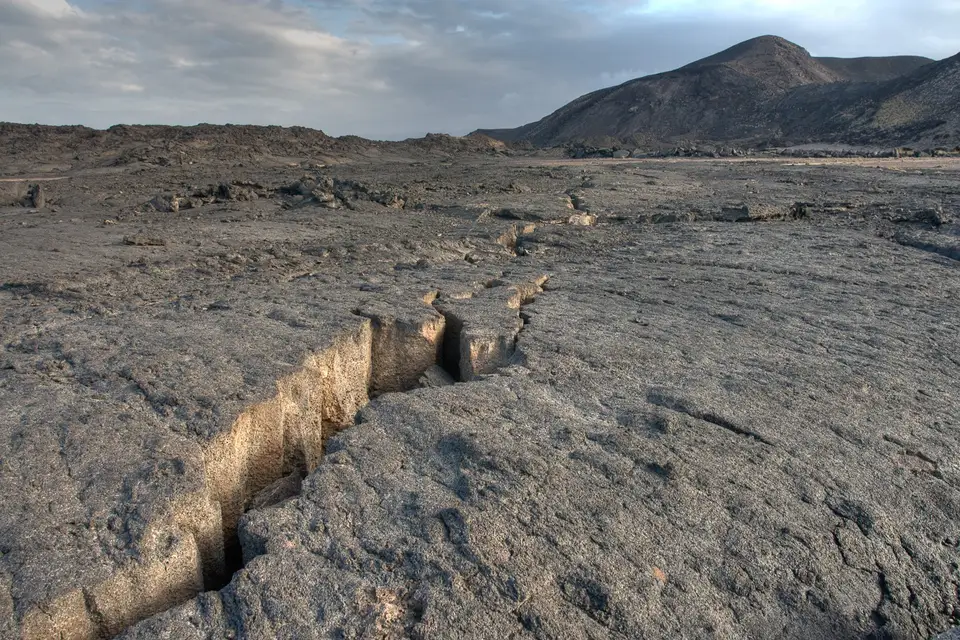
This tour refuses to choose, by separating the two cleanly. The first day is spent inland, on the road to Lake Assal, in a mineral landscape of lava and salt. The second is spent on the water, in the Gulf of Tadjourah, a few minutes by boat from the capital.
The split has a decisive logistical advantage: it avoids there-and-back journeys. Day 1 heads west and returns only at the end of the day. Day 2 leaves from the port and returns to town. No day is spent twice on the same road.
What is the programme, day by day?
| Day | Times | Stages | Kilometres | Meals | Overnight |
|---|---|---|---|---|---|
| Day 1 — the rift and the salt | 06:30 – 19:30 | Djibouti City → Arta → Lake Assal → Goubet el-Kharab viewpoint → coastal camp | ≈ 120 km to Lake Assal from Djibouti City, i.e. ≈ 240 km round trip over the day (documented distances) | Breakfast taken along, picnic at the lake, dinner at the camp | Beach camp: Ras Korali or Sables Blancs |
| Day 2 — the sea | 07:00 – 16:00 | Djibouti City → boat outing in the gulf (Moucha, Maskali or Ras Korali) → fish lunch → place du 27-Juin | ≈ 20 km of road to Khor-Ambado; ≈ 45 minutes by boat to Moucha island (documented distances) | Breakfast at the camp, fish lunch, dinner free in town | Hotel in Djibouti City |
The kilometres given are those our sources document. We publish no estimate for the stretches whose distance is not sourced: better an accurate field than an invented figure.
How does day 1 unfold, stage by stage?
06:30 — Departure from Djibouti City. The road west leaves the city by the Ethiopia road. Setting off at dawn is not a nicety: the first day takes place in one of the hottest places on the planet, and every hour gained in the morning is paid for in comfort in the afternoon.
07:30 — Arta. 42 kilometres from the capital, the small town marks a clear break: the altitude brings coolness. It is the moment for a coffee and a stop at the market before tackling the descent towards the rift.
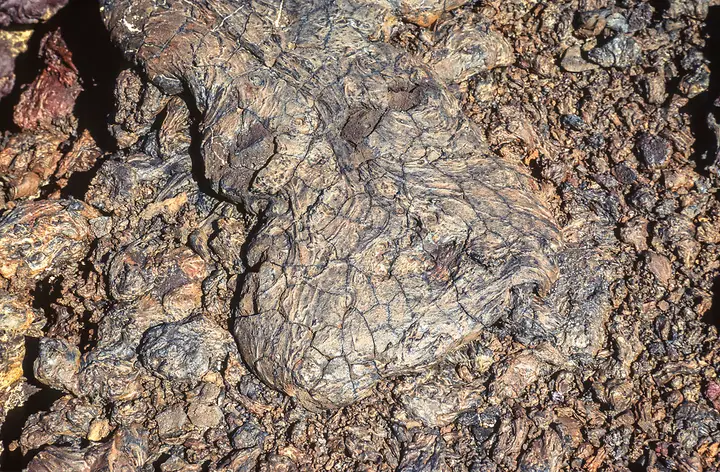
09:00 — Road to Lake Assal. You leave the main road for the track descending into the depression. The landscape changes in nature: black lava flows, then the white line of the basin.
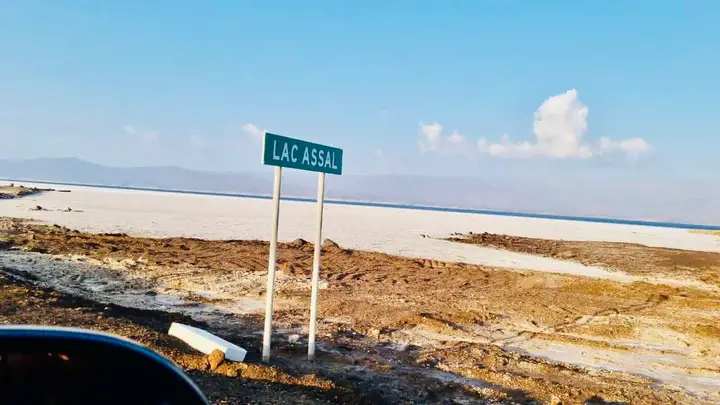
10:00 — Lake Assal. The lowest point of the African continent, 155 metres below sea level, and one of the saltiest bodies of water in the world. Two hours are enough for the essentials: the swim where you float without effort, the walk on the salt crust, the hot springs and the gypsum deposits at the edge.
12:30 — Lunch on site. A picnic brought from the town: there is no supply point on the site, and that is the rule to respect.
14:00 — Goubet el-Kharab viewpoint. The climb back north offers one of the country’s most spectacular panoramas: an inlet hemmed in between cliffs, overlooked by the Devil’s Islands, with the channel where the current rushes between the gulf and the chasm.
16:00 — Road to the coast. Descent towards the beach camps, to the east.
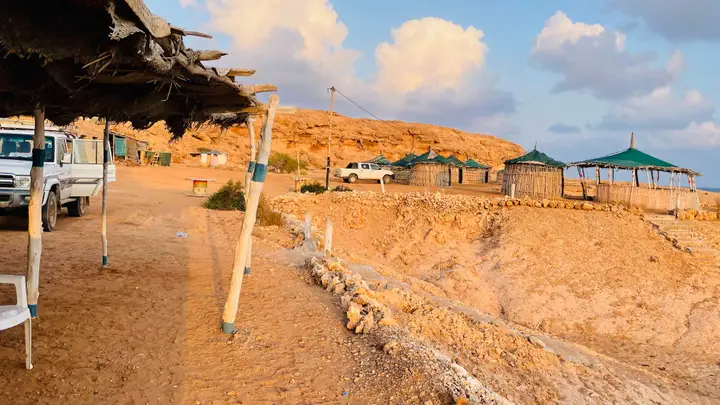
19:30 — Night in a camp. Fish dinner, sunset over the gulf, and a total darkness that explains why photographers choose this sector.
How does day 2 unfold, stage by stage?
07:00 — Breakfast at the camp, then return to town or direct launch depending on the starting point chosen.
08:00 — Boat outing. Three options, to be chosen according to the season.
| Day 2 option | What you see there | Ideal for |
|---|---|---|
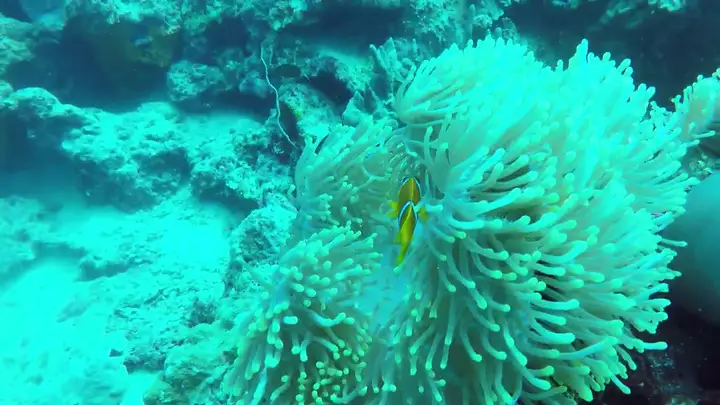
| Gulf of Tadjourah, Arta Plage and Ras Korali sector | Reefs, colourful fish, and whale shark watching in season | Travellers who came for the marine wildlife |
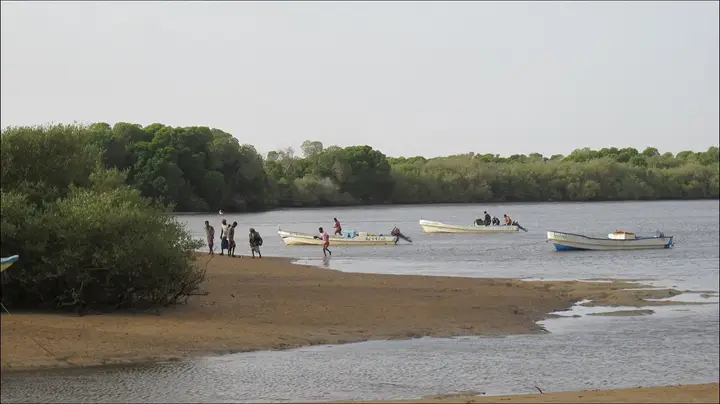
| Moucha and Maskali islands | Coral reefs, mangrove, turtles, easy snorkelling; 45 minutes by boat from Djibouti City | Families and beginner divers |
| Diving sites of the gulf | Coral heads, drop-offs, reef sharks | Certified divers |
12:30 — Fish lunch. On the beach or back in town, it is the meal most consistent with the day.
14:00 — Free time. Swimming, a nap, or a visit to the city centre: place du 27-Juin, its colonial-architecture buildings and its terraces.
16:00 — End of the programme. The return to the airport is straightforward: it lies about 7 kilometres from the city centre, some ten minutes of travel.
What is included, and what is not?
| Item | Generally included | Generally at your expense |
|---|---|---|
| Transport | 4×4 with driver for the rift day | Airport transfers, taxi in town |
| Guiding | English-speaking guide, site entries and permits | Tips |
| Meals | According to the formula: full board or half board | Drinks, alcohol, snacks |
| Accommodation | 1 night in a camp or hotel according to the formula | Upgrades, an extra night |
| Activities | Visits listed in the programme | Optional boat outing, scuba diving |
| Equipment | Bottles of water on board, snorkelling gear according to the operator | Personal mask and snorkel, head torch |
| Insurance | — | Travel and repatriation insurance |
| Visa | — | e-Visa, to be requested before departure |
Two points deserve systematic checking before paying: the number of meals actually included and the snorkelling gear. Those are the two items where the gap between the advertisement and the bill most often widens.
How much does this programme cost?
The prices below are those published by the operators, per person.
| Two-day formula | Indicative price | Particularity |
|---|---|---|
| Djibouti City and Lake Assal, economical version | ≈ 15,130 Fdj | The most accessible base |
| Djibouti City and Lake Assal, classic formula | ≈ 35,000 Fdj | Transport and guide included |
| Lake Assal and snorkelling at Moucha island | ≈ 40,000 Fdj | Adds the day at sea |
| Lake Abbe and Lake Assal | ≈ 55,000 Fdj | Desert variant, further away |
| Night in a beach camp (Ras Korali) | ≈ 17,000 Fdj / adult | Dinner and breakfast |
| Camping on full board (Sables Blancs) | 10,000 to 15,000 Fdj | Rate decreasing with the group |
| Night in a camp (Khor-Ambado) | ≈ 15,000 Fdj / adult | Night on site |
The total budget therefore depends above all on one trade-off: a complete organised tour or a build-your-own assembly. The organised formula costs more but removes all the logistics — 4×4, guide, permits, meals. The build-your-own assembly requires booking the transport, the night and the boat outing separately.
Which variants for your profile?
With family. Favour the short version of day 1 — Arta and Lake Assal, without the walk on the salt crust during the hot hours — and a short sea outing on day 2, towards the Moucha and Maskali islands, where the water is shallow and snorkelling accessible.
Divers. Reverse the balance: a morning on the gulf’s sites on day 1, then the rift on day 2. Diving is better practised in the morning, before the thermal wind gets up.
Photographers. Add sunrise at Lake Assal rather than the mid-morning visit, and keep the late afternoon for the Goubet viewpoint. It is the light that makes the difference, not the number of sites.
Travellers in a hurry. If you have only a single day, keep day 1: Lake Assal and the Afar depression are what Djibouti has that is hardest to see elsewhere.
What if you have a third day?
This programme extends naturally in two ways, according to what you want to add: desert or islands.
For the desert, the third day heads south-west to Lake Abbe, on the Ethiopian border. The site is famous for its fumarole chimneys thirty to fifty metres high, standing in the middle of a shrinking lake. It is a landscape without equivalent in the country, and it alone justifies an extra night on site rather than a there-and-back within the day.
For the islands, the third day is spent on the water: the Seven Brothers archipelago to the north, for experienced divers, or a further outing in the Gulf of Tadjourah for those who want to try again for the whale sharks.
A third day makes sense only if it does not turn into a race. Two major sites properly seen are worth more than four glimpsed from a 4×4.
Which traps should you avoid?
- Do not set off late on day 1. From midday, the Lake Assal basin becomes an oven and the salt throws the heat back.
- Do not underestimate water. Three litres per person for the rift day is a minimum, and there is no resupply on the site.
- Do not schedule the boat outing on the day of your flight. The sea can delay the return, and the safety margin becomes zero.
- Do not settle the camp on site without written confirmation of what is included.
- Do not forget the visa. The application is made online before departure, on the government’s official portal.
- Do not rely on bank cards outside the city. Plan for cash for the camps, the markets and the tips.
- Do not skip the safety margin between the end of the programme and the return flight: a vehicle breakdown or a rough sea is hard to absorb when the plane does not shift.
- Do not overestimate the number of sites per day. Two major stages properly experienced are worth more than five rushed stops.
Frequently asked questions
What can you see in Djibouti in two days?
Two sets are enough to fill two days: the Afar rift, with Arta and Lake Assal, the lowest point in Africa, then the Gulf of Tadjourah, with a boat outing to the reefs, the Moucha and Maskali islands or the whale sharks in season. The first day is done by 4×4 on road and track, the second by boat. A single night on site is needed.
How much does a two-day tour in Djibouti cost?
The organised tours published run from about 15,130 Djiboutian francs per person for a city and Lake Assal formula in its economical version, up to 55,000 francs for the variant that adds Lake Abbe. The classic city and Lake Assal formula sits around 35,000 francs, and the formula combining Lake Assal and snorkelling at Moucha island around 40,000 francs, transport and guiding included.
Do you need a 4×4 for this itinerary?
Yes for the first day. The road is tarmac for most of the journey towards Lake Assal, but the last kilometres and the descent to the salt pans are on track, and access to the Goubet viewpoint is safer in a high-clearance vehicle. The 4×4 journey is in fact part of the experience: the track crosses a recent lava field and several viewpoints.
Where should you sleep during those two days?
Two options dominate. A night in a beach camp, at Ras Korali or Les Sables Blancs, to stay as close as possible to the gulf: allow about 17,000 Djiboutian francs per adult with dinner and breakfast, or 10,000 to 15,000 francs camping on full board. A night in a Djibouti City hotel remains cheaper and more comfortable, but means returning to town on the first evening.
What is the best period for this tour?
From October to April, without hesitation. Temperatures become bearable, including in the Lake Assal basin, and the sea is calmer for the boat outing on the second day. From June to September, the heat makes the first day punishing and the swell in the gulf can lead to the sea outing being cancelled. In the cool season, set off early whatever happens.
Sources
Location
Lat. 11.58830Lng. 43.14530
Open the map — 2-day itinerary in Djibouti: rift, salt and sea →
Itineraries
Read next
Budget in Djibouti: backpacker, mid-range, luxury
Culture and heritage: rock art and old cities in four days
Desert and lakes: salt, rift and Lake Abbe in four days
Diving in Djibouti: the three-day itinerary
Djibouti and Ethiopia: combining the two countries
Djibouti in 1 day: the rift or the beach?
Djibouti in 10 days: the assembly of three itineraries
Djibouti in 2 weeks: what the second week adds