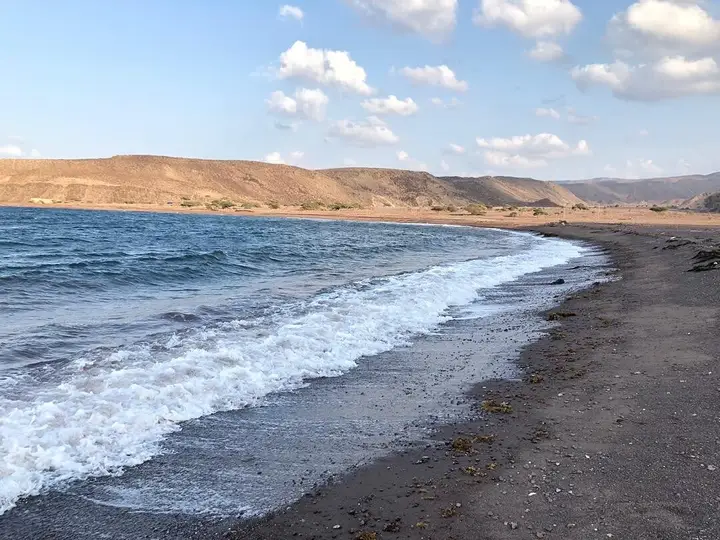
Douda beach: stilt bungalows and mangrove
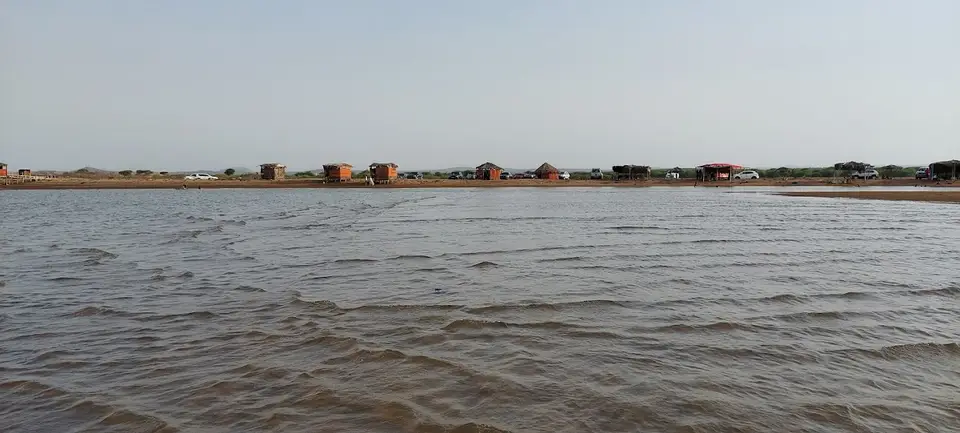
Douda beach is a seaside site south of Djibouti City, on the Loyada road. It combines a beach with shallow water, stilt huts set between sea and mangrove, a fish restaurant and a children's play area. The bungalows, with no electricity or running water, are rented from 4,000 to 12,000 Djiboutian francs depending on their size and how close they are to the shore.
One beach, two records. The catalogue describes this coastal sector twice: once as a leisure beach with its bungalow centre, once as a marine protected area registered under the name “Douda/Haramous”. The two readings are complementary, they do not replace each other.
Where is Douda beach?
South of Djibouti City, on the road leading to Loyada — the address recorded in the catalogue is “Loyada Road”. The National Tourism Agency presents it as a peaceful spot, “ten minutes or so from the capital”, whose interest lies as much in its proximity as in the originality of the tourist centre set up there.
The site combines three elements: a beach, a group of stilt huts tucked between sea and mangrove, and a protected natural area bordering the coastline.
Key facts
| Reference | Data |
|---|---|
| Location | South of Djibouti City, on the Loyada road axis |
| Coordinates of the area | 11.521 N — 43.191 E |
| Announced distance | “Ten minutes or so from the capital” (ANT factsheet) |
| Accommodation | Stilt bungalows, built on the water |
| Comfort | Basic: no electricity and no running water in the lodgings |
| Beach | Private and clean, shallow water |
| Dining | Small fish restaurant, on site |
| Children | Play area, swings and slides |
| Status of the sector | Douda/Haramous marine protected area |
| Access to the site | 500 Fdj per person (rate announced by the operator) |
What does the tourist centre look like?
The originality of the place lies in its architecture: a group of stilt huts, set between the sea and the mangrove. The bungalows built on the water open onto the ocean and the neighbouring mangrove, and the staff bring meals there directly.
It has to be said plainly: these lodgings are basic. No electricity and no running water in the bungalows. That is the price of the formula, and it needs preparing for.
On the beach side, the sand is private and maintained, the water shallow — a safe profile for swimming. A small fish restaurant is set up on site, beside a snack stall, and a play area with swings and slides completes the equipment for families.
What does the Douda/Haramous marine area protect?
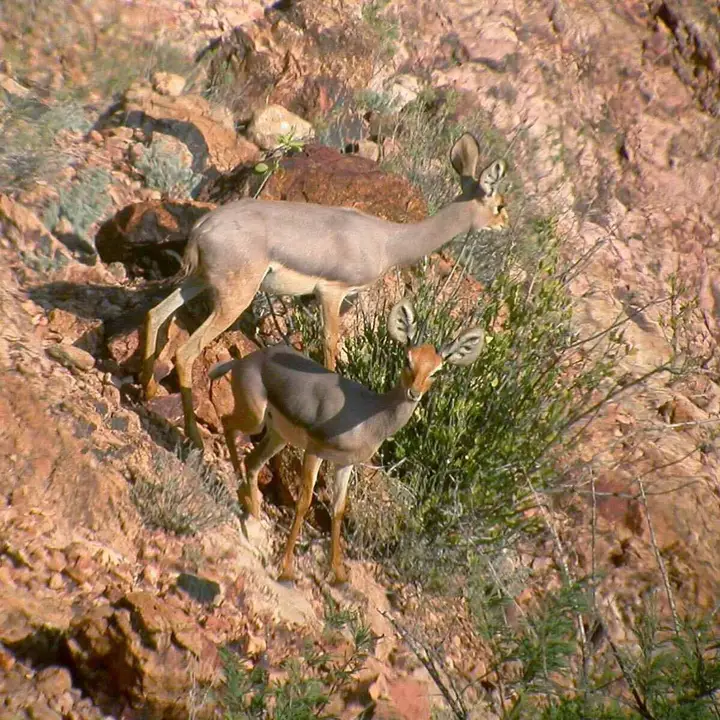
The sector is also a conservation zone, and that is what justifies its richness. The marine protected area gathers a wide variety of ecosystems: estuaries, sand beaches, mudflats, mangrove, exposed-zone reefs, seagrass beds and madreporic reefs.
It acts as a sanctuary for juvenile fish, sea turtles, sharks and dugongs. The protection is not symbolic: the area is described as strictly protected, and any human activity likely to harm marine life is forbidden there.
That is a point to keep in mind before setting off snorkelling or by boat in the sector: the mangrove is not a backdrop, it is a nursery.
How much does a visit to Douda cost?
| Item | Announced amount |
|---|---|
| Access to the site | 500 Fdj per person |
| Rental of a bungalow on the water | 4,000 to 12,000 Fdj depending on size and distance from the shore |
These amounts are those published by the site’s operator; they do not come from an official rate schedule and may change. The bungalow price varies mainly according to two criteria: its size and its distance from the shore.
To sleep in the sector without using the site’s bungalows, the page where to stay in Djibouti compares the districts and the accommodation formulas available.
Do Douda and Haramous mean the same place?
No, and the distinction is useful. The catalogue carries two separate records for this sector: one describes Douda beach and its tourist centre, the other the marine protected area under the name “Douda/Haramous”. The two factsheets share the same road address and very close coordinates — it is indeed the same coastal sector, but not the same object.
Haramous designates the southern sector of the Djibouti City conurbation, where the marine protected area lies. Douda designates the beach and its huts. One is a leisure site, the other a protection status: confusing them would amount to presenting a protected area as a holiday base.
In practice, you visit the beach and you respect the reserve.
What should you know before setting off?
- Plan for self-sufficiency. The bungalows have neither electricity nor running water: a head torch, a power bank and water are essential. The full list appears on the page camps and ecolodges.
- Bring cash. Access to the site is charged at the entrance, and card payment is rare outside Djibouti City.
- Respect the mangrove. Do not touch the mangrove roots, take nothing and carry your waste back: the area is protected.
- With children, the site is well suited — shallow water, private beach, play area. The page travelling with children gives the country’s practical reference points.
- To continue inland, the Arta page is the gateway to the neighbouring region, with its protected areas.
Frequently asked questions
Where is Douda beach?
South of Djibouti City, on the road leading to Loyada: the address recorded in the catalogue is 'Loyada Road'. The National Tourism Agency presents it as a peaceful spot, ten minutes or so from the capital. The site combines a beach, a centre of stilt huts and a mangrove.
Can you sleep at Douda beach?
Yes. The tourist centre rents bungalows on the water, from 4,000 to 12,000 Djiboutian francs depending on their size and how close they are to the shore. These are basic: no electricity and no running water, and meals are delivered directly to the bungalow. So bring a head torch and water.
What does the Douda/Haramous marine area protect?
A set of ecosystems: estuaries, sand beaches, mudflats, mangrove, exposed-zone reefs, seagrass beds and madreporic reefs. The area serves as a sanctuary for juvenile fish, sea turtles, sharks and dugongs. It is strictly protected: any human activity likely to harm marine life is forbidden there.
How much does access to Douda beach cost?
Access to the site is announced at 500 Djiboutian francs per person. Added to that is the rental of a bungalow if you sleep on site, from 4,000 to 12,000 Djiboutian francs depending on the size of the lodging and how close it is to the shore. Check these amounts on site: they come from the operator's published rates, not an official schedule.
Is Douda beach suitable for children?
Yes, on several counts. The water is shallow and swimming is described as safe, the beach is private and clean, and a play area with swings and slides is set up on site. The bungalows, with no electricity or running water, do however demand a little organisation with young children.
Sources
Location
Lat. 11.52062Lng. 43.19144
Destinations
Read next
Abourma: the rock engravings of the Makarrassou massif
Ali-Sabieh: the south-east region, sites and camps
Allols depression: salt, hot springs and caravans
Ardoukoba: the most recent volcano in Djibouti
Arta: the cool of the interior and whale sharks
Assamo: the protected area of the beira antelope
Balho: rock art and the northern border post
Bankoualé: the oasis at the foot of the Goda massif