Lake Assal: visiting Africa's lowest point
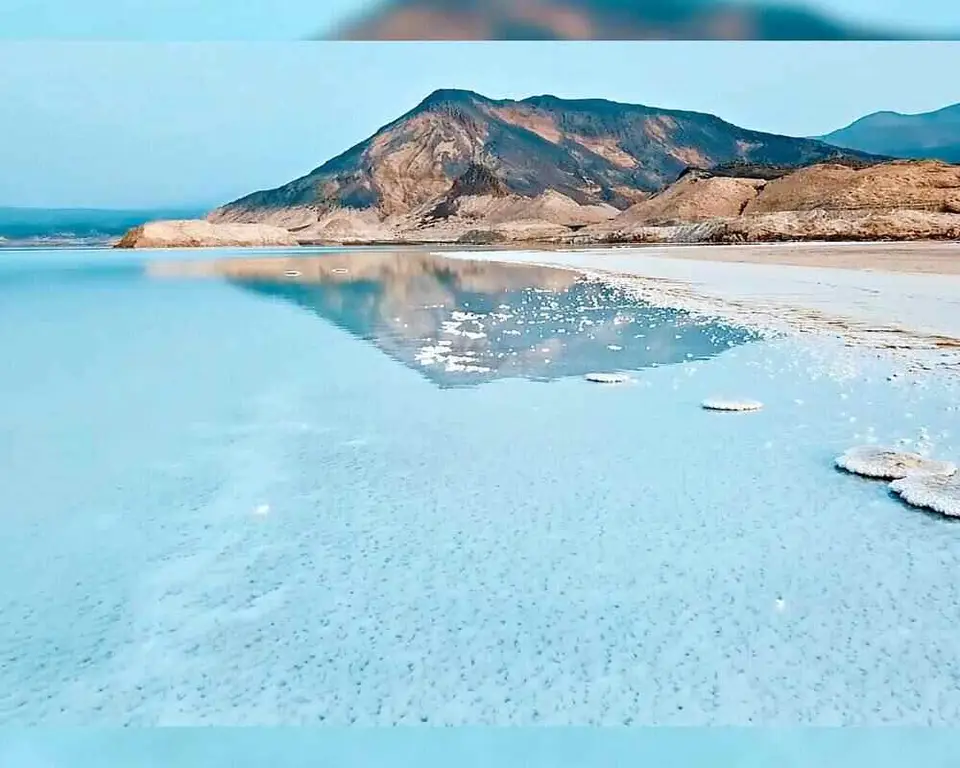
Lake Assal lies 155 metres below sea level in the Tadjourah region, about 120 kilometres from Djibouti City. It is the lowest point on the African continent and one of the saltiest bodies of water on earth, with 348 grams of salt per litre. The drive takes roughly ninety minutes on paved road. A visit fits comfortably into one day from the capital.
Where Lake Assal is
On the altitude, sources differ slightly. The National Tourism Agency places the lake “at less than 157 m below sea level” and gives a range of −155 to −157 m depending on the survey; geographic databases most often retain 155 m. We take 155 m as our reference value and report the range, rather than picking one figure without saying so.
The lake occupies the floor of a collapse basin at the northern end of the Assal rift, between the Goda mountains and the lava flows of Ardoukoba. It marks the junction of three tectonic plates — Arabian, Nubian and Somali — which are pulling apart here by a few centimetres each year.
That geology explains everything else: no outlet, extreme evaporation, and a salt crust that thickens year after year.
Getting there from Djibouti City
| Option | Duration | Indicative cost | Note |
|---|---|---|---|
| Organised tour | 1 day | ~18,000 Fdj / person | Transport and guide included |
| 4×4 with driver | 1 day | ~44,000 Fdj / vehicle (≈ 250 $) → ~250 $ / pers solo, ~150 $ / pers at 10 | Worth it from 4 people |
| Rental vehicle | 1 day | depends on supplier | Saloon accepted; short stretch on the salt crust |
The route follows the Ethiopian road west, then turns south after the Goubet pass. Allow ninety minutes without stopping, longer if you break at the Goubet al-Kharab viewpoint, which is worth it.
What to do on site
Swim in water at 348 g of salt per litre
You float without moving. The sensation is disorienting, and the salt stings the smallest scratch. Bring a bottle of fresh water to rinse yourself.
Walk on the salt ice floe
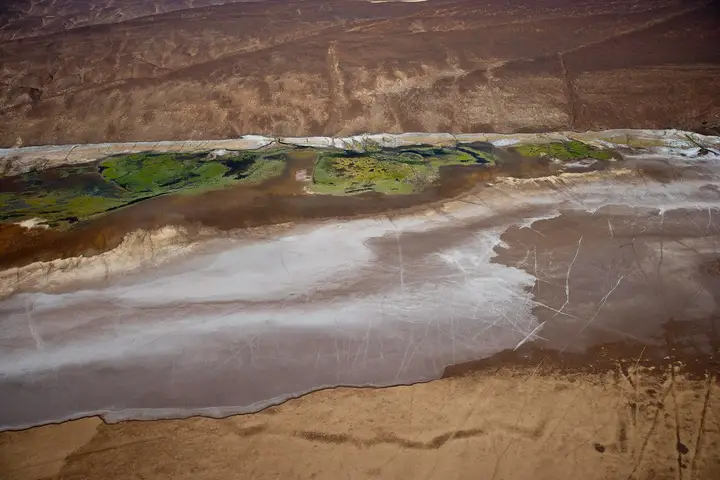
The white crust stretches over several square kilometres. It cracks underfoot and forms polygonal patterns that photographers come for.
See the hot springs and gypsum deposits
Along the edge of the lake, hot water resurgences deposit gypsum and salt in white and ochre terraces.
Push on to Ardoukoba and the Goubet
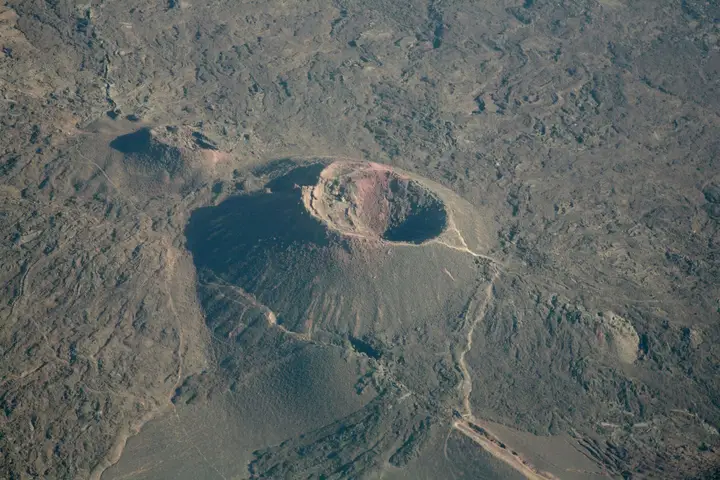
The Ardoukoba volcano was born in a week in November 1978. Nearby, Goubet al-Kharab forms a spectacular cove dominated by Devil’s Island.
When to go
| Month | Temperature | Crowds |
|---|---|---|
| January – February | 24 – 28 °C | High |
| March – April | 27 – 32 °C | Moderate |
| May | 32 – 37 °C | Low |
| June – August | 38 – 46 °C | Very low |
| September | 35 – 40 °C | Low |
| October – December | 26 – 31 °C | High |
Safety and respect for the site
- Carry at least three litres of water per person. There is no supply point on site.
- Leave before 7am. The basin concentrates heat and there is almost no shade.
- Do not taste the lake water, and do not let children put their hands to their faces.
- Take all your waste back. The site has no collection.
- Do not take salt in quantity: the site is protected natural heritage.
Frequently asked questions
Can you swim in Lake Assal?
Yes, and it is one of the strangest experiences in the country: salinity is so high that you float without any effort, much like in the Dead Sea. Two precautions apply. Keep the water away from your eyes and mucous membranes, because the sting is real. And rinse with fresh water immediately after swimming, since salt crystals abrade the skin as they dry.
How much does a Lake Assal day trip cost?
Expect around 18,000 Djiboutian francs per person for an organised day trip from Djibouti City, transport and guide included. Hiring a 4×4 with a driver costs roughly 44,000 francs per day, which works out cheaper from four people upwards. Meals are generally not included in these rates.
Can you reach Lake Assal in a rental car?
Yes. The road is paved all the way to the lake shore from Djibouti City. A short stretch of about 400 metres remains on the salt crust, which you cross at walking pace. A saloon car is enough; a 4×4 is not necessary. Simply check the state of the salt with your rental company, and carry plenty of water.
What is the best time of year to visit Lake Assal?
From October to April, when temperatures on site drop to between 25 and 30 degrees Celsius. In summer the basin acts like an oven: salt and volcanic rock reflect the heat and temperatures easily exceed 45 degrees. Whatever the season, start early in the morning and leave the site before midday to avoid peak exposure.
Sources
Location
Lat. 11.66093Lng. 42.40625
Destinations
Read next
Abourma: the rock engravings of the Makarrassou massif
Ali-Sabieh: the south-east region, sites and camps
Allols depression: salt, hot springs and caravans
Ardoukoba: the most recent volcano in Djibouti
Arta: the cool of the interior and whale sharks
Assamo: the protected area of the beira antelope
Balho: rock art and the northern border post
Bankoualé: the oasis at the foot of the Goda massif