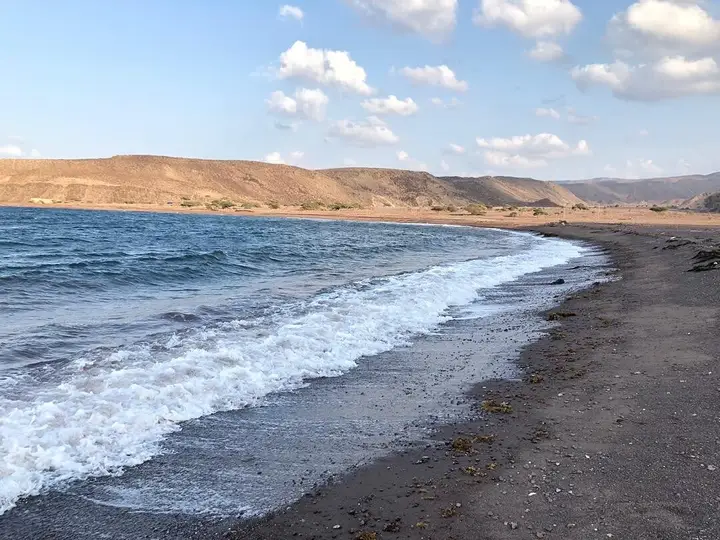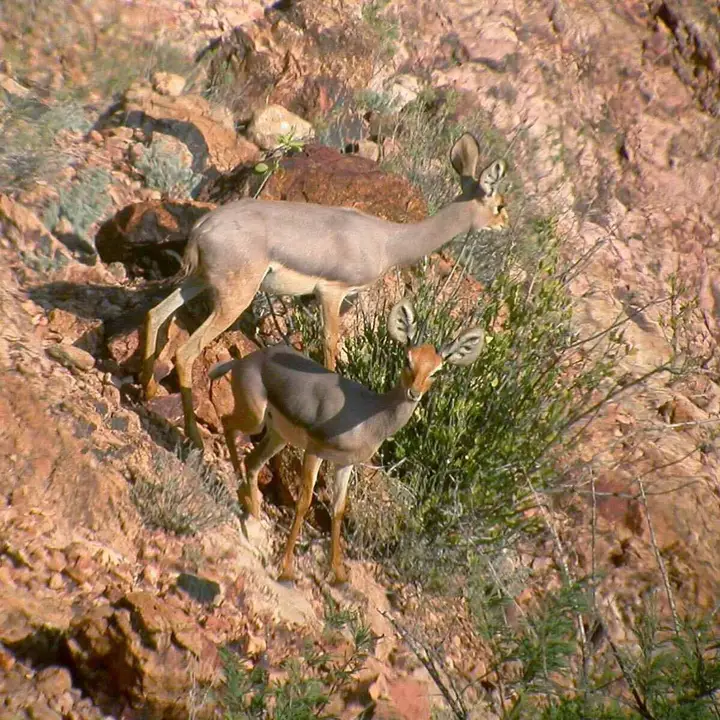
Moucha and Maskali islands: the day at sea
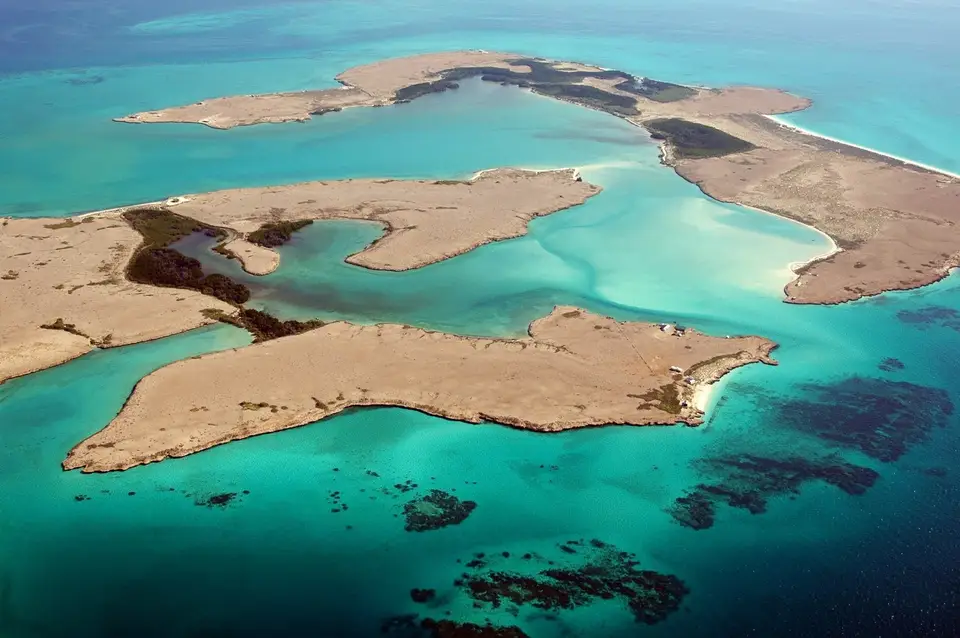
Moucha and Maskali are two coral islands in the Gulf of Tadjourah, about 45 minutes by boat from Djibouti City. Moucha, semi-desert, holds fine sand beaches, a mangrove and preserved reefs. Maskali, almost uninhabited, is ringed by reefs and known for its mangrove of white mangroves and its marine life. The two combine in a single day, with swimming, snorkelling and lunch on site.
Where are the Moucha and Maskali islands?
The two islands occupy the mouth of the Gulf of Tadjourah, a short distance from Djibouti City. They are emerged madreporic reefs: in other words, the land you walk on is an ancient coral reef, lifted and colonised by semi-desert vegetation. That origin explains the flatness of the islands, the colour of their water and the richness of the seabed around them.
Moucha, the larger, is semi-desert. It combines fine sand beaches, a mangrove and well-preserved coral reefs. Maskali, immediately nearby, is almost uninhabited: it stands out for a lush mangrove of white mangroves and for very fish-rich waters.
Both islands are among the most visited natural sites in the country, and their proximity to the capital makes them the most accessible sea trip.
Key facts
| Reference | Moucha | Maskali |
|---|---|---|
| Location | Mouth of the Gulf of Tadjourah | Mouth of the Gulf of Tadjourah |
| Approximate coordinates | 11.720 N — 43.198 E | 11.713 N — 43.157 E |
| Geological origin | Emerged madreporic reef | Emerged madreporic reef |
| Occupation | Beach facilities | Almost uninhabited |
| Access | Boat, about 45 min from Djibouti City | Boat, combined with Moucha |
| Highlights | Beaches, snorkelling, beach club | Mangrove, fish-rich waters |
| Notable wildlife | Morays, rays, turtles, seabirds | Turtles, ribbon-tailed stingray |
| Best season | October to April | October to April |
| Recommended duration | 1 day | 1 day, combined |
How do you reach the islands?
Everything happens by sea, from Djibouti City. Allow about 45 minutes by boat to reach Moucha. Maskali is reached in the same movement: the two islands are neighbours and most trips combine them in a single day.
Three formulas exist:
- The day trip, leaving in the morning and returning in the late afternoon. It is the most common formula, and the simplest: transfer, setting up on the beach and return are taken care of.
- The transfer with pitch rental, for those who want to manage their own programme without complex logistics.
- The stay or package, over one or more days, with diving or accommodation attached.
The state of the sea governs everything. The gulf is generally manageable, but a trip can be moved for wind or swell: keep a margin in your programme, especially if you are connecting with a flight.
What is there to do on the islands?
Swim and snorkel
This is the main activity, and it is accessible to everyone. The water is clear, shallow in places, and the reefs start a few metres from the shore: a mask and snorkel are enough. You will see colourful reef fish, morays, rays and, with a bit of luck, turtles.
Dive the neighbouring sites
The archipelago is a recognised diving area, with several distinct sites:
| Site | Indicative depth | Level | Interest |
|---|---|---|---|
| The Canyon | Shallow to medium site | Beginners accepted | Canyon between two coral tongues, sheltered from wind, turtles, rays, morays |
| The Air France Buoy | Drop-off of about 25 m | All levels | Sandy bottom, triggerfish, clownfish, wreck, light current |
| The Air France Potatoes | Suited to all | All levels | Schools of groupers, napoleon fish, stingrays, whitetip sharks |
| The Dome | Coral dome from 14 to 45 m | Intermediate | Multicoloured coral, wildlife down to 30 m, reef sharks |
Note that the Air France Potatoes are particularly renowned during the groupers’ spawning season, in March and April: that is when the schools are most spectacular.
Explore the mangrove
The mangrove of white mangroves is one of the most singular landscapes on Maskali. This environment plays a major ecological role: it serves as a nursery for juvenile fish and a feeding area for many species. You explore it by slow boat or with fins, avoiding touching the roots.
Watch the birds
Moucha hosts a varied birdlife: pelicans, egrets and other species, including the white-eyed gull. The Maskali mangrove also shelters one of the finest mangroves in Djibouti. Bring binoculars if you are a birdwatcher.
Have lunch on site
Moucha has dining facilities: a grilled buffet prepared on site, salads, desserts and soft drinks depending on the package. Some beaches also offer seafood, including fresh crab. Check what is included when you book: lunch is not systematically included.
Moucha or Maskali: which should you choose?
| Your profile | Recommended island | Why |
|---|---|---|
| First visit, family | Moucha | Facilities, equipped beach, dining |
| Scuba diving | Moucha and neighbouring sites | Canyon, Air France Buoy, Dome nearby |
| Nature and quiet | Maskali | Almost uninhabited, preserved mangrove |
| Snorkelling | Both | Reefs reachable from the shore |
| Mangrove photography | Maskali | Dense mangroves and channels |
In practice there is not really a choice to make: the combined day lets you enjoy Moucha’s facilities and Maskali’s quiet in the same trip. If you only have half a day, stay on Moucha.
A story of smuggling
Maskali has a romantic past. The writer and adventurer Henry de Monfreid used the island in 1914 as an arms cache, intended to be resold as contraband. That detail, often forgotten by visitors, is a reminder that these islands have not always been leisure destinations: for a long time they served as a foothold in a gulf that was a trade route and a space of trafficking.
How much does a day on the islands cost?
| Package | Indicative price | Detail |
|---|---|---|
| Transfer with pitch rental | 5,000 Fdj | Per person |
| Full-day Moucha and Maskali trip | 8,000 Fdj | Transfer and day on site |
| Exploration dive at Moucha | 10,000 Fdj | Supervised trip |
| Diving at Moucha island | 12,000 Fdj | Supervised trip |
| Ile Musha package | 26,691 Fdj | Based on 2 people |
| Moucha and Maskali islands package | 40,000 Fdj | Group of 1 to 10 people |
| Ile Musha package | 51,602 Fdj | Based on 1 person |
The dominant item is the boat. As with all sea trips, the price per person falls markedly as the group widens: a trip for two costs proportionally more than a trip for eight or ten.
When to go to the Moucha and Maskali islands?
| Period | Sea | Heat | Visitor numbers | Recommendation |
|---|---|---|---|---|
| October – November | Generally calm | Bearable | Moderate | Excellent window |
| December – February | Calm | Moderate | High | Ideal window |
| March – April | Calm to moderate | Rising | Moderate | Good window, groupers spawning |
| May – September | Variable | Very strong | Low | Morning trips only |
| Late September | Variable | Falling | Low | Gradual recovery |
The cool season combines every advantage: a more manageable sea, bearable heat, often better visibility. In summer, trips remain possible but concentrate in the early morning, and the heat on a beach with no shade quickly becomes a problem.
What should you know before setting off?
- Carry plenty of water, along with serious sun protection: the islands offer little shade.
- Water shoes advised: coral and sea urchins make walking barefoot risky.
- Reef-safe sun cream: the reefs are fragile.
- Payment in cash. Bring money for extras on site.
- Check what is included: transfer, lunch, drinks, snorkelling equipment and sunbed rental are not always included.
- Keep a time margin before a flight: the sea decides the schedule, not the reverse.
How do you enjoy the islands without damaging the reefs?
The reefs of Moucha and Maskali are presented as preserved, and that is precisely what makes them attractive. A few simple rules help maintain that state:
- Do not touch the coral and do not stand on it. Contact kills the polyps and breaks the colonies.
- Do not feed the fish. It changes their behaviour and unbalances the reef.
- Take no shell, no coral, no sand. Souvenirs are photographed.
- Keep your distance from turtles and do not chase them with fins.
- Throw nothing overboard, cigarette ends included, and carry your waste back to the mainland.
- Do not fish for leisure without supervision: the environment is protected on several counts.
These islands are also a geological archive. Emerged madreporic reefs, they keep the memory of the great stages of the planet’s history, above and below the surface. Their interest goes well beyond a day at the beach.
Preparing your trip
Book your trip while checking the state of the sea, and if possible combine Moucha and Maskali in the same day to spread the cost of the boat. If you want to dive, state your level when booking: some sites, such as the Dome, are aimed at intermediate divers. Finally, check your entry formalities on the official visa portal before fixing your dates.
Frequently asked questions
How do you reach the Moucha and Maskali islands?
By boat, from Djibouti City. Allow about 45 minutes of crossing to reach Moucha. Maskali is reached in the same movement: the two islands are neighbours and most trips combine them in a single day. Organised packages include the transfer, setting up on the beach and the return. A transfer with pitch rental is offered from around 5,000 Djiboutian francs.
What can you see underwater around the two islands?
The coral reefs of Moucha and Maskali are reputed to be preserved. There you will meet morays, rays, turtles, clownfish and many reef species. Maskali is also known for the ribbon-tailed stingray and for the whale shark, whose presence is never guaranteed. Several nearby dive sites, such as the Canyon or the Air France Buoy, complete the trip.
Do you need to be a diver to enjoy the islands?
No. Most visitors make do with swimming and snorkelling, accessible with a simple mask and snorkel. The reefs of Moucha start a few metres from the shore, and the shallows of Maskali are shallow in places. Scuba diving remains an option, with sites suited to beginners such as the Canyon, and others more demanding.
Can you stay overnight on the Moucha and Maskali islands?
Maskali is almost uninhabited: accommodation there is very limited. Moucha, on the other hand, has beach facilities, notably a beach club and a resort with dining, which allows a full day there without heavy logistics. For a night on site, better to go through an operator who arranges the transfer and installation, rather than improvising on the shore.
Sources
Location
Lat. 11.72022Lng. 43.19797
Destinations
Read next
Abourma: the rock engravings of the Makarrassou massif
Ali-Sabieh: the south-east region, sites and camps
Allols depression: salt, hot springs and caravans
Ardoukoba: the most recent volcano in Djibouti
Arta: the cool of the interior and whale sharks
Assamo: the protected area of the beira antelope
Balho: rock art and the northern border post
Bankoualé: the oasis at the foot of the Goda massif