Obock: the former capital and its wild coast
Obock is a small port town in northern Djibouti, on the western shore of the Bab el-Mandeb strait. It was the first capital of the French protectorate, under Léonce Lagarde, before the seat of power moved to Djibouti City. It is reached by 240 kilometres of road, about two hours by ferry or an hour by fast boat. The region holds the Ras Bir lighthouse and the Godoria mangrove.
Do not confuse two seasons. The best climatic season for Obock runs from November to March: the region is better ventilated than the capital and the mangroves are then visited in the cool hours. The whale shark season, on the other hand, peaks from November to January in the Gulf of Tadjourah. A visit to Obock in February or March remains pleasant, but it is no longer the heart of the watching season.
Where is Obock?
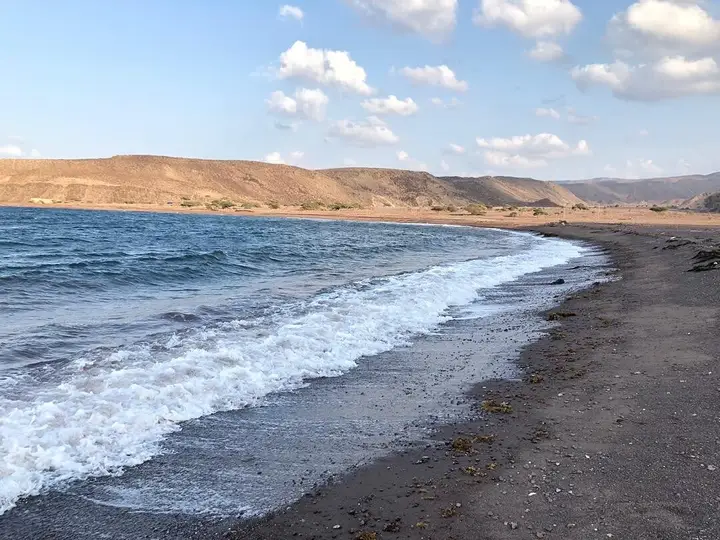
Obock occupies the western shore of the Bab el-Mandeb strait, at the northern tip of the Djiboutian coast. The town itself is modest: a few streets, a port, a market, an end-of-the-world atmosphere. What justifies the journey is the whole formed by the town, its cape and its coast.
The Obock region is the northernmost in the country. It combines three very different environments: a coastline with an already maritime climate, a mangrove among the richest in the Horn of Africa, and a mountainous hinterland belonging to one of the country’s last remnants of primary forest.
It is also a region heavy with history. Obock was the first capital of the French protectorate, under the administration of Léonce Lagarde, before the seat of power was transferred to Djibouti City. That past explains the town’s physiognomy, with its inherited administrative buildings and an urban plan that no longer matches its current weight.
Key facts
| Reference | Data |
|---|---|
| Administrative region | Obock |
| Coordinates of the area | 11.960 N — 43.276 E |
| Historical status | First capital of the French protectorate |
| Distance from Djibouti City | 240 km by road |
| Ferry time | about 2 h |
| Fast boat time | about 1 h |
| Road access | Paved road, a long crossing |
| Sea access | Ferry or fast boat from Djibouti City |
| Best season | November to March |
| Recommended duration | 2 to 3 days |
How do you get to Obock?
| Means | Duration | Advantage | Limit |
|---|---|---|---|
| Road | 240 km | Freedom to stop, no dependence on the sea | Long and tiring journey |
| Ferry | about 2 h | Comfortable, allows you to carry volume | Fixed timetable, sensitive to the sea |
| Fast boat | about 1 h | The quickest | Limited places, weather-dependent |
The choice depends on your goal. If you want to see the coast, the Mabla mountains and the Godoria mangrove on the way, the road is the answer: it leaves you in charge of your own pace. If Obock is your final destination and you are in a hurry, the sea route is markedly more efficient — an hour by fast boat against a long morning of driving.
In every case, allow a margin: sea departures can be moved, and the state of the access track to certain coastal areas deteriorates after the rains.
What is there to do in and around Obock?
Climb to the Ras Bir lighthouse
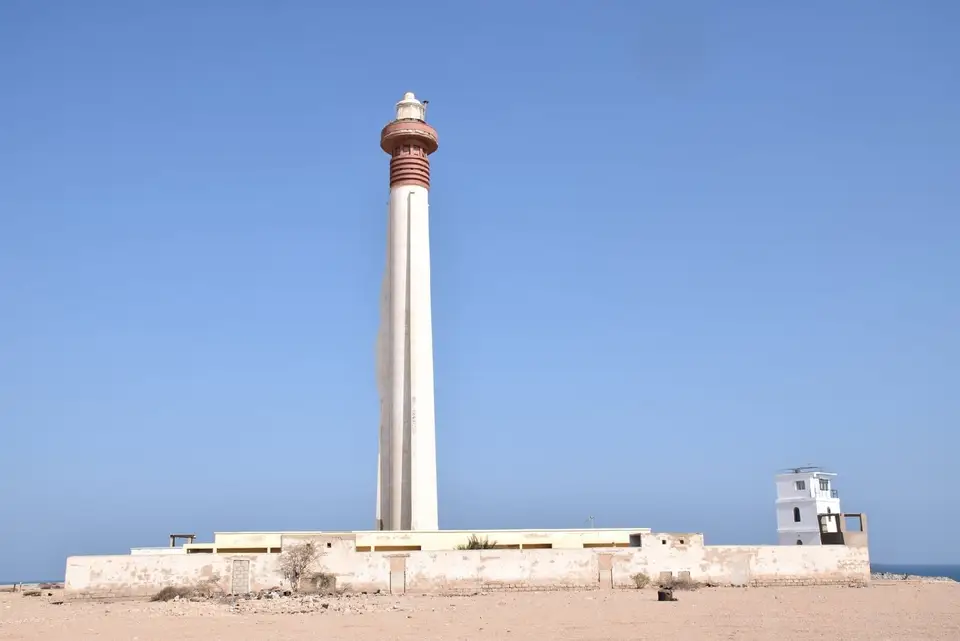
This is the emblematic monument of the region. 60 metres high, the Ras Bir lighthouse is presented as the tallest lighthouse in East Africa and the fourth on the continent. It also marks a navigation landmark: it is the first lighthouse you meet at the entrance to the Red Sea when heading north, towards the Mediterranean via the Suez canal.
The site’s history is long. A first lighthouse was commissioned as early as 1886 at Ras Bir cape; it was replaced in 1915, then in 1952. The current lighthouse dates from 2001: its optic peaks at 74 metres and sends out two white flashes every ten seconds, visible up to 20 nautical miles, or about 37 kilometres.
Having climbed the 250 steps, you look down on the southern entrance to the Red Sea, the eastern end of the Gulf of Tadjourah and, in clear weather, the Bab el-Mandeb strait that separates Djibouti from Yemen.
Explore the Godoria mangrove
Considered the finest mangrove in Djibouti, Godoria unfolds a maze of channels cut between mangrove roots, where dozens of animal and plant species cross. It is reached by sea, as part of a trip from Djibouti City, Obock or Les Sables Blancs; the land track is poor.
The site is a compulsory stage on the migration route that comes up the Rift valley and follows the Red Sea. Every year the straits see more than 1.5 million birds across 37 species, of which 5 are globally threatened, on their round trips between Eurasia and Africa. The area also hosts breeding birds: storks, ibises, pelicans, bee-eaters, rollers, swifts, swallows and waders.
A few remarkable species complete the picture: ospreys and sooty falcons breed on the cliffs and coastal islets, the Eurasian spoonbill and the barred warbler frequent the mangrove, while the crested lark and other characteristic passerines occupy the arid coastal plains. Among seabirds, the slender-billed gull and strong populations of crab plovers are also present.
This fragile area is under threat: overgrazing by goats and camels, along with the intensity of maritime traffic in the Red Sea, increases the risk of oil discharges, with disastrous effects on the environment.
Stay at Village de la Mer Rouge
Less than a kilometre from the town of Obock, this site is built partly on a hill overlooking the sea, partly on a 200-metre fine sand beach. It has about fifteen rooms in three groups: 4 “luxury” bungalows facing the sea, 6 bungalows on the hill, and 6 simpler bungalows on the beach, cooled by the wind. Two restaurants — one on the hill, one on the beach — serve cooking based on fish and seafood.
The facilities are serious for such an isolated site: water supply from the town of Obock, a solar unit and two generators. The coral barrier lies less than 30 metres from the beach, which makes snorkelling accessible without a boat. The site is regularly visited by dolphins and, more rarely, by whale sharks.
Dive in the Seven Brothers marine protected area
To the north of the region stretches the Seven Brothers marine protected area, covering 447.1 km², or about 27% of the country’s coastal fringe. The archipelago comprises several arid volcanic islets with particular hydrodynamic conditions, which have favoured a rare marine biodiversity: coral reefs, seagrass beds, preserved mangroves, sharks, sea turtles, dugongs and migratory birds.
The dive sites there are varied and address different levels: a shallow aquarium off the East island, deeper dives off the South island, a “Japanese garden” off Grande island frequented by whitetip sharks, and an “underwater arch” off Tolka island, reserved for experienced divers because of the current. The region is also renowned for sport fishing.
Further south, the Khor Angar mangrove, covering about 700 to 800 hectares, draws a second network of channels, accessible from the Seven Brothers camp.
Go up into the Mabla mountains
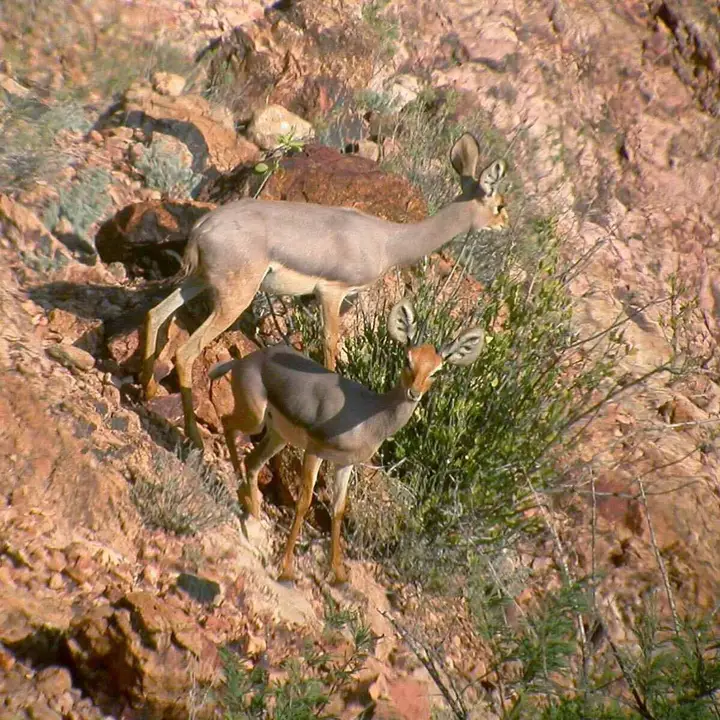
Inland, the Mabla mountains rise on average to around 1,370 metres, making them the fifth highest point in the country. With the Forêt du Day, they shelter one of the last remnants of primary forest in Djibouti: boxwood, acacias, palms, junipers, ferns and flowering grasses. The region is also an important cultural heritage for the Afar communities who have lived there for generations, and one of the rare habitats of the Djibouti francolin, a critically endangered species.
These mountains have suffered in recent years: forest fires, tree felling and military use have reduced the vegetation cover.
Obock, a capital dethroned
Understanding Obock means remembering why the town existed. Its position on the African shore of Bab el-Mandeb, at the southern entrance to the Red Sea, made it a natural foothold on a major sea route towards the Suez canal. That is what earned it the role of first capital of the French protectorate, under Léonce Lagarde.
The transfer of the seat of power to Djibouti City sealed its fate: the new capital had a larger port and, above all, access to the interior, later embodied by the Djibouti–Ethiopia railway. Obock remained a garrison, fishing and local trading town.
That history can still be read in the urban fabric: administrative buildings oversized relative to the current population, wide streets, alignments that evoke a town that once aspired to another role.
When to go to Obock?
| Period | Heat | Wind | Sea | Recommendation |
|---|---|---|---|---|
| November – December | Moderate | Present | Generally calm | Ideal window |
| January – February | The mildest | Present | Calm | Ideal window |
| March – April | Rising | Moderate | Calm to moderate | Good window |
| May – September | Very strong | Variable | Variable | To be avoided |
| October | Falling | Present | Correct | Good recovery |
The region is generally better ventilated than Djibouti City, which softens the hot hours without removing them. In summer, boat trips remain possible but concentrate in the early morning, and birdwatching loses much of its interest in the hottest hours.
What should you know before setting off?
- Carry cash. Electronic payment options are very limited in the region.
- Bring your medicines and a kit. Health provision is reduced outside the capital.
- Protect yourself from sun and wind. The north coast is exposed, and natural shade is scarce.
- Do not count on a continuous connection. The network is irregular on the coast and in the hinterland.
- Check the marine weather before any boat trip, and keep a day in hand if you have a flight to catch.
- Plan a substantial transport budget: it is the dominant item of a stay in Obock, whichever route you choose.
How do you visit Obock responsibly?
The region combines two fragilities: a mangrove threatened by overgrazing and maritime traffic, and a relict forest cover receding in the Mabla mountains.
A few principles apply:
- Limit your impact on the mangrove. Do not cut mangroves, do not stir up the sediment, throw nothing from the boat.
- Keep your distance from marine wildlife: turtles, dolphins and whale sharks are not to be chased.
- Buy local. The Ras-Bir Houguef camp, with its twelve daboitas set on a rocky platform above a small beach, is an example of a structure that supports the local community.
- Carry your waste back to Djibouti City: collection is haphazard on the north coast.
- Report any oil discharges you observe at sea: it is one of the main documented threats to the area.
Obock is not a standard seaside resort destination. It is a stretch of coast where history, maritime geography and a remarkable biodiversity overlap — and where the journey is earned, by road or by sea.
Preparing your trip
Confirm sea departures before fixing your dates, and if possible combine Obock with the Godoria mangrove and the Mabla mountains in a single two- to three-day stay. Finally, check your entry formalities on the official visa portal, along with the state of the road access with your operator after the rainy season.
Frequently asked questions
How do you get to Obock from Djibouti City?
Three options. By road, over about 240 kilometres, allowing several hours of travel. By ferry, in about two hours. Or by fast boat, in about an hour. The sea route is the quickest and most comfortable, but it depends on the state of the sea and on available departures. The road, on the other hand, gives you the freedom to stop on the way.
What is there to see in and around Obock?
The Ras Bir lighthouse, 60 metres high and reached by 250 steps, dominates the cape north-east of the town. The Godoria mangrove, considered the finest in the country, is visited by boat. Less than a kilometre from the town, Village de la Mer Rouge lines up a 200-metre fine sand beach. Finally, the Seven Brothers marine protected area occupies the north of the region.
Why was Obock the capital of the protectorate?
Obock occupied a strategic position on the African shore of the Bab el-Mandeb strait, at the southern entrance to the Red Sea: the site controlled a major sea route towards the Suez canal. The town was the first capital of the French protectorate, under the administration of Léonce Lagarde, before the seat of power was transferred to Djibouti City, which was linked to the interior.
When should you visit Obock and the Godoria mangrove?
From November to March. The region is better ventilated than the capital, but remains very hot the rest of the year. For the mangrove, favour the cool hours: migratory birds are more active there early in the morning. Avoid the full summer heat, which makes boat trips gruelling and reduces wildlife activity.
Sources
Location
Lat. 11.96000Lng. 43.27557
Destinations
Read next
Abourma: the rock engravings of the Makarrassou massif
Ali-Sabieh: the south-east region, sites and camps
Allols depression: salt, hot springs and caravans
Ardoukoba: the most recent volcano in Djibouti
Arta: the cool of the interior and whale sharks
Assamo: the protected area of the beira antelope
Balho: rock art and the northern border post
Bankoualé: the oasis at the foot of the Goda massif