Language and culture in Djibouti: what really applies
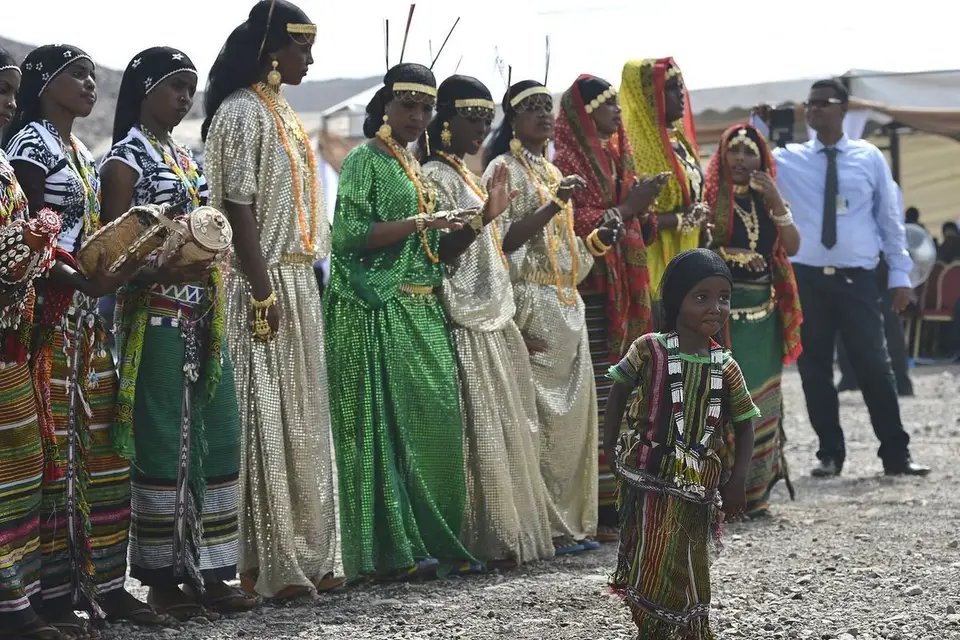
French and Arabic are the two official languages of Djibouti. Somali and Afar are spoken daily by the majority of the population, and English remains marginal. Islam structures social life, and the official British advice devotes a whole section to Ramadan. However, neither the amount of a tip nor precise customs are documented by an official source: to be confirmed locally.
What this page refuses to do. The research brief that feeds this site contains no verified data on social customs, tipping or public holidays in Djibouti. We have therefore invented no tipping scale, no list of public holidays and no Somali or Afar glossary: a made-up transcription would be worse than an absence. What follows systematically separates the documented from the to be confirmed locally.
Which language is most spoken in Djibouti?
French and Arabic are the two official languages of the republic of Djibouti. Somali and Afar, for their part, are the languages actually spoken every day by the majority of the population, depending on the community and the region. English remains marginal outside the tourism and hotel sector.
This four-language arrangement explains the question travellers ask most often. In Djibouti City, French opens almost every door: administration, school, bank, shops, restaurants. In the interior the picture changes: ordinary exchanges happen in Somali or Afar, and French recedes sharply.
| Language | Status | Where it serves the traveller |
|---|---|---|
| French | Official language | Administration, hotels, shops of the capital, school |
| Arabic | Official language | Religion, press, institutions, neighbourhood shops |
| Somali | Majority language of daily life | Markets, transport, ordinary exchanges |
| Afar | Majority language of daily life | Northern and western regions, camps |
| English | Not official | International hotels, a few guides |
Djibouti is among the member states and governments of the International Organisation of La Francophonie: the place of French is therefore not a folkloric remnant, it is institutional.
Is Djibouti a French-speaking country?
Yes, in the institutional sense: French is an official language and the country is a member of La Francophonie. No, in the demographic sense: it is not the mother tongue of the majority of the population, and a traveller who speaks only French will occasionally find himself without an intermediary.
In practice, three situations arise. In the capital and in the tourist sector, French is enough. On natural sites, your guide acts as the interface and generally speaks French. In a market, a minibus or a small neighbourhood shop, you have to accept negotiating by gestures or ask someone to translate — which is done without difficulty.
Is Djibouti an Arab country?
Djibouti sits at the hinge: it is an Arab and African republic. Arabic is an official language alongside French, and the country belongs to the regional organisations of both groupings. The population is mainly Muslim, and that influence can be read in first names, cuisine, the social calendar and architecture.
That does not mean Arabic is the language of ordinary exchanges: in the street, Somali and Afar dominate. A traveller who speaks Arabic will be understood and well received, but will rarely hear a whole conversation in that language outside religious and institutional settings.
What is the main religion in Djibouti?
Islam is the religion of the great majority of the population. For a traveller that translates into very concrete elements: the call to prayer, shops closing for a few minutes at prayer times, halal food in most establishments, and a month of Ramadan that reorganises the hours of the day.
The British FCDO devotes a whole section to Ramadan in its travel advice, alongside questions of safety and health. It is a useful indicator: this is not an exotic detail, it is an organisational parameter.
How should you behave during Ramadan in Djibouti?
It is the only cultural area on which we have precise official guidance. The FCDO explicitly lists what not to do during the day, for people who are not fasting:
- do not eat, drink, smoke or chew in public, including in your car;
- do not play loud music or dance;
- do not swear in public;
- respect those who are fasting and avoid offending local values.
The same document recommends checking the opening hours of shops and restaurants, and taking into account that establishments may adapt their service. Ask your guide, your accommodation or your contacts once you are on the spot.
How much should you tip in Djibouti?
We publish no amount, because no official source documents one. Secondary sources describe a tip that is not compulsory but appreciated in tourism-related services: restaurants, hotels, transport and guides. Treat that description as an indication of custom, not as a scale.
The question of tipping arises differently according to whom you are dealing with. A restaurant waiter, a taxi driver paid by the ride and a guide who accompanies you over several days do not follow the same logic: ask your accommodation, which knows the habits of its clientele, rather than applying an imported rule.
Can you manage without speaking Somali or Afar?
Yes, on three conditions. Stay on guided circuits at sites in the interior: a guide who translates completely changes the experience. Keep names written down: have your destination written out by your accommodation, in French or Arabic, to show a driver. Learn the local greeting from your guide, on the spot: that is more reliable than a transcription found online.
We have deliberately published no Somali or Afar glossary. Without a reliable transcription source, such a glossary would be invented, and an approximate pronunciation often produces the opposite of the intended effect. One word learned from your guide’s mouth is worth more than ten words misread.
What should you know about local customs?
Fairly little is documented, and we would rather say so plainly than compile generalities. This table separates the three levels of information you will come across.
| Subject | What is documented | What remains to check on the spot |
|---|---|---|
| Official languages | French and Arabic, constitutional status | — |
| Everyday languages | Somali and Afar in the majority | Exact distribution according to the region visited |
| Religion | Islam in the majority, a dedicated FCDO section | Local opening hours of shops |
| Ramadan | Expected behaviour listed by the FCDO | Exact dates for the current year |
| Tipping | No official scale | Expected custom, to be asked of your accommodation |
| Public holidays | No verified list in our sources | Official calendar, from your embassy |
Three rules of conduct command consensus in every source we consulted: ask before photographing a person, cover up at religious sites, and adopt modest dress away from beaches and camps. On that last point, see our page on what to pack, which details clothing by season.
For the administrative side — representation of your country, consular assistance, emergencies — the page on embassies and consulates gathers the practical steps. To choose the period of your trip taking Ramadan and festivals into account, see when to go to Djibouti.
Frequently asked questions
Which language is most spoken in Djibouti?
French and Arabic are the official languages of the republic. In daily life, Somali and Afar are the most widely spoken languages, depending on the community and the region. In Djibouti City, French remains very present in administration, schools and trade. A French-speaking traveller therefore manages without difficulty in the city, far less so in the interior of the country.
Is Djibouti an Arab country?
Djibouti is a republic that is both Arab and African: Arabic is an official language alongside French, and the country belongs both to the Arab League and to the African Union. The population is mainly Muslim, and first names, cuisine and the social calendar carry that influence. That does not make Arabic the language of daily life: Somali and Afar dominate ordinary exchanges.
What is the main religion in Djibouti?
Islam is the religion of the great majority of the population. In practice that means a marked social rhythm: the call to prayer, closures at prayer times, halal food in most establishments, and a month of Ramadan that reorganises the timetable. The official British advice devotes a whole section to it, a sign that attention to local custom is expected.
How much should you tip in Djibouti?
No official source documents an amount, and so we publish none. Secondary sources describe a tip that is not compulsory but appreciated in tourism-related services. Treat it as a custom to confirm on the spot, with your accommodation or your guide, rather than as a scale. Guides and drivers who accompany you for a whole day follow a different logic from a restaurant.
When does Ramadan start in Djibouti in 2026?
We publish no date: the official British advice recalls that Ramadan dates vary according to the year and the country, and are set by local observation. What is documented, on the other hand, is the behaviour expected during that period. Check the exact dates with your accommodation, your guide or your embassy before booking.
Sources
Practical
Read next
4×4 with a driver in Djibouti: prices and itineraries
Accessibility in Djibouti: what a demanding trip implies
Boat hire in Djibouti: trips out to sea
Budget in Djibouti: what does a trip cost on the spot?
Buses and taxis in Djibouti: fares by zone and route
Car hire in Djibouti: 4×4, saloon or driver?
Connectivity and SIM cards in Djibouti: internet and mobile
Djibouti airport transfer: taxi, fares and arrival