Djibouti–Addis Ababa train: line, tickets and station
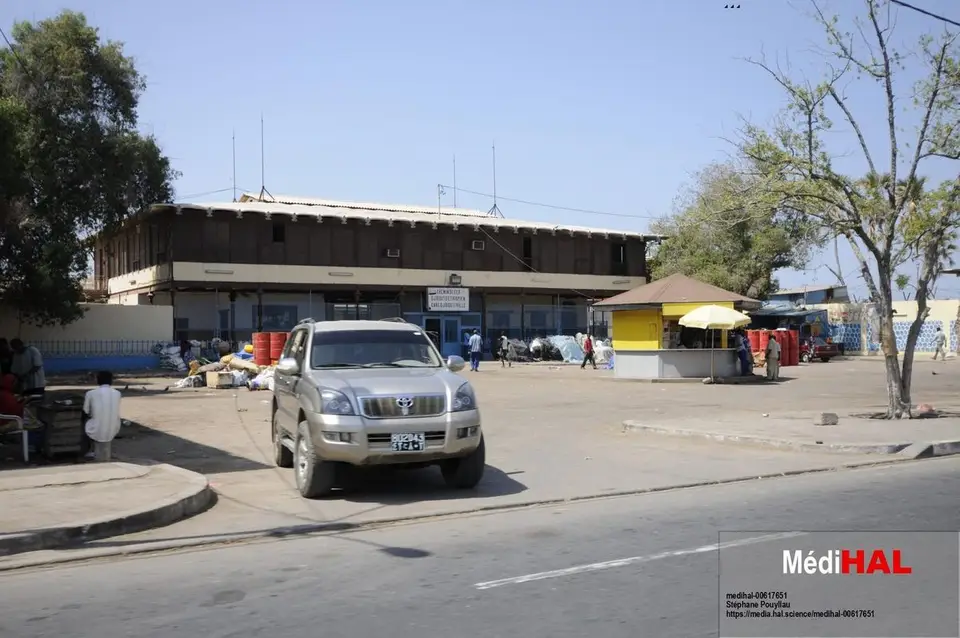
A modern railway line links Addis Ababa to Djibouti over about 756 kilometres, and it has been running since 2016. On the Djiboutian side, departure is from Nagad station on even days, at 8:00 am, with arrival two hours before. The National Tourism Agency publishes the fares from its January 2021 grid, with a separate price for foreigners.
What is the relationship between the Djibouti and Addis Ababa railway?
It is an old relationship, and it is also the key to the country’s economic geography. The railway between Ethiopia and Djibouti comprises two clearly distinct sets.
| Set | Nature | Length | Entry into service |
|---|---|---|---|
| Modern line | Electrified, linking Addis Ababa to Nagad station, on the Djiboutian side | About 756 km | 2016 |
| Old historic line | The original link, now superseded by the modern line | Not documented | Earlier than the modern line |
What to understand from that relationship. Ethiopia is a landlocked country: it has no coastline. Djibouti, with its port, is its natural outlet. The modern line materialises that link over about 756 kilometres, and it has been running since 2016.
A consequence for the traveller, and an important one: this line is first of all a freight axis. Carrying goods is its main function, with the passenger service coming as a complement. That does not mean you cannot use it — it means you should not approach it as a European rail link, with frequent departures and a booking made in three clicks. The passenger service of a mainly freight line follows a different logic, and it is checked before building an itinerary on it.
Where do you catch the train to Ethiopia in Djibouti?
The departure station on the Djiboutian side is at Nagad, west of Djibouti City. Keep that point in mind, because it defeats a common expectation: it is not a city-centre station.
| Departure point | Location | What to plan for |
|---|---|---|
| Nagad station | West of Djibouti City | A taxi or hire-car journey, with a comfortable margin |
| Ambouli international airport | About 7 km from the city centre | The arrival point of most travellers |
| Port of Djibouti City | City centre | Sea departures to the northern coast |
Three practical consequences follow.
Plan the journey to Nagad. A train cannot be caught up with. The agency recommends being at Nagad two hours before departure: leave with that margin, because on an international line boarding formalities take time.
Keep your documents on you, not in the hold. The line crosses an international border: passport, ticket and the documents required by both countries are asked for along the way.
Do not count on a dedicated shuttle. There is no documented shuttle service to the station: taxi or hire car remain the solution, as for any journey to the west of the capital.
What are the times of the Djibouti–Dire Dawa train in 2026?
This page long maintained that those times were distributed nowhere, and therefore refused to give them. That was wrong: the National Tourism Agency publishes them, at ant.dj/infos-utiles. Here is its grid, dated 21 January 2021.
| Element | What the agency publishes (January 2021 grid) |
|---|---|
| Departure days | “every even-numbered day” |
| Departure time | 8:00 am |
| Reporting time | Be at Nagad 2 hours before departure |
| Buying the ticket | The day before, the ticket is bought in advance |
| Where to buy it | At the western salt works, just in front of the ABDAN laboratory, or at Nagad |
Four points of method, because a 2021 grid is not the current year’s calendar.
Even days are the published rule, not a commercial frequency. On this line, missing the departure can mean waiting two days: checking at the station remains essential, and it is done the day before, when you buy the ticket.
The ticket is not bought on board. It is bought the day before, in town, at the western salt works in front of the ABDAN laboratory, or at Nagad. Turning up on the morning of departure without a ticket is the surest way to be left on the platform.
Reporting two hours early is not overzealousness. The line crosses a border, and boarding formalities there take time. Add the journey to Nagad, west of Djibouti City, and leave with a margin.
A word on Dire Dawa. The town lies on the route, on the Ethiopian side, between the border and Addis Ababa. Many searches concern the Djibouti–Dire Dawa link rather than Addis Ababa, which is logical: it is the nearest stop. The times there are those of the same line, with its own fare, also published.
What is the price of a train ticket from Djibouti to Addis Ababa?
The agency publishes the fares, and the most interesting detail lies elsewhere: the price depends on the traveller’s nationality. The January 2021 grid gives a Djiboutian fare and a foreign fare, and the gap is not marginal.
| Destination | Djiboutian fare | Foreign fare |
|---|---|---|
| Addis Ababa | 4,000 Fdj | 8,000 Fdj |
| Dire Dawa | 1,600 Fdj | 800 Fdj |
| Ali-Sabieh | 400 Fdj | 3,200 Fdj |
Source: agency grid of 21 January 2021, published at ant.dj/infos-utiles. Those amounts are the last official fare published: present yourself at the counter with your passport and ask for confirmation, as the grid may have changed since 2021.
What that table really says. The logic is not that of a uniform tourist fare: on Dire Dawa, the foreigner pays less than the Djiboutian, while on Ali-Sabieh he pays eight times more. There is therefore no rule to extrapolate — and any page announcing “the train costs X” without stating nationality and destination is necessarily wrong.
The amounts circulating online for this line often date from its entry into service, in 2016, and have been copied from one site to another without rechecking. The agency’s 2021 grid is more recent and, above all, it is dated: that is what makes it citable.
How to budget anyway. Three principles are enough.
- Retain the fare for your nationality, not the cheapest in the table.
- Add the ancillary costs: the journey to Nagad from Djibouti City, meals, and a possible night in Dire Dawa or Addis Ababa depending on the arrival time.
- Confirm at the counter before building a final budget: the published grid dates from January 2021.
| Item | Amount to plan for | Where to get it |
|---|---|---|
| Ticket to Addis Ababa | 4,000 Fdj (Djiboutian) or 8,000 Fdj (foreigner), agency grid of January 2021 | Counter, bought the day before |
| Ticket to Dire Dawa | 1,600 Fdj (Djiboutian) or 800 Fdj (foreigner), agency grid of January 2021 | Counter, bought the day before |
| Ticket to Ali-Sabieh | 400 Fdj (Djiboutian) or 3,200 Fdj (foreigner), agency grid of January 2021 | Counter, bought the day before |
| Journey Djibouti City → Nagad station | Taxi fare, to be negotiated before getting in | On the spot |
| Meals and drinks on board | At your own cost | Bring your own supplies |
| A night on the spot depending on arrival time | Depending on the accommodation chosen | To be booked before departure |
How do you buy a train ticket for the Djibouti–Ethiopia line?
Two channels exist, and they do not address the same traveller.
On the spot, the day before. It is the channel the agency publishes: the ticket is bought the day before departure, at the western salt works just in front of the ABDAN laboratory, or at Nagad. Present yourself with your passport: the fare depends on your nationality, and the counter must be able to check it.
Online, the operator’s passenger portal. It allows you to book and obtain a confirmation before the trip. It is the simplest route if you are preparing the leg from abroad, but the agency does not mention it: the two channels coexist without replacing each other, and it is prudent to confirm at the station what you booked online.
On booking by telephone, no number is published here. Not out of excessive caution, but because we cannot verify its accuracy. Two abuses are documented in this kind of situation: out-of-date contact details, which waste a day, and numbers belonging to intermediaries presenting themselves as the operator.
The safety rule is simple and holds for the whole region: never pay a private individual for a transport ticket. If you prefer the telephone, get the number from Nagad station, on the spot, or via an official source. A number found in a social media comment is not a source.
What should you prepare to cross the border?
The line crosses an international border: both countries apply their own entry rules, and checks may take place along the way as well as on arrival.
| Document | Djibouti side | Ethiopia side |
|---|---|---|
| Passport | Expiry at least 6 months after arrival (rule published by the official British advice) | Passport valid: check Ethiopian rules before departure |
| Visa | Required on entry: e-Visa online, or visa on arrival | Required: check the arrangements applicable to your nationality |
| Ticket | To be shown at boarding and during the check | Same |
| Proof of accommodation | Useful for the visa application | Useful on arrival |
Our recommended method. Treat the two visa applications separately and before buying the train ticket: a non-refundable ticket backed by a refused visa is a dead loss. The Djiboutian procedure is set out step by step in visa and entry formalities.
On safety, a useful reminder: the official British advice (updated 27 July 2026) advises against all travel to the border between Djibouti and Eritrea, in the north of the country. That notice does not concern the line to Ethiopia, but it illustrates a general rule in the region: border zones are handled with caution, and the itinerary is checked before departure, not on the way.
In a medical emergency in Djibouti, dial 21 35 09 62 or 21 35 27 12 and ask for an ambulance. Those numbers are published by the official British advice. Tell your insurer quickly if you are referred to a medical facility.
Is the train an alternative to the plane?
For a tourist stay in Djibouti, no — and it is better to say so plainly. The train does not replace the plane for arriving in the country: it serves to extend a trip towards Ethiopia, or to reach Dire Dawa from Djibouti as part of a regional itinerary.
| Criterion | Plane | Train | Road |
|---|---|---|---|
| Entry into the country from Europe | Yes, the normal route | No | No |
| Towards Ethiopia | Yes, with a connection | Yes, via Nagad station | Yes, via the land corridor |
| Information available in advance | Complete: online booking, published times | Partial: even days at 8:00 am and the January 2021 fare grid published by the agency, to be confirmed at the station | Variable |
| Formalities | Visa and passport on arrival | Double border check | Double border check |
| Suited to a first stay | Yes | No | No |
When the train becomes relevant. If your plan is to combine Djibouti and Ethiopia in one trip — a multi-week itinerary, with Addis Ababa on the programme — the modern line is a legitimate option, and it offers a landscape the road does not give. In that case, preparation is simple: buy your ticket the day before at the counter, confirm the departure at Nagad, treat the two visas separately, and allow a day’s margin before any return flight.
When it is not. For a stay of a few days in Djibouti only, the train has no function: your time is better spent on the sites — Lake Assal, Arta, Tadjourah, the Moucha and Maskali islands.
To prepare the rest of the trip, two pages complete this one: how to get to Djibouti for the flight and the boarding formalities, and transport in Djibouti for all the modes of travel once you are there.
Frequently asked questions
What is the relationship between the Djibouti and Addis Ababa railway?
The railway between Ethiopia and Djibouti comprises two distinct sets: a modern, electrified link, about 756 kilometres long and in service since 2016, which connects Addis Ababa to Nagad station on the Djiboutian side; and an older historic line. The modern line makes Djibouti the natural sea outlet of Ethiopia, a landlocked country. It is first of all a freight axis, with a passenger service alongside.
What are the times of the Djibouti–Dire Dawa train in 2026?
The National Tourism Agency publishes departure 'every even-numbered day' at 8:00 am, with arrival at Nagad two hours before, on its January 2021 grid. The ticket is bought the day before, at the western salt works in front of the ABDAN laboratory or at Nagad. That grid is not from 2026: confirm the departure day at the station before travelling.
What is the price of a train ticket from Djibouti to Addis Ababa?
The agency publishes 4,000 Djiboutian francs to Addis Ababa for a Djiboutian national, and 8,000 for a foreigner, on its January 2021 grid. To Dire Dawa, allow 1,600 francs for a Djiboutian and 800 for a foreigner. Those amounts date from 2021: ask for confirmation at the counter before building your budget.
How can I buy a train ticket from Djibouti by telephone?
No booking number is published here, because we cannot verify its accuracy. The channel published by the agency is the counter: the ticket is bought the day before, at the western salt works in front of the ABDAN laboratory or at Nagad. The operator's passenger portal also allows online booking. If you insist on the telephone, get the number from Nagad station, and refuse any payment to a private individual.
Where do you catch the train to Ethiopia in Djibouti?
The departure station on the Djiboutian side is at Nagad, west of Djibouti City. It is not a city-centre station: plan a taxi or hire-car journey to get there, and leave with a comfortable margin. Present yourself with your passport, your ticket and the documents required by both countries, since the line crosses an international border.
Sources
Practical
Read next
4×4 with a driver in Djibouti: prices and itineraries
Accessibility in Djibouti: what a demanding trip implies
Boat hire in Djibouti: trips out to sea
Budget in Djibouti: what does a trip cost on the spot?
Buses and taxis in Djibouti: fares by zone and route
Car hire in Djibouti: 4×4, saloon or driver?
Connectivity and SIM cards in Djibouti: internet and mobile
Djibouti airport transfer: taxi, fares and arrival