Ferry to Tadjourah and Obock: crossing, times and fares
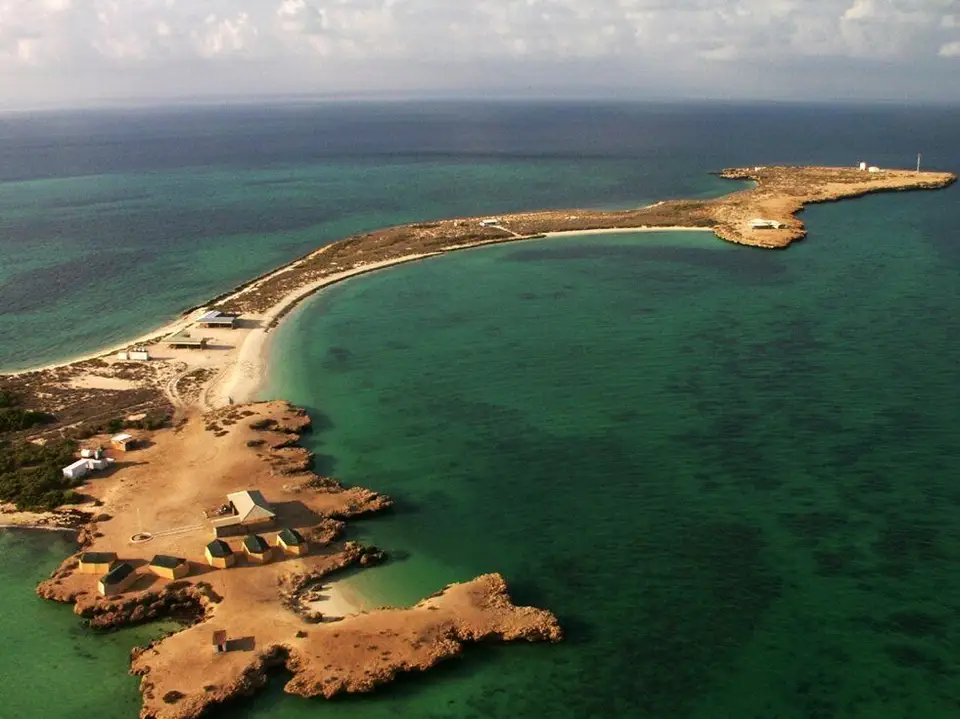
Tadjourah and Obock are reached from Djibouti City by the ferry of the Safar Salam company. The National Tourism Agency's grid gives 700 Djiboutian francs per person for Tadjourah and 800 for Obock, half fare for a child of 2 to 12 or a student. Departures to Tadjourah on Saturday, Tuesday, Thursday and Friday, to Obock on Sunday and Wednesday. The crossing lasts about an hour and thirty minutes.
How do you reach Tadjourah and Obock from Djibouti City?
Two options only: the sea or the road. The Gulf of Tadjourah separates the capital from the north coast, and going round it by land means about 180 kilometres to Tadjourah and 240 to Obock, on a tarmac axis.
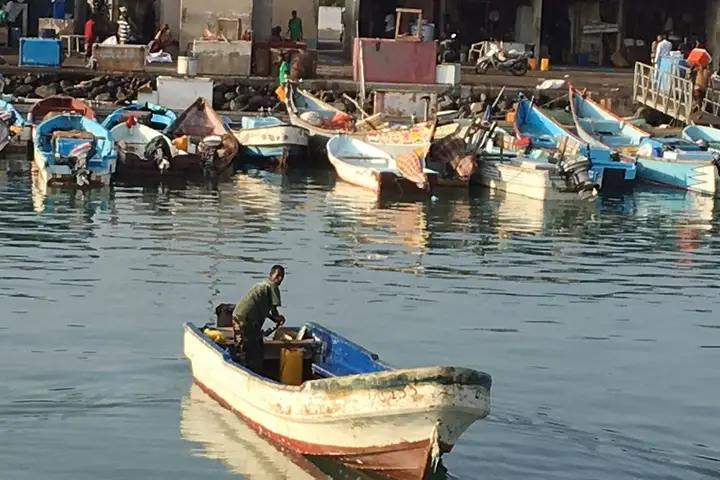
By sea, the crossing is direct. It is provided by the ferry of the Safar Salam company, which links Djibouti City to Tadjourah on Saturday, Tuesday, Thursday and Friday, and to Obock on Sunday and Wednesday. Private fast boats cover the same link in far less time.
The choice depends on what you are carrying: a backpack leans towards the boat, a 4×4 and a multi-stage itinerary lean towards the road.
Who operates the crossing?
The regular link is operated by Safar Salam. It is the reference ferry for passengers between the capital and the north coast, used by travellers and residents alike.
Alongside that regular service run faster, smaller boats, privately operated. They do not leave at a fixed time: they wait to be full, which can take time and is not guaranteed.
What are the ferry times and fares?
Contrary to a widespread idea, this link has fares and departure days published by the National Tourism Agency — January 2021 grid. Passenger fares are per person and per crossing; the ferry also carries vehicles.
| Link | Operator | Adult fare | Child of 2 to 12 and student | Light vehicle | 4×4 |
|---|---|---|---|---|---|
| Djibouti City → Tadjourah | Safar Salam (ferry) | 700 Fdj | 350 Fdj | 5,000 to 6,000 Fdj | 7,000 Fdj |
| Djibouti City → Obock | Safar Salam (ferry) | 800 Fdj | 400 Fdj | 7,000 Fdj | 8,000 Fdj |
| Djibouti City → Tadjourah | Private fast boats | Negotiated fare, not published | To be confirmed | No | No |
| Djibouti City → Tadjourah | Road (about 180 km) | Fuel and vehicle at your expense | — | — | — |
| Djibouti City → Obock | Road (about 240 km) | Fuel and vehicle at your expense | — | — | — |
The departure days and times are published too:
| Destination | Published departure days and times |
|---|---|
| Tadjourah | Saturday 8:00 am · Tuesday 8:00 am · Thursday 10:30 am · Friday 8:30 am |
| Obock | Sunday 8:00 am · Wednesday 8:00 am |
Three calendar points that change how a stay is organised:
- The ferry stays about an hour at the quay before leaving again: that is the time to load and unload, and it counts in your day.
- It is more or less stopped from mid-July to the end of August, during the khamsin, the wind of the hot season.
- It is completely stopped on public holidays.
Those values are those of the ANT grid of January 2021: if a fare has moved since, it is confirmed at the ticket office. They are, on the other hand, genuinely published official fares, and not estimated orders of magnitude.
How long does the crossing take?
Allow about an hour and thirty minutes by ferry, and about forty-five minutes by fast boat. On a day trip, the difference changes everything: the fast boat makes the there-and-back within the day comfortable, the ferry makes it just possible.
Two reservations about those durations. The National Tourism Agency publishes no crossing time: it indicates only that the boat stays about an hour at the quay before leaving, and the durations above are observed orders of magnitude, not guaranteed timetables. The crossing also depends on the swell and the load of the vessel. Allow a margin, especially if you are connecting with a flight.
The crossing itself is worth the journey. The Gulf of Tadjourah is framed by the Goda mountains and the reliefs of the rift, and from the deck you glimpse the gulf’s first coral drop-offs.
Can you take a vehicle?
Yes, the ferry carries vehicles, and the fares are published: 5,000 to 6,000 Fdj for a light car to Tadjourah, 7,000 Fdj to Obock, and 7,000 or 8,000 Fdj for a 4×4 according to the destination.
There is no online vehicle booking. Turn up early at the port, with the vehicle papers, and have the place confirmed at the ticket office before committing: the ferry stays only about an hour at the quay, which is short for manoeuvring.
Otherwise, the road remains the safe solution: the axis towards Tadjourah and Obock is tarmac for almost the whole journey.
How do you buy a ticket?
There is no reliable online ticketing for this link. The ticket is bought at the port ticket office, in Djibouti City, on the day of departure or the day before.
Three practical tips:
- Turn up early. Loading is in order of arrival, and a full vessel takes no one else.
- Have your identity papers to hand: passport or identity card according to the day’s checks.
- Plan for cash in Djiboutian francs. Card payments are not guaranteed at the ticket office.
If you are connecting with an international flight, keep half a day of margin: a postponed departure, a public holiday or the khamsin all remain possible.
The fast boat: for whom?
The fast boat addresses three profiles: those who want to return within the day from Djibouti City, those pressed by a flight, and those who take a long crossing on a loaded vessel badly.
In exchange, it leaves when full: you may wait an hour or leave immediately, according to the numbers. It is also more sensitive to the chop of the gulf, and people prone to seasickness will feel it.
What if you go by road?
The road is the most predictable option. Allow about 180 kilometres from Djibouti City to Tadjourah and about 240 kilometres to Obock, on a tarmac axis. The journey crosses the landscapes of the rift before tipping over towards the coast.
Two advantages: you stop where you want, and you can extend towards Lake Assal, the Goubbet al-Kharab or Les Sables Blancs on the same itinerary. The downside is time: the road takes up a large part of the day.
Many travellers combine the two formulas — out by boat, back by road, or the reverse — to see the gulf from the sea without sacrificing the freedom of the vehicle.
What is there to do on arrival?
In Tadjourah. The white town lines up its coral-stone houses and overlooks the sea from its promontory. Fiaa beach, in the district of the same name, is the meeting place of families and a snorkelling spot reachable a few fin strokes from the shore. Five kilometres away, the Sables Blancs beach nestles at the foot of a black-rock cliff: emerald water, immaculate sand and a coral drop-off a few metres out. It is one of the most beautiful sites in the country, and it combines well with a night on site.
In Obock. The historic town of the north is the gateway to the Godoria mangrove, considered the finest in the country, and to the Ras Bir lighthouse, sixty metres high, which marks the southern entrance to the Red Sea. The Seven Brothers islands are reached by boat from the coast.
What precautions should you take?
- Check the departure time on the day itself. Days and times are published, but a last-minute change remains possible.
- Take water and something to cover up: the crossing is often made in full sun with wind.
- Allow a margin before any flight. A postponement, a public holiday or the seasonal stoppage of the khamsin are not rare.
- Keep cash in Djiboutian francs for the ticket and for journeys on arrival.
- Report your return if you set off on an excursion from Tadjourah or Obock: telephone coverage is irregular on the north coast.
To organise the rest of the journey on arrival, see car hire in Djibouti. To choose the season, see when to go to Djibouti, and for the detail of the north coast sites, what to see in Djibouti.
Frequently asked questions
How long does the ferry crossing to Tadjourah take?
About an hour and thirty minutes between Djibouti City and Tadjourah with the Safar Salam ferry. The smaller, faster boats cover the same distance in about forty-five minutes. The difference matters on a day trip: the fast boat leaves more time ashore, but it is more sensitive to the state of the sea and leaves only once the boat is full.
How much does the ferry to Tadjourah or Obock cost?
The National Tourism Agency's grid gives 700 Djiboutian francs per person for Tadjourah, and 800 for Obock. A child of 2 to 12 or a student pays half: 350 francs to Tadjourah, 400 to Obock. Children under 2 do not appear in the grid. A car costs 5,000 to 6,000 francs to Tadjourah, 7,000 to Obock.
Can you take a car on the ferry?
Yes, the ferry carries vehicles, and the fares are published: 5,000 to 6,000 Djiboutian francs for a car to Tadjourah, 7,000 to Obock, and 7,000 or 8,000 francs for a 4×4 according to the destination. Turn up early at the port with the vehicle papers. The ferry stays about an hour at the quay before leaving again: that is the time to unload or load your car.
Should you book your ferry ticket in advance?
There is no online booking for this link: the ticket is bought at the port ticket office, in Djibouti City. The departure days are published — Tadjourah on Saturday, Tuesday, Thursday and Friday, Obock on Sunday and Wednesday — but the exact time is confirmed on the day. Turn up early, with your papers and cash. The ferry is completely stopped on public holidays.
Is the ferry better than the road?
In terms of time, yes: an hour and thirty minutes of crossing replaces several hours of road, and the boat journey gives you the Gulf of Tadjourah from the sea. In terms of flexibility, no: with a vehicle or an itinerary involving several stages, the tarmac road to Tadjourah and Obock remains simpler. Many travellers combine the two: out by boat, back by road.
Sources
Practical
Read next
4×4 with a driver in Djibouti: prices and itineraries
Accessibility in Djibouti: what a demanding trip implies
Boat hire in Djibouti: trips out to sea
Budget in Djibouti: what does a trip cost on the spot?
Buses and taxis in Djibouti: fares by zone and route
Car hire in Djibouti: 4×4, saloon or driver?
Connectivity and SIM cards in Djibouti: internet and mobile
Djibouti airport transfer: taxi, fares and arrival