Where to sleep in Ali-Sabieh: town hotels and camps
Accommodation in the Ali-Sabieh region is shared between the town's hotels and two camps. Our September 2026 survey scores only two urban establishments: the Hotel Le Palmaraie, 3.7/5 over 41 reviews, and the Al Barako Hotel, 4.6/5 over 5 reviews. Away from the town, the Dhaydhan camp is scored 4.3/5 over 10 reviews and the Assamo ecotourism camp has five rooms for twenty-eight people.
Where to sleep in the Ali-Sabieh region?
The region is the most constrained in the country for accommodation, and it is the first limiting factor of a stay in the south-east. The offer is shared between the town hotels of Ali-Sabieh and two camps set away from it, one of them on the edge of a protected area.
| Solution | Where | Documented capacity | September 2026 Google survey |
|---|---|---|---|
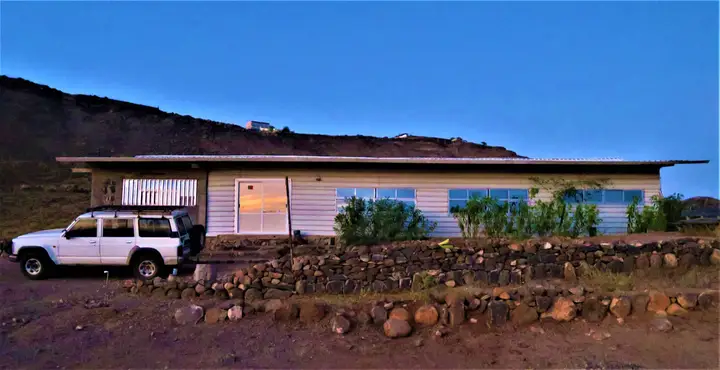
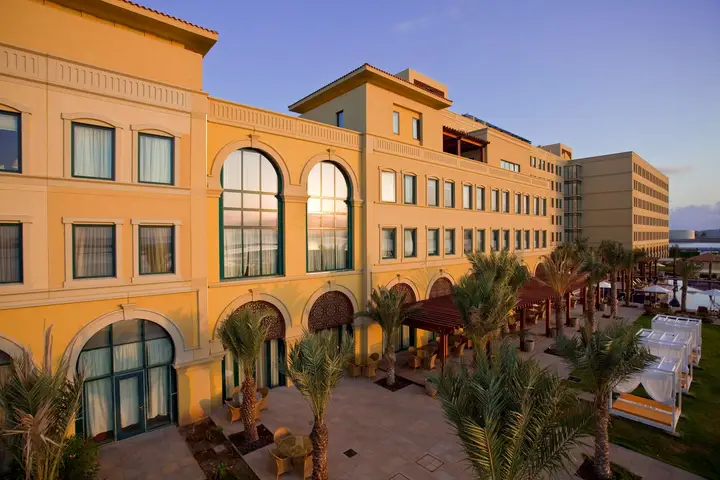
| Hotel Le Palmaraie | in Ali-Sabieh | not documented | 3.7/5 over 41 reviews, classed as a hotel |
| Al Barako Hotel | in Ali-Sabieh | not documented | 4.6/5 over 5 reviews |
| La Palmeraie d’Ali-Sabieh | in Ali-Sabieh, according to the ANT directory | not documented | not linked in our survey |
| Dhaydhan camp | about ten kilometres from the town | traditional toukouls, meals to order | 4.3/5 over 10 reviews |
| Assamo camp | at Addaoua-Bouralé, on the edge of the protected area | 5 rooms, 3 showers, 28 people | no score in our survey |
Our catalogue documents the region’s two camps, in the form of site pages and, for Assamo, an organised stay. It contains no urban accommodation offer, however: we therefore publish no price for the hotels of Ali-Sabieh.
What does Google score in Ali-Sabieh?
Our September 2026 survey counts only two rated establishments in the town, for a median score of 4.2/5 and 46 cumulative reviews. That is the lowest volume in the country along with Dikhil, and it has to be kept in mind.
| Establishment | Google score | Reviews |
|---|---|---|
| Hotel Le Palmaraie | 3.7/5 | 41 |
| Al Barako Hotel | 4.6/5 | 5 |
The comparison between those two lines is instructive and should not be read too quickly. The Hotel Le Palmaraie concentrates 41 of the town’s 46 reviews: it is the reference establishment, and its score of 3.7/5 is the only genuinely documented signal on Ali-Sabieh’s hotel trade. The Al Barako Hotel shows 4.6/5, but over only five reviews: a high score on a tiny sample, which we report without turning it into a recommendation.
A word on the names, because they invite confusion. The National Tourism Agency’s directory cites a “Palmeraie d’Ali-Sabieh” (77 78 26 14), while our Google survey scores an “Hotel Le Palmaraie” and our own pages mention a Palmeraie guesthouse, presented as the oldest in the town. The three names look alike, but our sources do not allow us to assert that it is one and the same establishment: ask for confirmation before dialling a number.
What does the Dhaydhan camp offer?
Dhaydhan is the region’s most accessible camp: it lies about ten kilometres from Ali-Sabieh, which allows it to be reached without organising an expedition.
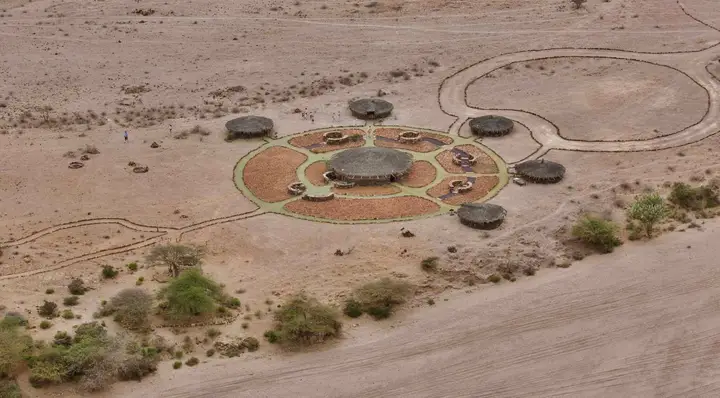
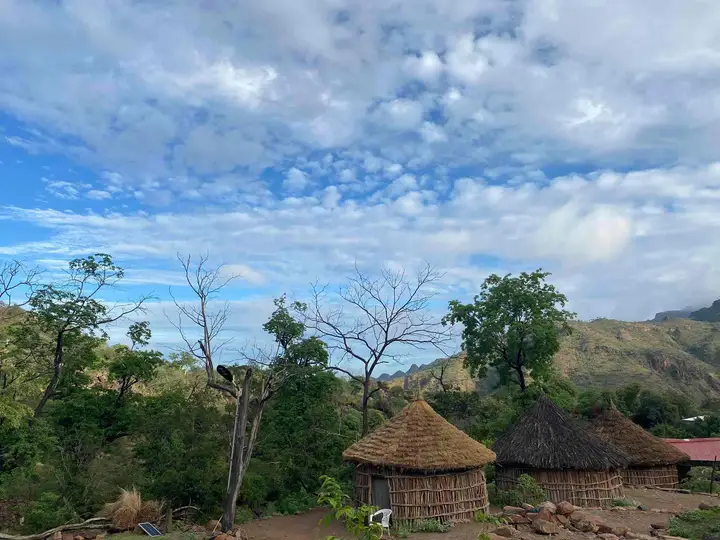
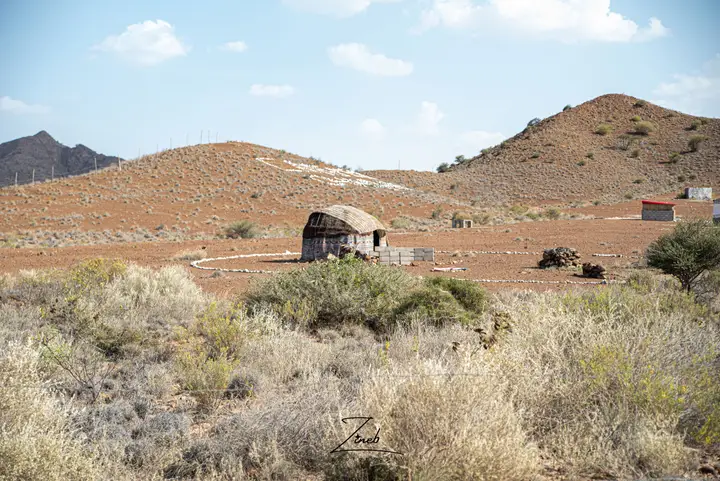
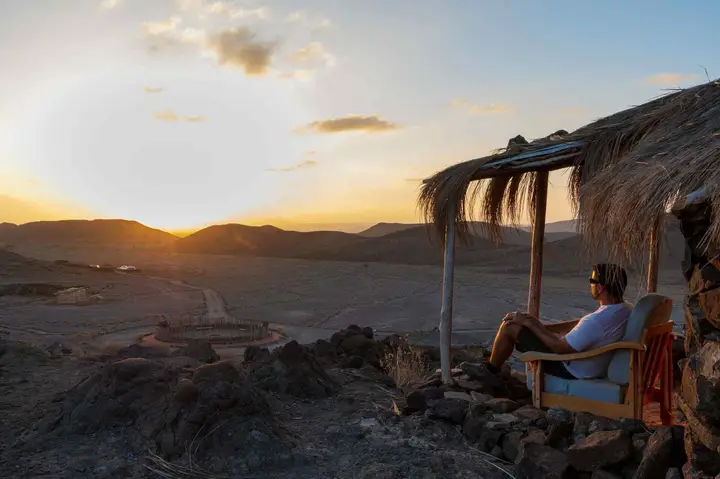
The site takes up the nomadic-camp formula: traditional toukouls fitted with mosquito-netted beds, bivouacking under the stars and nomadic cooking served on mats. Camels, gazelles, dik-diks and birds are part of the surroundings, and outings to identify medicinal plants are offered. Meals are ordered in advance, which assumes giving notice before arriving.
In the September 2026 Google survey, it is scored 4.3/5 over 10 reviews, and its documented telephone number is 77 81 00 53. Ten reviews is little: we report the score with its volume so that you can weigh it.
It is the only accommodation in the region for which we have both a dated score and a cross-checked contact. That makes it, in practice, the safest starting point for organising a night in the south-east.
What does the Assamo camp offer?
Assamo belongs to another category: it is a non-profit ecotourism camp, built at Addaoua-Bouralé, on the edge of the protected natural area that shelters the beira antelope. It was inaugurated on 10 January 2016, with local labour and solar lighting, and its revenue funds the protection of the sites.
Its capacities are documented, which is rare in the region: five rooms, six barbecue hearths and three showers, for twenty-eight people in all. The site lies far from any road, which makes it a place to stay rather than an improvised stopover: you go there with a guide, on a track, and you stay.
No Google score is attached to this camp in our September 2026 survey. We therefore cannot say how it is perceived by its visitors, and we do not assume it. Our page on camps and ecolodges describes how it works, its economic model and its environment.
How do you choose your accommodation in the region?
| Criterion | Ali-Sabieh hotels | Dhaydhan camp | Assamo camp |
|---|---|---|---|
| Situation | in the town, on the road and rail axis | about ten kilometres from the town | at Addaoua-Bouralé, far from any road |
| Access | national highway 1, train, bus | a short track | track, with a guide |
| Capacity | not documented | not documented | 28 people, 5 rooms |
| Google score | 3.7/5 over 41 reviews and 4.6/5 over 5 reviews | 4.3/5 over 10 reviews | not scored |
| Cross-checked contact | no | yes, 77 81 00 53 | no |
| For whom | a stopover night, an early start | a night in a camp without going far | a two-day nature stay, with a guide |
The logic is close to that of the north of the country: the town serves as a stopover, the camp is the goal. The difference lies in the scale, more intimate here: capacities are counted in tens of places, not hundreds, and there is hardly any alternative if something goes wrong.
One practical argument weighs in the decision: the train. Ali-Sabieh is served by the former Djibouti-Ethiopia line, which makes it the only region of the country reached by something other than a car or a boat. The details of the services are on the page train towards Ethiopia.
What precautions before booking in the region?
Book before arriving. That is the most important piece of advice on this page. A camp of twenty-eight places, a town with only a few rated hotels and local demand concentrated on the cool season: in the south-east, arriving without a booking amounts to a gamble.
Payment. Plan for cash in Djiboutian francs. The camps and small establishments work in cash, and the banks are mostly in the capital.
Water. Bring your own for the day: the sites are isolated, with no shop nearby, and the walking is done without shade.
The facilities. No source consulted documents air conditioning, hot water, wifi or board for the region’s establishments, neither in town nor in a camp. We do not infer them from the standing on display: ask for confirmation at the time of booking.
The wildlife. Around Assamo, the area is protected and beiras are shy: you stay on your guide’s tracks, you do not feed the animals and you take nothing, not even a plant.
The Ali-Sabieh region page details the Assamo protected area, the Grand Bara, the Holl Holl viaduct and the village of Daasbiyo, and the Assamo page returns to the village and its Afar name. To settle on the period, see when to go to Djibouti, and for the detail of camp nights in the rest of the country, our page on camps and ecolodges. The other southern region, that of Dikhil and Lake Abbe, combines naturally with a stay in the south-east.
Frequently asked questions
Where can you sleep in Ali-Sabieh?
Two families of solutions. In the town, hotels including the Palmeraie guesthouse, presented by the National Tourism Agency as the oldest. Away from it, two camps: Dhaydhan, about ten kilometres from the town, with traditional toukouls, and Assamo, on the edge of the protected natural area that shelters the beira antelope. Capacities are small in both cases.
How much does a night in Ali-Sabieh cost?
We publish no price for Ali-Sabieh. Our catalogue documents the region's two camps, but no nightly offer is published there with a rate in Djiboutian francs, and we do not copy prices found elsewhere. The town's hotels as well as the camps must be contacted directly to find out their rates and what they include.
Can you sleep in a camp in Ali-Sabieh?
Yes, the region's two camps take visitors. Assamo has five rooms, six barbecue hearths and three showers, for twenty-eight people in all, with solar lighting and local labour. Dhaydhan offers traditional toukouls fitted with mosquito-netted beds, about ten kilometres from Ali-Sabieh, with meals by prior order.
Should you book the Dhaydhan camp in advance?
Yes. Capacities are small and the food is prepared to order, which assumes notice. The cool season, from November to February, also concentrates local demand on the weekends. We recommend booking several weeks ahead, and more for a group: a camp of about twenty places fills quickly in a region that offers few alternatives.
What is the best period for sleeping in the Ali-Sabieh region?
From November to February. The region is inland, without the sea breeze of the coast, and both nights and days are harder there in summer. The camps especially are better experienced in the cool season: bivouacking in a toukoul becomes uncomfortable as soon as the heat rises. March and April remain workable, May to September are to be avoided.
Sources
Where to stay
Read next
Affordable hotels in Djibouti: the 3★ against their rating
Assamo camp: sleeping in the land of the beira
Camps and ecolodges: sleeping in the wild
Dhaydhan camp: a nomadic night near Ali-Sabieh
Dittilou camp: sleeping in the cirque
Djalelo camp: the ecolodge of the protected valley
La Maison des Randonneurs: sleeping in Arta, pack on
Luxury hotels in Djibouti: the 4★ and 5★ against their score