Godoria mangroves: channels, birds and access by sea
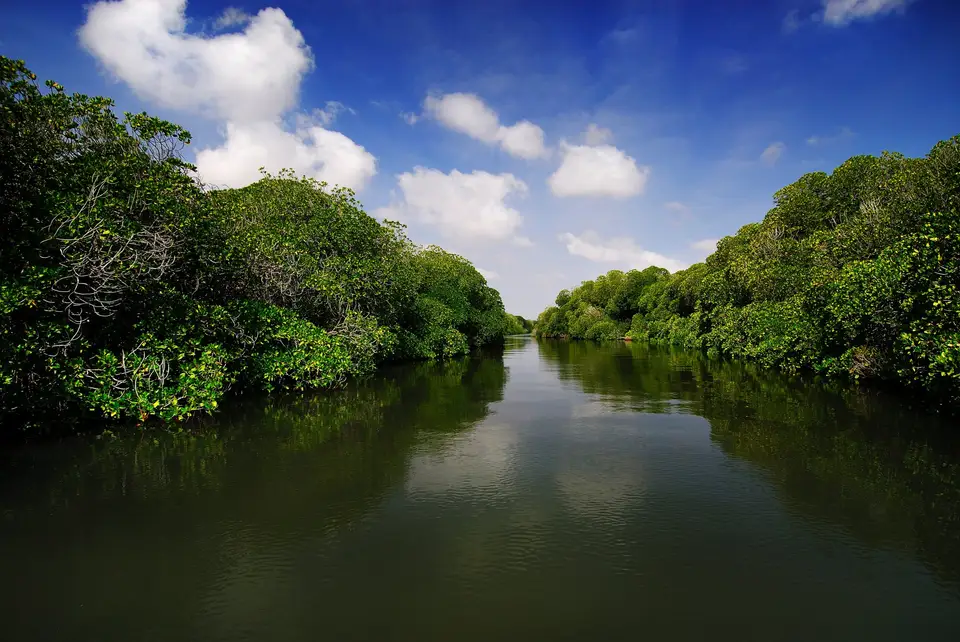
The Godoria mangrove is a group of channels and mangrove roots on the coast of the Obock region, presented as the finest mangrove in Djibouti and as the largest wetland in the country. It is visited mainly by sea, from Djibouti City, Obock or Les Sables Blancs, the land track being poor. The site is a major stage in bird migration between Eurasia and Africa.
Access by water. Godoria is reached first by sea, from Djibouti City, Obock or Les Sables Blancs. The land track exists but is poor: that is the main constraint of the site, and it decides the programme.
Where is the Godoria mangrove?
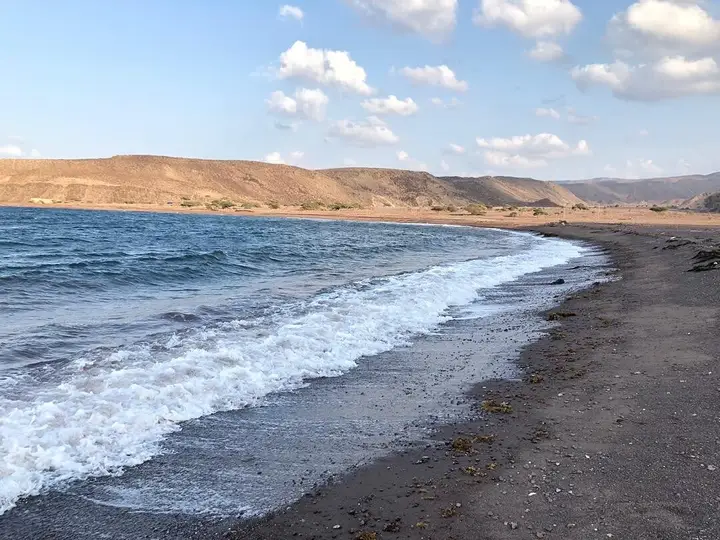
On the coast of the Obock region, on the Red Sea side. The catalogue calls it the “Godoria forest”; the National Tourism Agency speaks of the Godoria mangroves, and sums the place up in one phrase: a floating forest between desert and sea.
The catalogue and the National Tourism Agency agree: Godoria is the finest mangrove in Djibouti. The site is also presented as the largest wetland in the country, as the page what to see in Djibouti recalls. It forms a maze of channels cut between mangrove roots, where dozens of animal and plant species live together.
Key facts
| Reference | Data |
|---|---|
| Region | Obock |
| Coordinates of the area | 12.154 N — 43.408 E |
| Environment | Mangrove: channels and mangrove roots |
| Recommended access | By sea, on a trip from Djibouti City, Obock or Les Sables Blancs |
| Land access | Poor track |
| Announced rank | The finest mangrove in Djibouti (Dalmar catalogue and ANT factsheet) |
| Extent | The largest wetland in the country (what to see in Djibouti page) |
| Migration route | More than 1.5 million birds of 37 species, of which 5 globally threatened |
| Documented threats | Overgrazing by goats and camels, maritime traffic, risk of oil discharges |
| Status | Fragile natural area, to be visited with supervision |
How do you reach the mangrove?
Sea access dominates, and it shapes how the trip is organised. Trips leave from three points: Djibouti City, Obock or Les Sables Blancs. The National Tourism Agency specifies that the water route is by far the easiest.
On land, the track leading to the area is poor: it is not a comfortable option, and it requires a suitable vehicle. The Obock page details the two ways of reaching the north coast — the road and the ferry — and the page boat rental covers sea trips.
Which birds can you observe there?
Godoria lies on one of the great migration routes of the planet: the one that comes up the Rift valley and follows the Red Sea. Every year, the straits see more than 1.5 million birds across 37 species, of which 5 are globally threatened, on their round trips between Eurasia and Africa.
The site is not just a corridor: it also hosts breeding birds — storks, ibises, pelicans, bee-eaters, rollers, swifts, swallows and waders. Ospreys and sooty falcons breed on the cliffs and coastal islets, the Eurasian spoonbill and the barred warbler frequent the mangrove, while the crested lark and the black-crowned lark occupy the arid coastal plains. Among seabirds, the slender-billed gull and strong populations of crab plovers are also present.
Why is this mangrove under threat?
Two pressures are documented, and they are nothing abstract.
Overgrazing. Goats and camels graze in the mangrove and degrade the vegetation that forms it. A mangrove that loses its mangroves also loses its nursery function.
Maritime traffic. The intensity of traffic in the Red Sea increases the risk of oil discharges, whose effects on the environment are described as disastrous.
That is why the site is visited with supervision, by slow boat, without taking anything and without wild landings on the mud banks.
What do we know about the site’s history?
The National Tourism Agency reports the discovery, near Godoria, of a 2,000-year-old cistern. The hypothesis that follows — Romans having frequented this coast — remains a supposition supported by a relic, not a historical certainty.
It does, however, say something useful: this coast has never been an empty space. A water point, a shelter, a fishing resource, the mangrove served long before it welcomed visitors.
How do you visit Godoria without damaging the site?
- Stay on the water. The mangrove is crossed by slow boat; mangrove roots are fragile and bear trampling badly.
- Take nothing: no shell, no wood, no seedling. The mangrove regenerates slowly.
- Do not feed the wildlife and keep your distance from breeding birds, especially in the nesting season.
- Carry all your waste back. The site has no collection: what leaves with you does not end up in the channels.
- Sleep in the region’s camps rather than improvising a bivouac: the page camps and ecolodges lists those on the Obock coast.
- Time the trip to the right period. Access is by boat, and the sea decides the programme: the page when to go to Djibouti gives the month-by-month calendar.
Frequently asked questions
Where is the Godoria mangrove?
On the coast of the Obock region, on the Red Sea side. Both the catalogue and the National Tourism Agency describe it as the finest mangrove in Djibouti. The site is also presented as the largest wetland in the country. It forms a maze of channels cut between mangrove roots.
How do you reach the Godoria mangrove?
By sea, most often. Trips leave from Djibouti City, Obock or Les Sables Blancs; the National Tourism Agency specifies that the sea route is the easiest. The land track, on the other hand, is poor — that is the main constraint of the site.
Which birds can you observe at Godoria?
Godoria lies on the migration route that comes up the Rift valley and follows the Red Sea: more than 1.5 million birds of 37 species, of which 5 are globally threatened, pass through the straits each year. The site also hosts breeding birds — storks, ibises, pelicans, bee-eaters, rollers, swifts, swallows and waders.
Why is the Godoria mangrove under threat?
Two pressures are documented. Overgrazing by goats and camels degrades the vegetation of the mangrove. And the intensity of maritime traffic in the Red Sea increases the risk of oil discharges, whose effects on the environment are described as disastrous. Those are the two identified threats to this fragile site.
What else can you see near Godoria?
The site combines naturally with Obock and the Ras Bir lighthouse, which overlook the same coastal sector. Further north, the Seven Brothers archipelago and the Khor-Angar mangrove complete the itinerary. Several camps on the Obock coast serve as starting points, which avoids organising everything from Djibouti City.
Sources
Location
Lat. 12.15403Lng. 43.40819
Destinations
Read next
Abourma: the rock engravings of the Makarrassou massif
Ali-Sabieh: the south-east region, sites and camps
Allols depression: salt, hot springs and caravans
Ardoukoba: the most recent volcano in Djibouti
Arta: the cool of the interior and whale sharks
Assamo: the protected area of the beira antelope
Balho: rock art and the northern border post
Bankoualé: the oasis at the foot of the Goda massif