Seven Brothers camp: the Khor-Angar mangrove, at Obock
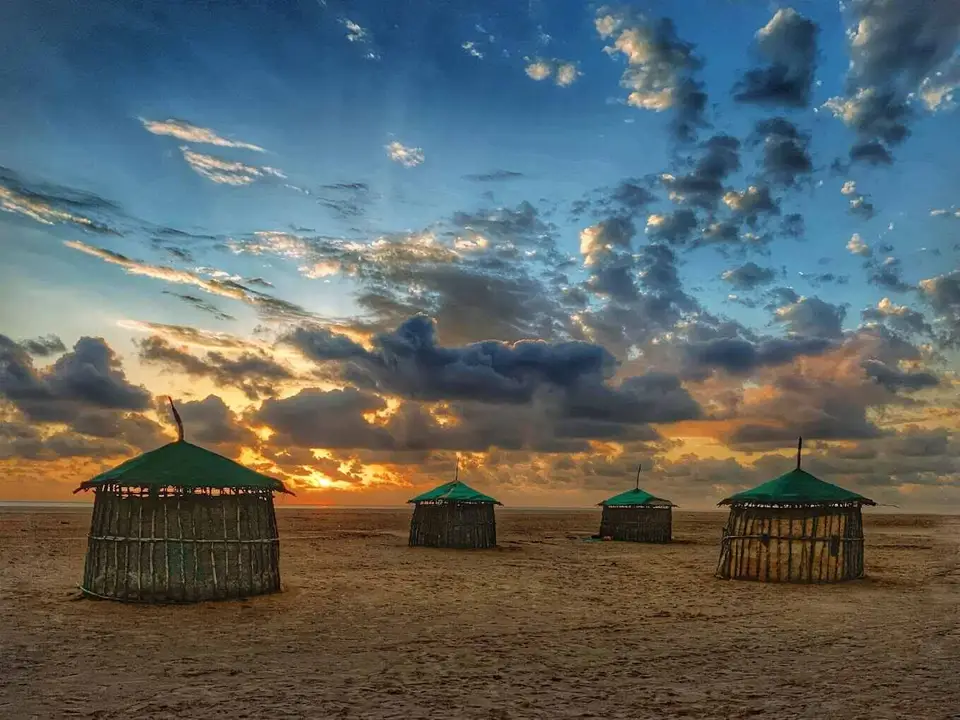
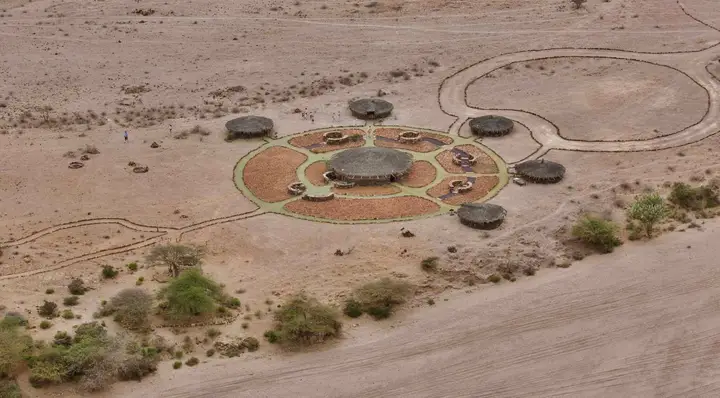
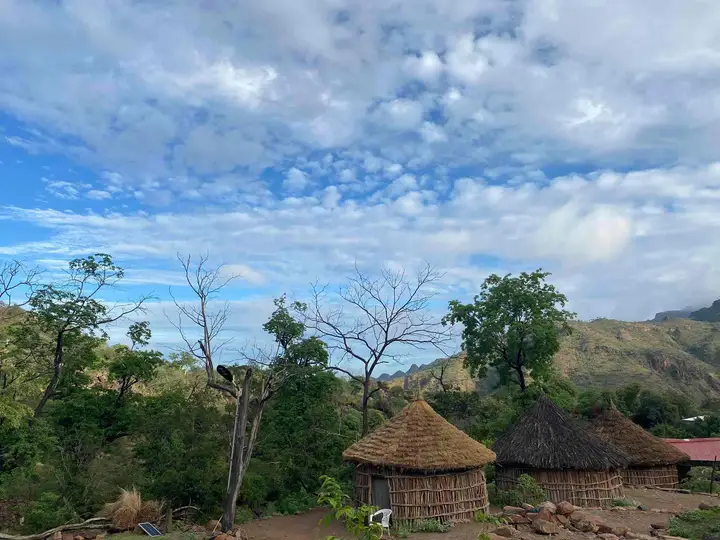
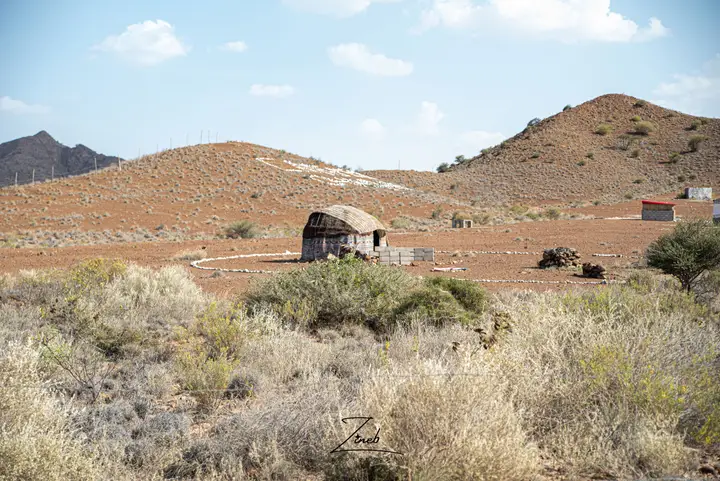
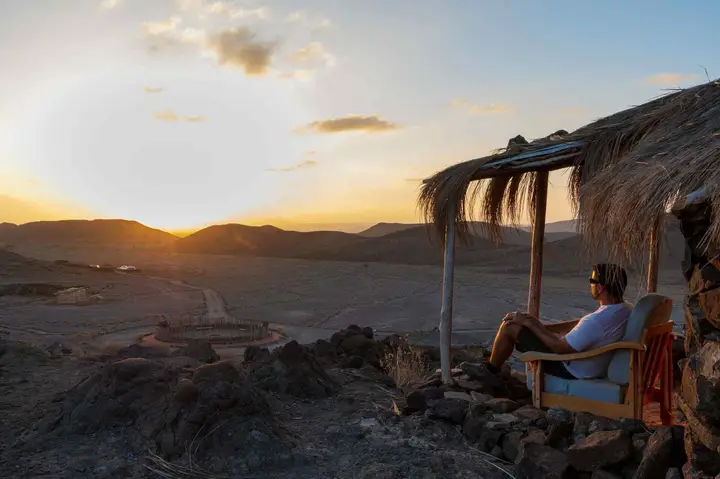
The Seven Brothers camp is a fishing camp in the Obock region, set on the shores of the Khor-Angar mangrove, in the sector of Ras Siyan and the Seven Brothers archipelago. The catalogue describes a network of channels and mangrove roots covering several hundred hectares. No rate is published: the price is set by the establishment and must be confirmed with it.
Where is the Seven Brothers camp?
In the Obock region, on the shores of the Khor-Angar mangrove, in the sector of Ras Siyan and the Seven Brothers archipelago. The catalogue presents it as a tourist and fishing camp, one of the few in the north of the country to claim that dual activity explicitly.
This is a useful point of vocabulary before booking: the camp is not on the archipelago. The camp is on land, in the mangrove; the islands lie offshore, several kilometres from the cape, and are reached only by boat. The cape of Ras Siyan and the Seven Brothers archipelago have their own pages, with their own access constraints: one is discovered from the sea, the other belongs to a marine protected area.
The camp is reached via the town of Obock, which forms the logistical base for this whole sector. Our page on Obock details the access by road and by boat.
What is the Khor-Angar mangrove?
The catalogue describes it as a labyrinth of channels and mangrove roots covering about 700 to 800 hectares. It is the environment that gives the camp its character, and it is discovered by boat: the mangrove visit is in fact among the activities announced by the establishment. Our sources do not document land access to the camp; have it confirmed before setting off.
This area forms part of a wider protected whole. The Unesco biosphere reserve covering the north of Obock associates in its title the Seven Brothers archipelago, Ras Siyan, Khor Angar and Godoria: the Khor-Angar mangrove and that of Godoria are therefore neighbours, without being the same site, and it is the first that borders the camp.
In practice, a mangrove environment imposes three things: tides, mosquitoes and no improvised swimming from the bank. The channels are travelled by boat, not by swimming.
Which activities does the camp announce?
The catalogue lists an unusually broad programme for a Djiboutian camp. It should be read for what it is: a declaration by the operator, which our sources do not allow us to check activity by activity.
| Announced activity | What our sources say about it |
|---|---|
| Mangrove visit | Consistent with the site: the camp is in the Khor-Angar mangrove |
| Sport fishing and amateur fishing | The catalogue presents the place as a fishing camp; boat and equipment not documented |
| Scuba diving | An area known for its reefs; boat and supervision not documented |
| Birdwatching | Mangrove and wetland environment, consistent with the biosphere reserve |
| Kitesurfing | Declared by the operator; equipment, wind and supervision not documented |
| Quad biking and motocross | Declared by the operator; vehicles, tracks and supervision not documented |
No equipment is documented as included or hired on site. So count on your own gear for fishing and snorkelling, and have the motorised activities confirmed in writing if they are what motivates your stay.
Can you dive or fish from the camp?
The area lends itself to it: the coral reefs of northern Obock count among the best preserved in the country, and the neighbouring archipelago is one of Djibouti’s great diving sites. Our page on diving in Djibouti describes what is practised there and under what conditions.
Two reservations, however. A dive assumes a boat, supervision and equipment: none of that is documented at the camp, and a fishing camp is not a diving centre. Fishing, for its part, is done according to local practice; if you fish from a boat, have the authorised zones specified, the protected-area regulations applying to part of this coastline.
How do you book, and at what price?
No rate is published, and no contact is either. The camp does not appear in the partner platform’s catalogue, and our sources give neither telephone, nor email address, nor booking channel: we will not invent one. The rate is set by the establishment.
In practice, three routes exist: go through a local operator based in Obock, have the request relayed by the National Tourism Agency, or turn up on site via the town of Obock and accept the uncertainty. In all three cases, ask for the price, what is included, and the transfer to the camp.
Plan for cash and water. The camps on this coast rarely run beyond the strict minimum, and the neighbouring camp of Ras-Bir Houguef illustrates the same level of equipment, wilder still. Our overview of camps and ecolodges allows the sites of the region to be compared.
When should you go, and what precautions should you take?
The comfortable period runs from October to April, with cooler nights and a wind that limits the mosquitoes. From May to September, the heat and humidity of the coastline make the stay punishing, and the mangrove holds that humidity without letting the air through. See when to go to Djibouti before fixing your dates.
Three precautions follow from the environment: serious mosquito protection, water in quantity, and closed shoes for the muddy banks. On an isolated site, tell someone your itinerary and do not expect organised rescue nearby. The catalogue documents neither electricity, nor running water, nor the camp’s capacity: those three points are asked before leaving, not on arrival.
Frequently asked questions
Is the Seven Brothers camp on the Seven Brothers archipelago?
No. The camp stands on the mainland, on the shores of the Khor-Angar mangrove, in the Ras Siyan sector. The Seven Brothers archipelago is a string of islands offshore, east of the cape, which belongs to a marine protected area and a biosphere reserve. The two carry a similar name, but they are not the same places, nor the same access constraints.
How much does a night at the Seven Brothers camp cost?
No rate is published. The camp does not appear in the partner platform's catalogue, and our other sources give no price range. The rate is set by the establishment and must be confirmed with it directly: ask for the price per person per night, what is included, and the rate applied to groups and children.
How do you book at the Seven Brothers camp?
Our sources publish neither telephone, nor email address, nor online booking channel for this camp: we will not invent one. The normal route is through the town of Obock, through a local operator, or to have the request relayed by the National Tourism Agency. Allow several days' notice and confirm access before travelling.
Which activities can actually be done on site?
The operator announces a broad programme: motocross, quad biking, kitesurfing, sport and amateur fishing, a mangrove visit, scuba diving and birdwatching. These activities are declared by the establishment; our sources do not allow us to check which are operational, with what equipment or in which season. Ask for the effective list when booking, and do not count on equipment being provided.
Can you visit the Khor-Angar mangrove?
The mangrove is the camp's very environment: the catalogue describes a labyrinth of channels and mangrove roots covering about 700 to 800 hectares. It is travelled by boat, and the mangrove visit is among the activities announced by the establishment. The area belongs to a protected whole; stay in the open channels, take nothing and take your waste back.
Sources
Location
Lat. 12.37949Lng. 43.35652
Where to stay
Read next
Affordable hotels in Djibouti: the 3★ against their rating
Assamo camp: sleeping in the land of the beira
Camps and ecolodges: sleeping in the wild
Dhaydhan camp: a nomadic night near Ali-Sabieh
Dittilou camp: sleeping in the cirque
Djalelo camp: the ecolodge of the protected valley
La Maison des Randonneurs: sleeping in Arta, pack on
Luxury hotels in Djibouti: the 4★ and 5★ against their score