Travelling to Djibouti solo or as a couple: costs and formats
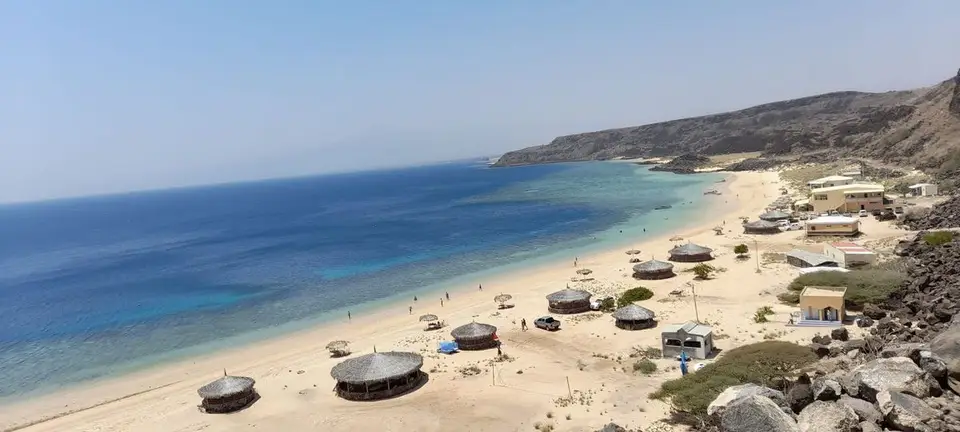
Djibouti works alone or as a pair, but the cost structure clearly favours travelling two by two. A vehicle with driver and a taxi are paid per vehicle, not per person: one excursion costs almost the same for one person as for two. Third-party comparison sites estimate the budget on the spot at about 127 euros per person per day, excluding flights, a non-official estimate.
A note on method. No keyword research carried out for this site found any demand specific to solo or couple travel to Djibouti. This page does not answer a documented need: it gathers what is verifiable on the cost structure and on safety, and explicitly flags what we could not verify. The only figures published here come from the National Tourism Agency, the FCDO, Open-Meteo or third-party comparison sites identified as such.
Is travelling alone in Djibouti feasible?
Yes, on one condition: accepting to share. It is the particularity of Djibouti and it comes as a surprise. The country is not expensive because it is unfrequented — on the contrary, it is expensive because the main items are paid per unit and not per person.
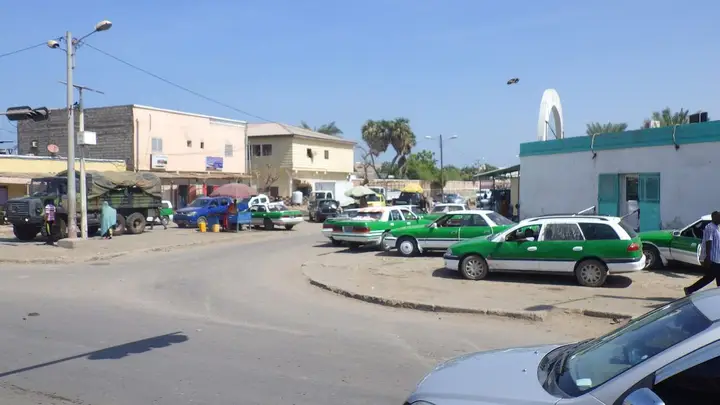
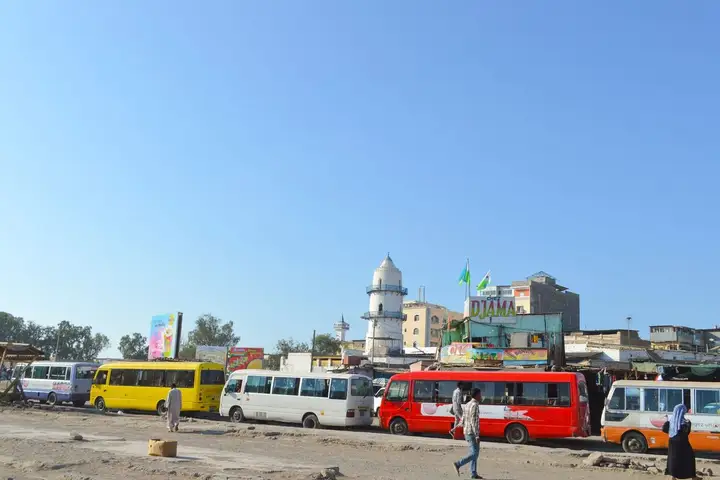
Two documented examples are enough to understand. A taxi costs 600 Djiboutian francs per zone, whatever the number of passengers: for two, the cost per person is halved. A vehicle with driver, essential as soon as you leave the capital, is paid per vehicle for the day, the same principle. Conversely, a minibus journey is paid per person, from about 50 Fdj per zone.
In practice, the solo traveller has three remedies: join a shared outing, where boat and vehicle are pooled; choose an organised stay, whose price is calculated on a group basis; or concentrate the stay on the capital and its nearby beaches, where journeys are short.
Travelling as a couple in Djibouti: which format should you choose?
A couple is the arrangement for which the cost structure is most favourable: shared room, shared vehicle, shared boat. What remains is choosing the format, and there everything depends on the number of days.
| Length | Recommended format | Why |
|---|---|---|
| Two to three days | A base in the capital and day trips | No long journey, return in the evening |
| Four to five days | Two nights on the spot in the north or at Les Sables Blancs | Avoids covering the same road twice |
| One week | Two- to three-day circuits combined | Alternates sea, city and one site in the interior |
| More than a week | Adding Lake Abbé or Abourma, by vehicle | Those sites require a night on the spot |
The rule that emerges from our own pages is simple: better to sleep on the spot than to drive twice. The journey to the northern coast and Les Sables Blancs is long, and doing it as a there-and-back in the same day consumes the stay. Detail and reservations on the link in our page on the Tadjourah and Obock ferry.
What does a trip to Djibouti cost?
No official body publishes a standard budget. The only quantified reference points we have are third-party comparison-site estimates: about 127 euros per person per day on the spot, excluding the international flight, with a cost of living estimated about thirty per cent above that of France. We give them for what they are — orders of magnitude, not fares.
What is documented, by contrast, is the structure of transport spending. This table shows, for each item, whether the price is counted per person or per vehicle: that is the information that really decides a solo traveller’s budget.
| Item | Basis of charging | Published reference fare |
|---|---|---|
| Taxi in town | Per zone, per vehicle | 600 Fdj per zone |
| Airport transfer | Per vehicle | About 1,500 Fdj |
| Minibuses and city buses | Per person, per zone | From about 50 Fdj per zone |
| Ferry to Tadjourah | Per person | 700 Fdj per adult; 350 Fdj aged 2 to 12 |
| Ferry to Obock | Per person | 800 Fdj per adult; 400 Fdj aged 2 to 12 |
| Vehicle with driver | Per vehicle and per day | On quotation |
| Accommodation room | Per room | Depending on the establishment |
Those amounts come from the fare grid published by the National Tourism Agency in January 2021: they are official fares, to be confirmed at the counter since they may have changed.
Everything charged per vehicle is shared; public transport, for its part, is charged per person. That is the whole difference between solo and a couple in Djibouti.
Why does the cost weigh more heavily solo?
Because the country’s unavoidable expenses are vehicle expenses. A single traveller who wants to see Lake Assal, the Forêt du Day or the islands pays for the day of 4×4 alone, whereas the same vehicle carries two or four people at the same price.
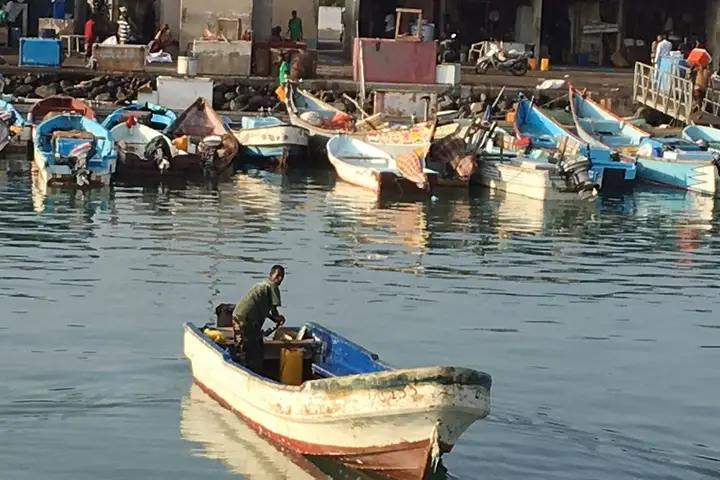
The reasoning holds for the sea too. A boat trip to the Moucha and Maskali islands mobilises a boat and a crew: the price is shared among the passengers present. Solo, you must either pay for the whole place or wait for a group to form.
Hence a practical and counter-intuitive conclusion: in Djibouti, going solo costs proportionally more than in most destinations. It is not a question of standing, it is a question of the geometry of the fares.
Is Djibouti safe for a woman travelling alone?
We cannot answer beyond what the official sources say, and we will not fill the gap with reassuring statements. The official British advice addresses two recommendations to travellers in general: do not walk alone late in the evening, and keep valuables out of sight — passports and cameras in particular. It also mentions a terrorist threat targeting places frequented by foreigners, among others.
In the sources consulted for this site, we found no official recommendation specific to women travelling alone in Djibouti. That does not mean there is no issue: it means we have no basis on which to write about it. The generic advice above applies, and local customs — dress, contact, attitude — are to be confirmed on the spot, as we explain in the page on language and practical culture.
How do you meet other travellers on the spot?
The country being little frequented, connections are made mainly through operators, not through hostels. Three routes work.
Shared outings. Excursion operators put groups together to fill a boat or a 4×4. It is the most direct mechanism for a solo traveller: you pay for a place, not for a vehicle.
Organised stays. On a multi-day circuit, the group is formed in advance. It is also the formula that settles the question of individual cost.
Accommodation in the capital. Hotels and camps near Djibouti City serve as a rallying point; that is where last-minute arrangements are made, often the day before for the next day. Favour an establishment that organises outings itself: it is the quickest way to join a group.
Is Djibouti still French?
No, and the confusion is worth clearing up. Djibouti is a sovereign republic, with its own authorities, its tourist office, its currency — the Djiboutian franc, distinct from the CFA franc — and its visa portal. It is in fact that portal which issues the visa, not a foreign representation: see our page on visa and entry formalities.
What survives of the historical link is real but of another nature: French is an official language alongside Arabic, and Djibouti is among the member states and governments of the International Organisation of La Francophonie. A traveller who speaks French will find himself at ease, without that changing the nature of the country.
What is the current situation in Djibouti?
For travel purposes, the sources we use describe a stable country, organised around a capital that concentrates the services, with a poorly equipped interior and long distances. None advises against the trip.
Two points remain to be factored in. The FCDO reports a risk of petty crime and a terrorist threat targeting places frequented by foreigners in particular: that points towards organised travel and days that end early. And heat is a real programme factor: Djibouti City reaches a mean maximum of 40.8 °C in July, against 27.5 °C in January — a country that is not visited the same way depending on the month. See when to go to Djibouti.
Which period should you choose according to your profile?
The cool season, from October to April, suits both profiles, but serves them differently. Solo, it makes shared outings easier: demand is higher, so groups form more readily. As a couple, it allows long days and nights in a camp, which the heat forbids the rest of the year.
Conversely, May and September are the most interesting months for a tight budget: fares fall and the sites empty. You simply have to accept leaving early in the morning and coming back before midday. For a first trip, however, do not look for savings: choose the season, then the format.
Frequently asked questions
What does a trip to Djibouti cost?
Third-party comparison sites estimate the budget on the spot at about 127 euros per person per day, excluding the international flight, with a cost of living about thirty per cent above that of France. Those are estimates, not official data. The heaviest item is the vehicle with driver, essential outside the capital, and charged per vehicle.
Is Djibouti still French?
No. Djibouti is a sovereign republic, with its own authorities, its visa and its tourist office. French is an official language there and the country is a member of the International Organisation of La Francophonie, which explains the confusion: the language and part of the law are French-speaking, but the country is not French. On the French presence on the spot, see our page on embassies and consulates.
What is the current situation in Djibouti?
For travel purposes, the documented situation is that of a stable country organised around one capital, with services concentrated in Djibouti City and a poorly equipped interior. The official British advice reports a risk of petty crime and a terrorist threat targeting places frequented by foreigners in particular. None of our sources advises against the trip.
Is travelling alone in Djibouti feasible?
Yes, but it is a formula that costs a lot and requires preparation. A car with driver for one excursion is paid per vehicle, so the same sum as for two or three: the cost per person is highest solo. The remedy is to join a shared outing or an organised stay, where the vehicle and the boat are pooled.
Travelling as a couple in Djibouti: which format should you choose?
The most efficient format combines a base in the capital with day trips, plus two nights on the spot in the north if the programme includes Tadjourah or Les Sables Blancs. A couple is the arrangement that gets the most out of the fares: shared room, shared vehicle, shared boat trip. Avoid stringing together four days of track on a short stay.
Sources
Practical
Read next
4×4 with a driver in Djibouti: prices and itineraries
Accessibility in Djibouti: what a demanding trip implies
Boat hire in Djibouti: trips out to sea
Budget in Djibouti: what does a trip cost on the spot?
Buses and taxis in Djibouti: fares by zone and route
Car hire in Djibouti: 4×4, saloon or driver?
Connectivity and SIM cards in Djibouti: internet and mobile
Djibouti airport transfer: taxi, fares and arrival